Introduction
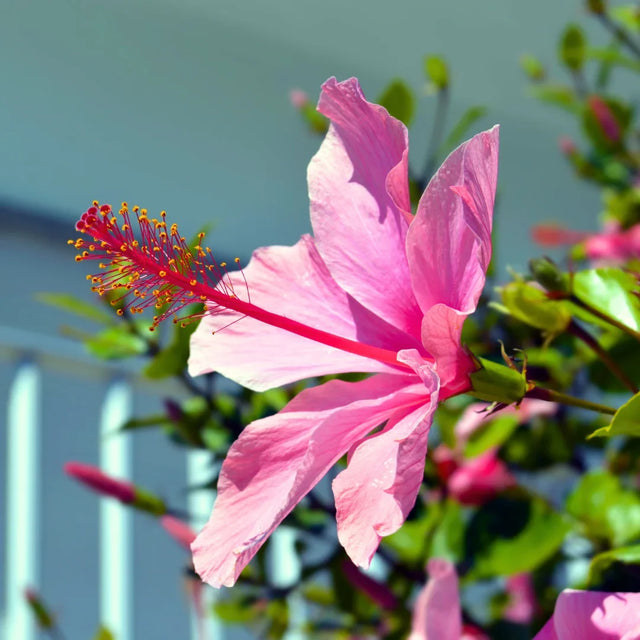
With their large, colorful flowers and long summer blooming season, Rose of Sharon plants bring beautiful tropical-looking blooms to gardens in surprisingly cold climates. Whether grown as a flowering shrub or trained into a small ornamental tree, these hardy hibiscus varieties can create a striking focal point in a sunny landscape.
Successful Rose of Sharon care begins with understanding the plant's growth habit. Unlike tropical hibiscus, Rose of Sharon (Hibiscus syriacus) is a hardy, deciduous woody plant that loses its leaves in winter and produces new foliage and flowers when temperatures warm. Its care requirements are generally similar whether grown as a shrub or a trained tree, although pruning and structural maintenance differ.
Not sure which type of hibiscus you have? Our complete hibiscus plant care guide compares Rose of Sharon, tropical hibiscus, and hardy perennial hibiscus so you can choose the right growing instructions.
At Simply Trees, you can explore the elegant White Chiffon® Hibiscus Tree, known for its ruffled white flowers, and the Blue Chiffon® Hibiscus Tree, which produces beautiful lavender-blue blooms. If you prefer a traditional shrub form, the Peppermint Smoothie™ Althea Shrub offers distinctive pink-and-white flowers with contrasting red centers.
In this guide, we'll cover everything you need to know about hibiscus tree care and hibiscus bush care, including planting, sunlight, watering, fertilization, pruning, winter protection, and common problems. We'll also explain the differences between tree-form and shrub-form Rose of Sharon so you can help your plants thrive year after year.
Rose of Sharon Care at a Glance
| Care Requirement | Ideal Conditions |
|---|---|
| Botanical Name | Hibiscus syriacus |
| Common Names | Rose of Sharon, Shrub Althea, Hardy Woody Hibiscus |
| Plant Type | Deciduous flowering shrub or trained ornamental tree |
| USDA Hardiness Zones | Generally Zones 5–9 |
| Sunlight | Full sun to partial shade; best blooms in full sun |
| Soil | Well-draining soil with moderate moisture |
| Watering | Regular during establishment; moderate once established |
| Fertilizer | Balanced, slow-release fertilizer in spring if needed |
| Blooming Season | Summer into early fall, depending on cultivar and climate |
| Flowering Wood | New growth produced during the current season |
| Pruning | Late winter or early spring |
| Mature Size | Commonly 8–12 feet tall and 6–10 feet wide in shrub form; trained trees vary |
| Winter Behavior | Dormant and leafless, with woody stems remaining above ground |
1. What Is Rose of Sharon?
Rose of Sharon is a flowering woody shrub belonging to the mallow family, Malvaceae. Despite its common name, it is not a true rose.
It is a species of hibiscus, botanically known as Hibiscus syriacus, and is valued for its ability to produce large, showy flowers throughout the warmer months.
Unlike tropical hibiscus, which generally requires frost-free conditions, Rose of Sharon tolerates winter dormancy in much colder climates.
It is widely grown in USDA Hardiness Zones 5–9, making it suitable for many landscapes across the United States.
Is Rose of Sharon a Tree or a Bush?
Rose of Sharon naturally grows as a multi-stemmed woody shrub.
However, growers can train selected plants into small ornamental trees by developing a single main trunk and maintaining a flowering canopy above it.
Both forms belong to the same species and share similar sunlight, soil, watering, and hardiness requirements.
The main differences are their appearance, spacing needs, and pruning techniques.
Is Rose of Sharon the Same as Hardy Hibiscus?
Rose of Sharon is often described as a hardy hibiscus because it can tolerate relatively cold winters.
However, the term "hardy hibiscus" is also frequently used for herbaceous perennial hibiscus, including Hibiscus moscheutos and related hybrids.
These plants have different growth habits.
- Rose of Sharon: A woody shrub or tree that retains its branches during winter.
- Hardy Perennial Hibiscus: An herbaceous perennial that typically dies back to ground level during winter and regrows in spring.
- Tropical Hibiscus: Usually an evergreen shrub in warm climates that requires protection from freezing temperatures.
This guide specifically covers Rose of Sharon, including its shrub and tree forms.
2. Rose of Sharon Varieties at Simply Trees
Although these varieties share the same basic care requirements, their flower colors and growth forms create different landscaping possibilities.
White Chiffon® Hibiscus Tree

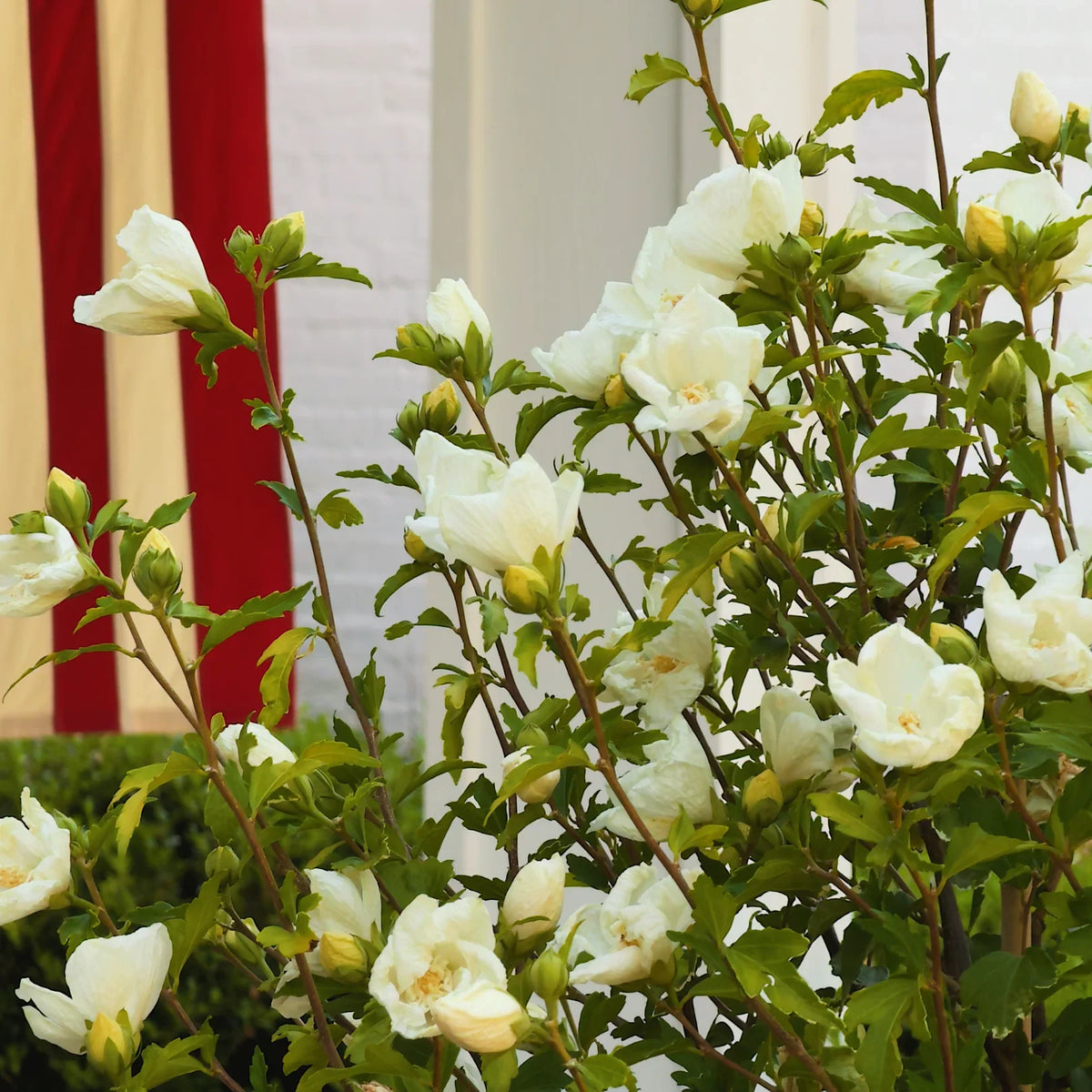
The White Chiffon® Hibiscus Tree is a tree-form Rose of Sharon with elegant white flowers featuring softly ruffled, decorative centers.
Its refined appearance makes it particularly attractive as a specimen tree or focal point in a landscape.
Best for:
- Front-yard focal points
- Cottage-style gardens
- White-themed landscapes
- Patio-adjacent plantings
- Mixed ornamental borders
What makes it different: White Chiffon provides a soft, elegant flowering display, while its trained tree form creates a more defined ornamental structure than a naturally growing shrub.
Blue Chiffon® Hibiscus Tree

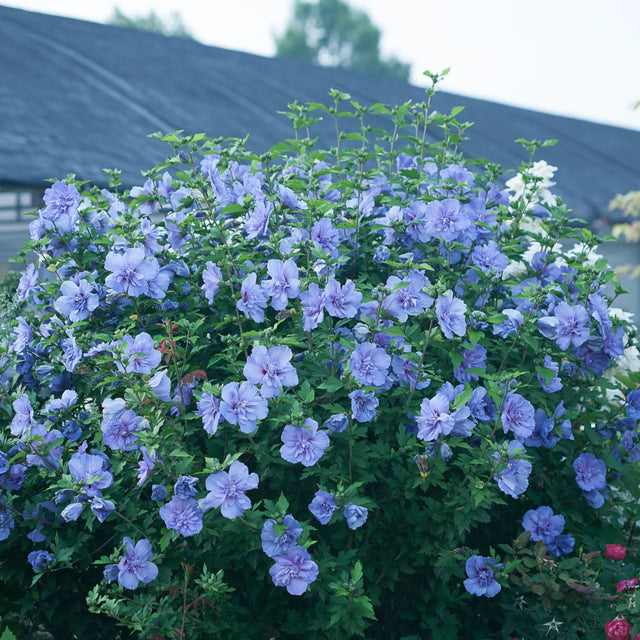
The Blue Chiffon® Hibiscus Tree produces showy lavender-blue flowers with decorative, ruffled centers.
Like White Chiffon, it is a woody Rose of Sharon trained into a small tree form.
Best for:
- Ornamental focal points
- Colorful summer landscapes
- Pollinator-friendly gardens
- Mixed flowering borders
- Patio and entryway accents where space permits
What makes it different: Blue Chiffon brings cooler lavender-blue flower tones to the landscape, making it an attractive contrast to warm-colored summer flowers.
Peppermint Smoothie™ Althea Shrub

The Peppermint Smoothie™ Althea Shrub is a shrub-form Rose of Sharon with attractive pink-and-white flowers and contrasting red centers.
Rather than being trained into a single-trunk tree, this variety maintains a more natural shrub growth habit.
Best for:
- Mixed shrub borders
- Flowering hedges
- Cottage gardens
- Pollinator-friendly landscapes
- Colorful summer focal points
What makes it different: Peppermint Smoothie combines its distinctive two-toned flowers with a naturally bushier structure, making it better suited to shrub-style landscaping than a trained tree specimen.
Rose of Sharon Variety Comparison
| Variety | Flower Color | Growth Form | Best Landscape Use |
|---|---|---|---|
| White Chiffon | White, ruffled center | Trained tree | Elegant ornamental focal point |
| Blue Chiffon | Lavender-blue, ruffled center | Trained tree | Colorful specimen and accent tree |
| Peppermint Smoothie | Pink, white, and red | Woody shrub | Flowering borders and shrub plantings |
All three varieties require similar basic growing conditions, but their different forms affect how they should be shaped and maintained.
3. How Much Sun Does Rose of Sharon Need?
Rose of Sharon grows best in full sun, although it can tolerate partial shade.
For the healthiest growth and most abundant flowers, choose a planting location receiving at least six hours of direct sunlight daily.
Can Rose of Sharon Grow in Full Sun?
Yes. Full sun is generally ideal for Rose of Sharon.
Abundant sunlight encourages:
- Healthy foliage development
- Strong flowering growth
- More flower buds
- A denser, fuller canopy
- More consistent summer blooms
In particularly hot climates, established plants can tolerate summer heat, although adequate watering remains important during prolonged drought.
Can Rose of Sharon Grow in Partial Shade?
Yes. Rose of Sharon can grow in partial shade, but it may produce fewer flowers.
Excessive shade can also encourage stretched or uneven growth as branches reach toward sunlight.
If your Rose of Sharon looks healthy but produces few flowers, sunlight exposure should be one of the first things you investigate.
4. Best Soil for Rose of Sharon
Rose of Sharon adapts to a range of soil conditions, making it relatively easy to grow in suitable landscapes.
However, it performs best in soil that drains well while retaining enough moisture to support healthy roots.
What Type of Soil Is Best?
Good garden soil with adequate drainage is generally suitable.
Loamy soil provides a useful balance of moisture retention and aeration, but Rose of Sharon can tolerate other soil types when drainage is adequate.
Avoid locations where water remains standing for prolonged periods after heavy rainfall.
Can Rose of Sharon Grow in Clay Soil?
Rose of Sharon can tolerate some clay soil, provided the planting area does not remain excessively saturated.
If your landscape has dense clay, improve drainage across the planting area rather than creating a small pocket of heavily amended soil.
Does Rose of Sharon Need Acidic Soil?
Rose of Sharon is relatively adaptable to different soil pH levels.
It generally does not require the strongly acidic soil conditions preferred by plants such as azaleas.
If your plant shows signs of nutrient deficiency or poor growth, a soil test can help determine whether adjustments are necessary.
5. How to Plant Rose of Sharon Trees and Shrubs
Proper planting gives Rose of Sharon the best opportunity to establish a strong root system and develop healthy flowering growth.
When Is the Best Time to Plant Rose of Sharon?
Spring and fall are often excellent planting seasons, depending on local climate.
Milder temperatures can reduce transplant stress and allow roots to establish before the most demanding periods of summer or winter.
For more information about seasonal planting, explore our guide to why fall is a great time to plant trees and shrubs.
Step-by-Step Planting Instructions
- Choose a sunny location: Select an area receiving approximately six or more hours of direct sunlight.
- Check the available space: Allow room for the mature canopy and root system.
- Dig a wide planting hole: Make the hole approximately twice as wide as the root ball and no deeper than necessary.
- Remove the nursery container: Inspect the roots and carefully correct significant circling roots where appropriate.
- Position the plant: Keep the root flare near the surrounding soil surface.
- Backfill carefully: Replace soil around the root ball without burying the main stem too deeply.
- Water thoroughly: Slowly soak the root ball and surrounding soil.
- Apply mulch: Spread approximately 2–3 inches of organic mulch over the surrounding root zone, keeping it away from the trunk or stems.
- Monitor establishment: Check soil moisture regularly during the first growing season.
Do Tree-Form Hibiscus Plants Need Staking?
Some newly planted tree-form Rose of Sharon specimens may benefit from temporary staking, particularly in windy locations or when their root balls are not yet stable.
However, staking is not automatically necessary for every plant.
If staking is needed, use flexible ties and allow enough natural movement for the trunk to develop strength. Remove temporary support once the tree is sufficiently established.
6. How Often Should You Water Rose of Sharon?
Watering requirements depend on the plant's age, weather conditions, and whether it is growing in the ground or in a container.
Although mature Rose of Sharon plants tolerate some dry conditions, newly planted specimens need more consistent moisture while establishing.
Watering Newly Planted Rose of Sharon
Water thoroughly immediately after planting.
During the establishment period:
- Check moisture several inches below the soil surface.
- Water when the root zone begins to dry.
- Keep the root ball adequately moist without prolonged saturation.
- Increase moisture monitoring during hot or windy weather.
- Use mulch to reduce evaporation and moderate soil temperatures.
Instead of relying on a fixed daily schedule, adjust watering according to actual soil moisture and weather conditions.
Watering Established Rose of Sharon
Established plants are moderately drought-tolerant but generally bloom and grow best when adequate moisture is available.
During prolonged dry weather, deep watering can help maintain healthy foliage and flowering.
Water slowly enough for moisture to reach the root zone rather than repeatedly wetting only the surface.
Can You Overwater Rose of Sharon?
Yes. Prolonged saturation can damage roots and contribute to poor growth.
Possible symptoms include yellowing leaves, weak growth, and wilting despite wet soil.
If the soil remains waterlogged, investigate drainage before adding more water.
7. How to Prune Rose of Sharon Trees and Bushes
Pruning is one of the most important parts of hibiscus tree care and hibiscus bush care, particularly because the two forms require slightly different approaches.
Rose of Sharon flowers on new wood, meaning flower buds develop on growth produced during the current growing season.
This makes late winter and early spring suitable times for shaping the plant without removing established flower buds from the previous year.
When Is the Best Time to Prune Rose of Sharon?
Late winter or early spring, before vigorous new growth begins, is generally the best time for substantial pruning.
At this time, the plant is dormant and its branch structure is easier to see.
Dead, damaged, or hazardous branches may be addressed at other times when necessary.
How to Prune a Rose of Sharon Bush
Shrub-form Rose of Sharon naturally develops multiple woody stems and a broad, upright habit.
To maintain a healthy shrub:
- Identify and remove dead or damaged branches.
- Remove selected crossing or rubbing stems.
- Thin overly crowded growth to improve airflow.
- Shorten excessively long branches to maintain balance.
- Preserve the plant's natural overall shape.
Rose of Sharon can tolerate fairly substantial pruning, but severe cutting is usually unnecessary for routine maintenance.
Heavy pruning may encourage vigorous new growth and larger individual flowers, although it can reduce the number of flowers or delay the display.
How to Prune a Rose of Sharon Hibiscus Tree
Tree-form Rose of Sharon requires more deliberate structural maintenance because the goal is to preserve its main trunk and rounded flowering canopy.
Follow these steps:
- Preserve the main trunk: Avoid cutting back the central trunk or established canopy framework.
- Remove basal shoots: Trim unwanted shoots emerging from the lower trunk or root area.
- Maintain canopy shape: Selectively shorten overly long branches while preserving a balanced crown.
- Remove crossing branches: Reduce rubbing and overcrowding within the canopy.
- Inspect branch attachments: Address weak or damaged growth before it creates structural problems.
- Avoid excessive shearing: Heavy, indiscriminate trimming can produce dense, uneven regrowth.
For grafted tree-form plants, watch for shoots emerging below the graft union, as these may originate from the rootstock rather than the desired flowering cultivar.
What Is the Difference Between Pruning a Hibiscus Tree and a Hibiscus Bush?
| Pruning Factor | Tree Form | Shrub Form |
|---|---|---|
| Main Goal | Maintain trunk and flowering canopy | Maintain healthy, balanced shrub |
| Lower Growth | Remove unwanted shoots along the trunk | Retain healthy framework stems as appropriate |
| Canopy Shape | Maintain a defined crown | Preserve natural upright or rounded growth |
| Major Pruning | Late winter or early spring | Late winter or early spring |
| Flowering Wood | Current-season growth | Current-season growth |
Important: Do not cut a trained hibiscus tree down to the ground as part of routine winter care. Unlike herbaceous perennial hibiscus, Rose of Sharon maintains a permanent woody structure.
8. Rose of Sharon Fertilizer: What to Use and When
Rose of Sharon generally grows well in moderately fertile soil and does not always require frequent fertilization.
However, supplemental nutrients may be beneficial when soil fertility is inadequate or growth is weak.
What Is the Best Fertilizer for Rose of Sharon?
A balanced, slow-release fertilizer formulated for flowering shrubs may be suitable when needed.
Avoid excessive nitrogen, which can encourage vigorous foliage growth at the expense of flowering.
Before adding substantial fertilizer, consider a soil test to identify nutrient deficiencies.
When Should You Fertilize?
Early spring, as growth begins, is generally an appropriate time to fertilize if additional nutrients are needed.
Avoid heavy late-season feeding in climates with cold winters because it may encourage tender growth before freezing temperatures arrive.
For broader fertilizer guidance, read our article on when and how to fertilize new trees and shrubs.
9. When Does Rose of Sharon Bloom?
Rose of Sharon is especially valuable because it flowers during summer, when many spring-blooming shrubs have already finished their displays.
Depending on the cultivar and growing region, flowering may begin in early to midsummer and continue into fall.
Individual flowers are relatively short-lived, but healthy plants can produce new blooms over an extended period.
How Do You Get More Flowers on Rose of Sharon?
To encourage abundant flowering:
- Provide at least six hours of direct sunlight.
- Maintain adequate moisture during prolonged drought.
- Avoid excessive nitrogen fertilizer.
- Prune at the appropriate time.
- Protect young plants from establishment stress.
- Maintain sufficient space and airflow around the canopy.
Why Is My Rose of Sharon Not Blooming?
Common causes include insufficient sunlight, excessive fertilizer, drought stress, recent heavy pruning, or a plant that is still establishing.
Rose of Sharon also tends to leaf out later than many other deciduous shrubs, so gardeners should avoid assuming it is dead simply because neighboring plants have already developed leaves.
Should You Deadhead Rose of Sharon?
Deadheading is generally not necessary for continued flowering.
However, removing spent flowers or developing seed capsules can improve appearance and may help limit unwanted seedlings in fertile varieties.
Some Rose of Sharon cultivars produce fewer viable seeds than others.
10. Rose of Sharon Winter Care
Unlike tropical hibiscus, Rose of Sharon is adapted to winter dormancy in colder climates.
As temperatures cool in fall, its leaves naturally change color and drop.
The woody trunk and branches remain alive above ground through winter.
Does Rose of Sharon Come Back Every Year?
Yes. In suitable USDA hardiness zones, Rose of Sharon is a perennial woody plant that returns with new leaves and flowering growth each year.
It does not need to be replanted annually when grown in an appropriate climate.
Does Rose of Sharon Lose Its Leaves in Winter?
Yes. Leaf drop is a normal part of its growth cycle.
A leafless Rose of Sharon in winter is not necessarily dead or unhealthy.
New leaves typically emerge when temperatures become consistently warm in spring.
How to Protect Young Rose of Sharon Plants During Winter
- Apply an appropriate mulch layer around the root zone.
- Keep mulch away from direct contact with the trunk.
- Water during prolonged dry periods when soil is not frozen and moisture is needed.
- Avoid excessive late-season fertilization.
- Protect exposed young plants from severe wind or animal damage when necessary.
For tree-form specimens, avoid cutting back the main trunk during winter preparation.
Can You Grow Rose of Sharon in Pots?
Yes. Young or suitably sized Rose of Sharon plants can grow in large containers with appropriate drainage.
However, container roots experience colder winter temperatures than roots planted in the ground.
In cold climates, container-grown Rose of Sharon may require additional winter protection even when the plant is otherwise hardy in the local USDA zone.
Larger, mature plants may be more practical to grow directly in the landscape.
11. Common Rose of Sharon Problems and Solutions
Although Rose of Sharon is generally adaptable and relatively low-maintenance, several conditions can affect growth or flowering.
Problem #1: Rose of Sharon Leaves Turning Yellow
Yellow leaves can result from excessive moisture, drought stress, nutrient deficiencies, or normal seasonal changes.
What to do: Check soil moisture and the time of year before making changes.
Problem #2: Hibiscus Tree Not Blooming
A tree-form Rose of Sharon may produce healthy green foliage but relatively few flowers.
Common causes include excessive shade, heavy nitrogen fertilization, or recent pruning that delayed new flowering growth.
What to do: Evaluate sunlight exposure and fertilizer use before making major changes.
Problem #3: Leaves Have Holes or Visible Insects
Rose of Sharon can occasionally attract aphids, Japanese beetles, and other insects.
Minor insect damage is not always a serious problem.
What to do: Identify the pest and assess the extent of damage before choosing a treatment.
Problem #4: Rose of Sharon Looks Dead in Spring
Rose of Sharon commonly breaks dormancy later than many other garden shrubs.
This can cause gardeners to worry when nearby plants have leafed out but their hibiscus remains bare.
What to do: Allow adequate time for warm-weather growth and inspect branches for living tissue before removing them.
Problem #5: Hibiscus Tree Producing Shoots From the Trunk
Tree-form Rose of Sharon may produce shoots from the lower trunk or near the base.
These shoots can interfere with the desired tree shape and divert growth away from the ornamental canopy.
What to do: Remove unwanted shoots close to their point of origin without damaging the trunk.
Rose of Sharon Troubleshooting Guide
| Symptom | Possible Cause | What to Check |
|---|---|---|
| Few or no flowers | Shade, fertilization, or pruning | Sunlight and maintenance history |
| Yellow leaves in summer | Water stress or root problems | Soil moisture and drainage |
| No leaves in early spring | Normal late dormancy or winter injury | Temperature and living branch tissue |
| Leggy growth | Insufficient light or overcrowding | Sunlight and plant spacing |
| Shoots growing from tree trunk | Basal growth or rootstock shoots | Lower trunk and graft union |
| Chewed or damaged leaves | Insect pests | Foliage and leaf undersides |
| Wilting in wet soil | Possible root stress | Drainage and root-zone conditions |
12. Rose of Sharon Care Through the Seasons
Spring Rose of Sharon Care
- Monitor for new growth as temperatures warm.
- Complete structural pruning before vigorous growth begins.
- Apply fertilizer if needed.
- Check soil moisture during establishment.
- Inspect branches for winter damage.
Summer Rose of Sharon Care
- Enjoy the flowering display.
- Water deeply during prolonged dry periods.
- Monitor foliage for pests.
- Remove damaged branches when necessary.
- Avoid excessive pruning that disrupts flowering.
Fall Rose of Sharon Care
- Allow leaves to change color and drop naturally.
- Avoid unnecessary late-season fertilization.
- Maintain adequate moisture during dry weather.
- Clean up unwanted seedlings or seed capsules where appropriate.
Winter Rose of Sharon Care
- Allow the plant to remain dormant.
- Maintain mulch around the root zone.
- Inspect tree-form plants for storm damage.
- Protect vulnerable container roots from severe cold.
- Prepare for late-winter or early-spring pruning.
13. Common Rose of Sharon Care Mistakes to Avoid
- Confusing it with tropical hibiscus: Rose of Sharon has different winter and pruning requirements.
- Planting in excessive shade: May reduce flower production.
- Overwatering: Prolonged saturation can damage roots.
- Overfertilizing: Excess nitrogen can encourage leaves instead of flowers.
- Removing the main trunk of a trained tree: Can permanently damage its ornamental structure.
- Pruning too late in the growing season: May remove developing flowers or encourage tender growth before winter.
- Assuming late leaf emergence means the plant is dead: Rose of Sharon often breaks dormancy relatively late.
- Ignoring mature size: Shrub-form plants can become large and spreading.
Frequently Asked Questions About Rose of Sharon Care
Is Rose of Sharon a hibiscus?
Yes. Rose of Sharon is Hibiscus syriacus, a hardy, deciduous species of hibiscus commonly grown as a flowering shrub or trained ornamental tree.
How do you care for a Rose of Sharon hibiscus tree?
Provide full sun, well-draining soil, and regular watering during establishment. Maintain the trained trunk and canopy through selective pruning in late winter or early spring, and remove unwanted shoots emerging from the lower trunk.
How do you care for a hibiscus bush?
For shrub-form Rose of Sharon, plant in full sun to partial shade, water appropriately, and prune in late winter or early spring to remove damaged or overcrowded growth. Allow room for the shrub's mature spread.
How much sunlight does Rose of Sharon need?
Rose of Sharon grows best with at least six hours of direct sunlight daily. It tolerates some partial shade, but flowering may decrease.
How often should you water Rose of Sharon?
Newly planted Rose of Sharon requires regular moisture during establishment. Established plants tolerate some drought but benefit from deep watering during extended dry periods.
When should you prune a Rose of Sharon hibiscus tree?
Late winter or early spring is generally the best time to prune Rose of Sharon. It flowers on new wood, so pruning before active spring growth allows the plant to develop flowering shoots during the growing season.
Does Rose of Sharon bloom on old wood or new wood?
Rose of Sharon blooms on new wood, meaning flowers develop on stems produced during the current growing season.
What is the difference between a hibiscus tree and a hibiscus bush?
Tree-form Rose of Sharon is trained to develop a main trunk and flowering canopy, while shrub-form plants naturally grow with multiple woody stems. Both share similar basic care requirements but require different pruning techniques.
Does Rose of Sharon come back every year?
Yes. Rose of Sharon is a hardy perennial woody plant in suitable growing zones. It loses its leaves during winter but produces new growth in spring.
Does Rose of Sharon lose its leaves in winter?
Yes. Rose of Sharon is deciduous, meaning it naturally loses its foliage in fall and remains dormant throughout winter.
Why is my Rose of Sharon not blooming?
Insufficient sunlight, excessive nitrogen fertilizer, drought stress, or heavy pruning can reduce or delay flowering. Young plants may also need time to establish.
How big does Rose of Sharon get?
Shrub-form Rose of Sharon commonly reaches approximately 8–12 feet tall and 6–10 feet wide. Mature size varies by cultivar and pruning. Trained tree forms may have different dimensions.
Can Rose of Sharon grow in containers?
Yes. Young or appropriately sized plants can grow in large containers with adequate drainage. Container-grown plants may need more frequent watering and additional winter root protection.
Is Rose of Sharon the same as tropical hibiscus?
No. Rose of Sharon is a hardy deciduous woody hibiscus, while tropical hibiscus is generally evergreen in warm climates and requires protection from freezing temperatures.
Is Rose of Sharon the same as perennial hardy hibiscus?
Not necessarily. Rose of Sharon is a woody hibiscus that retains its branches during winter. Herbaceous hardy hibiscus, such as Hibiscus moscheutos, typically dies back to the ground each winter.
Final Thoughts: Growing Beautiful Rose of Sharon Trees and Bushes
Rose of Sharon is a rewarding addition to sunny landscapes, offering large, colorful flowers and dependable seasonal interest.
Whether you choose an elegant tree-form hibiscus or a naturally growing flowering shrub, successful Rose of Sharon care begins with adequate sunlight, well-draining soil, and appropriate watering.
Understanding the difference between tree-form and shrub-form plants is particularly important when pruning. Both flower on new growth, but tree-form specimens require careful maintenance of their trunks and flowering canopies.
With thoughtful planting and regular care, Rose of Sharon can provide beautiful summer blooms for years to come.
Beautiful gardens start with healthy plants and the knowledge to help them thrive.