Introduction
Few flowering plants make a statement quite like hibiscus. With their large, colorful blooms and lush foliage, hibiscus plants can transform an ordinary garden into a vibrant summer landscape. Some varieties thrive in tropical climates, while others survive freezing winters and return with beautiful flowers year after year.
But here's something many gardeners don't realize: not all hibiscus plants need the same care. A tropical hibiscus grown in a patio container has different watering and winter requirements from a hardy Rose of Sharon planted in the backyard. And a hibiscus trained into a small ornamental tree requires different pruning techniques from a naturally growing hibiscus bush.
Understanding these differences is the foundation of successful hibiscus plant care. Whether you're growing hibiscus in the ground, in a container, as a flowering shrub, or as an ornamental tree, choosing the right care routine helps support healthy growth and abundant blooms.
At Simply Trees, we offer several hibiscus varieties for different landscape styles. Our hardy selections include the White Chiffon® Hibiscus Tree, Blue Chiffon® Hibiscus Tree, and Peppermint Smoothie™ Althea Shrub. For gardeners who prefer tropical flowers, the Lipstick Hibiscus Shrub offers beautiful pink blooms.
In this guide, we'll explain how to care for a hibiscus plant, help you identify the different hibiscus types, compare their growing requirements, and answer common questions about watering, sunlight, pruning, flowering, and winter protection.
Hibiscus Care at a Glance
Although hibiscus plants belong to the same genus, their growing requirements can differ considerably.
| Care Requirement | Tropical Hibiscus | Rose of Sharon | Hardy Perennial Hibiscus |
|---|---|---|---|
| Common Botanical Group | Hibiscus rosa-sinensis and related cultivars | Hibiscus syriacus | Hibiscus moscheutos and related hybrids |
| Plant Type | Evergreen flowering shrub in warm climates | Deciduous woody shrub or trained tree | Herbaceous perennial |
| Typical Growing Zones | Generally USDA Zones 9–11 | Generally USDA Zones 5–9 | Often USDA Zones 4–9, depending on cultivar |
| Sunlight | Full sun; some afternoon shade in extreme heat | Full sun to partial shade | Full sun |
| Watering | Consistent moisture | Moderate once established | Consistent moisture; generally more water-demanding |
| Soil | Fertile, well-draining soil | Adaptable, well-draining soil | Moist, organically rich soil |
| Winter Behavior | Requires protection from freezing | Loses leaves but retains woody branches | Typically dies back to the ground |
| Pruning | Shape during suitable active growth | Late winter or early spring | Remove dead stems after dormancy |
The most important takeaway: Before deciding how much to water, when to prune, or how to protect your hibiscus during winter, identify which type of hibiscus you're growing.
1. Understanding the Different Types of Hibiscus Plants
Hibiscus is a diverse genus within the mallow family, Malvaceae. It includes flowering shrubs, small trees, and herbaceous perennials, with different species adapted to tropical, subtropical, and temperate climates.
Three groups are especially important for home gardeners in the United States.
Tropical Hibiscus: Large Flowers for Warm Climates
Tropical hibiscus is best known for its large, colorful flowers and glossy green foliage.
Plants in the Hibiscus rosa-sinensis group generally prefer warm temperatures and can remain evergreen where winters are frost-free.
These hibiscus plants are especially popular in patio containers, tropical-inspired gardens, and sunny outdoor living spaces.
However, tropical varieties are sensitive to freezing temperatures. In colder climates, they're commonly grown in containers and moved indoors for winter.
They also tend to need more consistent watering than established Rose of Sharon shrubs, particularly when flowering heavily or growing in containers.
For detailed instructions on watering, container growing, pruning, and overwintering, read our complete Tropical Hibiscus Care Guide.
Rose of Sharon: Hardy Hibiscus Trees and Bushes
Rose of Sharon (Hibiscus syriacus) is a deciduous, woody species of hibiscus known for its summer flowers and ability to tolerate colder winters.
Unlike tropical hibiscus, Rose of Sharon naturally loses its leaves during fall and remains dormant through winter.
Its woody stems and branches remain alive above ground and produce new leaves and flowers when temperatures warm.
Rose of Sharon naturally grows as a multi-stemmed shrub, but selected plants can also be trained into small ornamental trees.
This makes it suitable for flowering hedges, landscape borders, focal points, and smaller ornamental tree plantings.
For detailed planting, watering, pruning, and winter-care instructions, visit our Rose of Sharon Care Guide for Hibiscus Trees and Bushes.
Hardy Perennial Hibiscus: Large Flowers That Return Each Spring
Hardy perennial hibiscus, often called rose mallow or swamp hibiscus, includes Hibiscus moscheutos and related hybrids.
These plants are known for their exceptionally large flowers, which can sometimes reach dinner-plate proportions.
Unlike Rose of Sharon, many hardy perennial hibiscus varieties are herbaceous plants.
This means their above-ground stems typically die back during winter, while the root system survives underground and produces fresh growth in spring.
Many hardy perennial hibiscus varieties also prefer more consistent soil moisture than established Rose of Sharon shrubs.
Although both groups are considered cold-hardy, their watering and pruning requirements are not interchangeable.
2. Hibiscus Varieties at Simply Trees
Choosing the right hibiscus begins with understanding its growth habit and growing requirements.
Simply Trees offers both hardy Rose of Sharon and tropical hibiscus varieties, allowing gardeners to select plants based on their preferred flower colors, landscape design, and climate.
White Chiffon® Hibiscus Tree

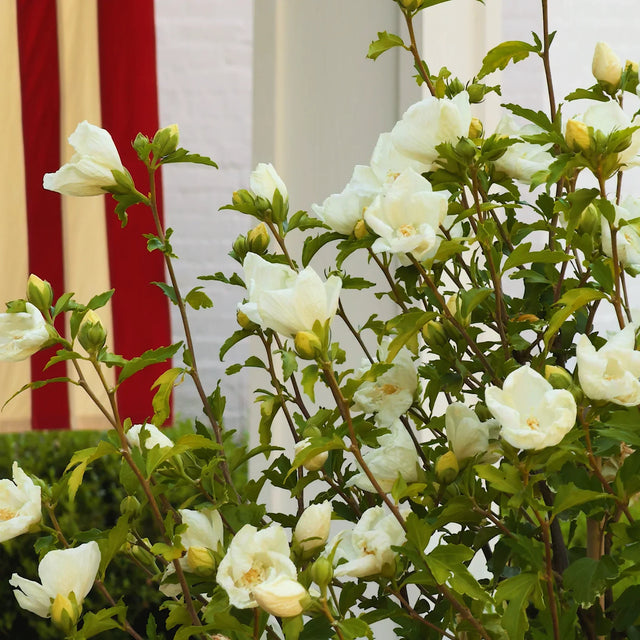
The White Chiffon® Hibiscus Tree is a beautiful Rose of Sharon variety featuring elegant white flowers with decorative, ruffled centers.
Grown in a trained tree form, it creates an attractive focal point in front yards, flowering borders, and cottage-inspired landscapes.
Hibiscus type: Hardy Rose of Sharon
Growth form: Trained ornamental tree
Best for: Garden focal points, elegant landscapes, and white-themed flowering designs.
Care consideration: Maintain its main trunk and flowering canopy through appropriate pruning rather than treating it like a multi-stemmed shrub.
Blue Chiffon® Hibiscus Tree

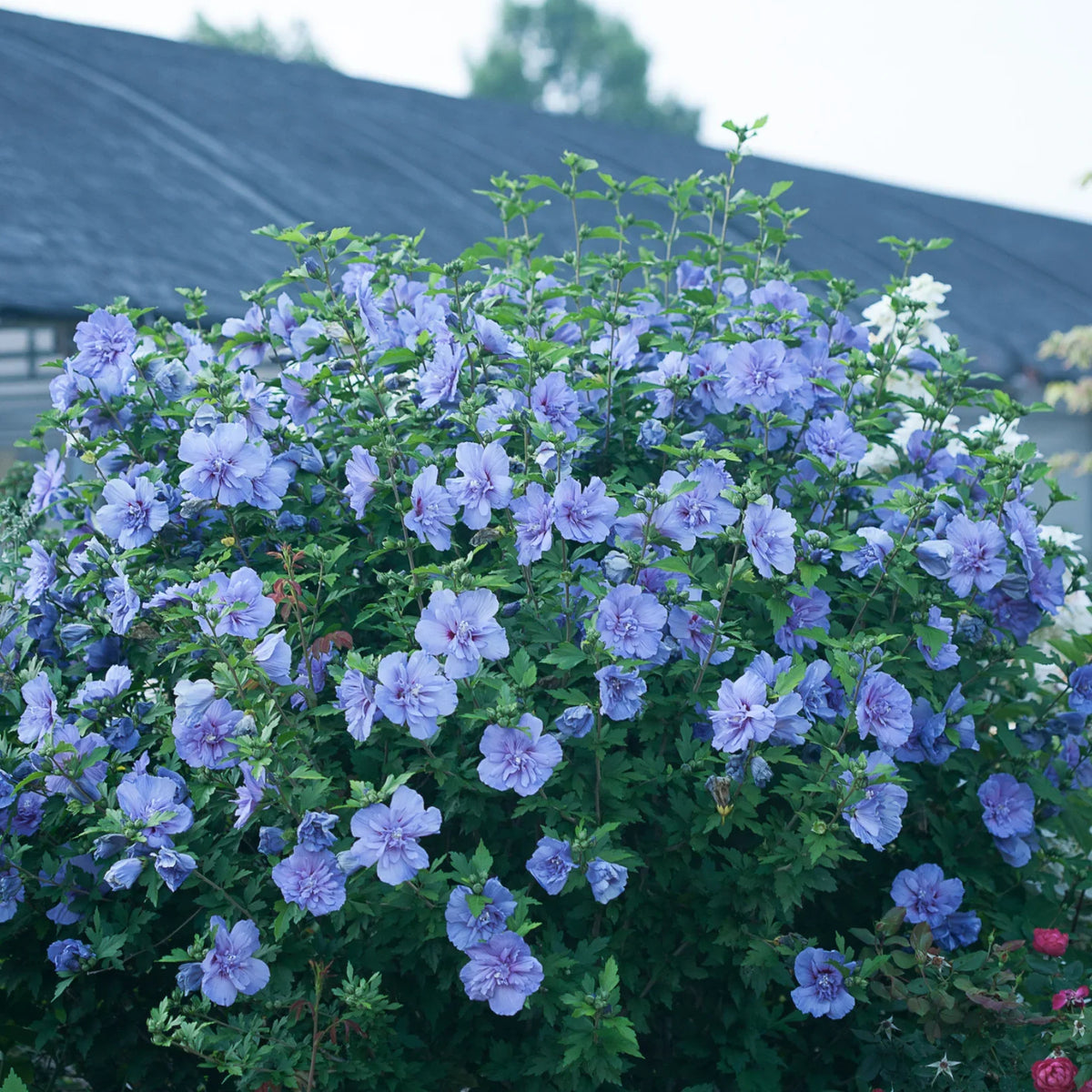
The Blue Chiffon® Hibiscus Tree produces beautiful lavender-blue flowers with softly ruffled centers.
Like White Chiffon, this variety is a hardy Rose of Sharon trained into a small ornamental tree.
Hibiscus type: Hardy Rose of Sharon
Growth form: Trained ornamental tree
Best for: Summer flowering focal points, colorful gardens, and landscapes featuring cooler flower tones.
Care consideration: Regular structural maintenance helps preserve its trained form and attractive canopy.
Peppermint Smoothie™ Althea Shrub

The Peppermint Smoothie™ Althea Shrub is a shrub-form Rose of Sharon featuring pink-and-white flowers with contrasting red centers.
Unlike tree-form hibiscus, this plant maintains a naturally bushier structure, making it suitable for mixed shrub borders, flowering hedges, and cottage gardens.
Hibiscus type: Hardy Rose of Sharon
Growth form: Woody flowering shrub
Best for: Flowering borders, mixed shrub plantings, and colorful landscape accents.
Care consideration: Preserve its natural shrub shape through selective pruning rather than attempting to maintain a single trunk.
Lipstick Hibiscus Shrub

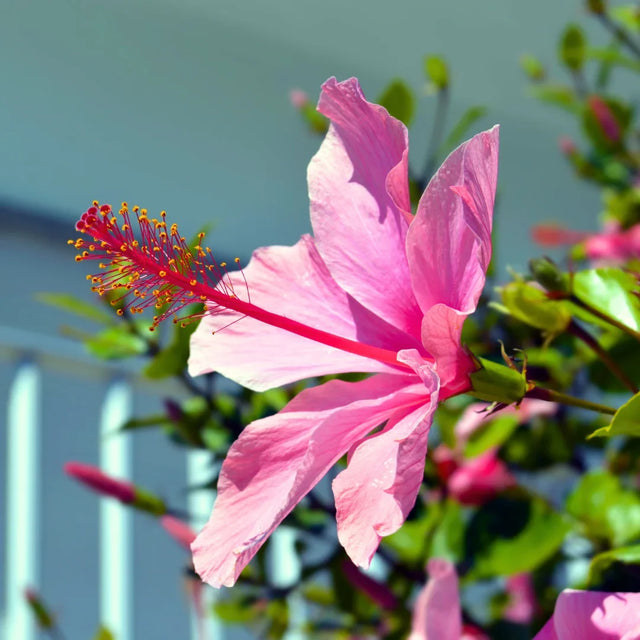
The Lipstick Hibiscus Shrub is a tropical flowering shrub valued for its bold pink flowers and lush foliage.
Its striking tropical appearance makes it particularly attractive in patio containers, warm-climate gardens, and sunny outdoor spaces.
Hibiscus type: Tropical hibiscus
Growth form: Flowering shrub
Best for: Patio containers, tropical gardens, and warm-climate flowering borders.
Care consideration: Requires more consistent moisture and protection from freezing temperatures than hardy Rose of Sharon varieties.
Which Simply Trees Hibiscus Should You Choose?
| Variety | Flower Color | Growth Form | Winter Behavior |
|---|---|---|---|
| White Chiffon | White | Trained tree | Hardy and deciduous |
| Blue Chiffon | Lavender-blue | Trained tree | Hardy and deciduous |
| Peppermint Smoothie | Pink, white, and red | Woody shrub | Hardy and deciduous |
| Lipstick Hibiscus | Pink | Tropical shrub | Frost-sensitive |
Choosing by climate: Gardeners in colder growing zones may find hardy Rose of Sharon varieties more practical for permanent landscape planting. In warm climates, tropical hibiscus offers a different appearance and potentially longer flowering season. For colder regions, tropical hibiscus can also be grown in containers and overwintered indoors.
3. How to Care for Hibiscus Plants: The Essential Requirements
Although different hibiscus types have distinct growing needs, several fundamental care principles apply across the genus.
Most hibiscus plants perform best when they receive adequate sunlight, appropriate soil moisture, sufficient nutrients, and a suitable growing climate.
Sunlight: Do Hibiscus Plants Need Full Sun?
Most hibiscus plants grow and flower best when they receive abundant sunlight.
A location receiving approximately six or more hours of direct sun is generally suitable for many outdoor varieties.
However, light requirements vary by hibiscus type and climate.
- Tropical hibiscus: Prefers strong sunlight, although some afternoon protection may help during extreme heat.
- Rose of Sharon: Grows in full sun to partial shade, with the most flowers generally developing in sunnier locations.
- Hardy perennial hibiscus: Generally performs best in full sun, particularly when abundant flowering is desired.
Insufficient sunlight can lead to fewer flowers, weak growth, and an uneven plant shape.
Watering: How Often Should You Water Hibiscus?
Proper watering is essential for healthy hibiscus growth, but there is no single schedule that works for every hibiscus plant.
The amount of water needed depends on the species, soil type, temperature, rainfall, and whether the plant is growing in a container.
As a general rule, hibiscus plants benefit from thorough watering when the root zone needs moisture, while avoiding prolonged waterlogging.
| Hibiscus Type | Watering Approach |
|---|---|
| Tropical Hibiscus | Maintain relatively consistent moisture during active growth and flowering. |
| Rose of Sharon | Water regularly while establishing; mature plants tolerate some dry conditions. |
| Hardy Perennial Hibiscus | Maintain consistent moisture, especially during summer growth and flowering. |
Care tip: Check soil moisture before watering. Wilting can result from drought, but it can also occur when waterlogged roots are damaged.
Soil: What Is the Best Soil for Hibiscus?
Most hibiscus plants benefit from well-draining soil, but their preferences for moisture and fertility differ.
Tropical hibiscus generally prefers fertile soil that retains adequate moisture without remaining saturated.
Rose of Sharon is more adaptable to different soil types and usually performs well in ordinary garden soil with sufficient drainage.
Hardy perennial hibiscus often prefers organically rich, moisture-retentive soil and can tolerate wetter conditions than many woody landscape shrubs.
Before planting, consider whether your soil is sandy, loamy, clay-heavy, or frequently saturated.
Fertilizer: Do Hibiscus Plants Need Feeding?
Hibiscus plants need essential nutrients to support healthy foliage, roots, and flowers.
However, fertilizer requirements depend on the plant's growth rate, growing conditions, and soil fertility.
Tropical hibiscus, especially when grown in containers, may benefit from more regular light feeding during active growth.
Established Rose of Sharon shrubs often require less supplemental fertilizer when planted in suitable garden soil.
Avoid excessive nitrogen applications, which may encourage abundant foliage without a corresponding increase in flowering.
For general fertilization advice, explore our guide on when and how to fertilize new trees and shrubs.
4. Hibiscus Tree Care vs. Hibiscus Bush Care
Gardeners often use the terms hibiscus tree and hibiscus bush interchangeably, but these descriptions usually refer to a plant's trained form rather than a completely different botanical species.
A naturally growing hibiscus shrub can sometimes be trained into an ornamental tree by encouraging a central trunk and maintaining a raised flowering canopy.
However, the underlying species still determines its temperature tolerance, watering needs, and winter behavior.
How to Care for a Hibiscus Tree
For tree-form hibiscus, care includes maintaining the plant's natural growing requirements while preserving its ornamental structure.
Important considerations include:
- Maintaining a strong and healthy main trunk
- Removing unwanted shoots from the lower trunk
- Preserving a balanced flowering canopy
- Providing adequate space around the crown
- Avoiding pruning that damages the structural framework
Tree-form Rose of Sharon should not be cut down to the ground during winter maintenance because its woody trunk and branches remain alive through dormancy.
How to Care for a Hibiscus Bush
Hibiscus bushes generally have a fuller, multi-stemmed growth habit.
For shrub-form plants, pruning focuses on removing damaged branches, maintaining balanced growth, and preventing overcrowding.
However, the correct care routine still depends on the type.
A tropical hibiscus bush needs frost protection in colder climates, while a Rose of Sharon bush can survive outdoor winter dormancy within its suitable growing zones.
What About Braided Hibiscus Tree Care?
Braided hibiscus trees are ornamental plants trained by intertwining young stems to create a decorative trunk.
They are not a separate botanical species.
Most braided hibiscus sold as patio plants are tropical hibiscus, although it is important to verify the actual species before selecting a care routine.
To care for a braided hibiscus tree:
- Follow the sunlight and watering requirements of its actual hibiscus species.
- Protect tropical braided hibiscus from freezing temperatures.
- Inspect braided stems for rubbing, constriction, or damage as the plant grows.
- Remove unwanted shoots that interfere with the trained structure.
- Prune the canopy selectively to maintain an attractive shape.
Important: A single-trunk hibiscus tree and a braided hibiscus tree are not necessarily the same thing. Their appearances differ, and their care depends on the species used to create the trained form.
5. How to Prune Hibiscus Plants
Pruning helps maintain healthy growth, encourages branching, and keeps hibiscus plants looking attractive.
However, pruning instructions vary significantly between woody hibiscus shrubs, trained trees, and herbaceous perennials.
When Should You Prune Tropical Hibiscus?
Tropical hibiscus can generally be shaped during suitable active growing conditions.
More substantial pruning is often performed in late winter or early spring as new growth resumes, particularly for container plants.
Avoid severe pruning immediately before freezing weather.
When Should You Prune Rose of Sharon?
Rose of Sharon typically flowers on new wood produced during the current growing season.
Late winter or early spring is therefore generally an appropriate time for substantial pruning.
Tree-form plants should be pruned to maintain the trunk and canopy, while shrub-form plants can be thinned and shaped to preserve their natural growth habit.
When Should You Cut Back Hardy Perennial Hibiscus?
Herbaceous hardy perennial hibiscus typically dies back to the ground after frost.
Once the stems have died, they can be removed during late fall or early spring, depending on local conditions and gardening preferences.
Unlike woody Rose of Sharon, this type produces new above-ground stems from its root system each growing season.
6. Hibiscus Winter Care: Which Varieties Survive Frost?
Winter survival is one of the most important differences between hibiscus types.
Some varieties tolerate cold temperatures and remain outdoors year-round, while others require protection from freezing conditions.
Tropical Hibiscus Winter Care
Tropical hibiscus is sensitive to freezing temperatures.
In colder climates, container-grown plants should generally be moved to a bright, protected location before damaging cold weather arrives.
During indoor overwintering, provide sufficient light, monitor for pests, and reduce watering as growth slows.
Rose of Sharon Winter Care
Rose of Sharon is deciduous and naturally enters winter dormancy.
Its leaves drop during fall, but the woody structure remains alive.
In suitable growing zones, established plants can remain outdoors throughout winter.
Mulching the root zone and protecting newly planted specimens during severe weather can help reduce environmental stress.
Hardy Perennial Hibiscus Winter Care
Many hardy perennial hibiscus varieties die back to ground level during winter.
Although the stems may appear dead, the roots can remain alive and produce new growth when spring temperatures rise.
Because some varieties emerge relatively late in spring, gardeners should avoid disturbing the root zone before new shoots appear.
Hibiscus Winter Care Comparison
| Hibiscus Type | Winter Appearance | Recommended Approach |
|---|---|---|
| Tropical Hibiscus | Evergreen in frost-free conditions | Protect from freezing; overwinter containers indoors in cold climates |
| Rose of Sharon | Leafless woody branches | Allow normal winter dormancy; protect roots during establishment |
| Hardy Perennial Hibiscus | Above-ground stems die back | Protect dormant roots and wait for spring regrowth |
For additional cold-weather gardening advice, read our guide to protecting plants from frost.
7. How to Grow Hibiscus in Pots
Container gardening is a practical option for many hibiscus varieties, especially tropical plants that need to be moved indoors during winter.
Growing hibiscus in pots also makes it easier to manage soil conditions, adjust sunlight exposure, and create attractive patio displays.
Choose a Container With Drainage Holes
Proper drainage is essential for healthy roots.
Select a container with drainage holes and use an appropriate potting mix.
Avoid allowing the container to sit in standing water for prolonged periods.
Match the Pot Size to the Plant
The container should provide adequate space for the existing root system without holding excessive unused potting mix.
As the plant grows, repot into a slightly larger container when necessary.
Monitor Moisture More Frequently
Container-grown hibiscus often dries out more quickly than plants growing directly in the ground.
During summer, monitor moisture regularly, particularly when pots are exposed to direct sunlight and hot temperatures.
Tropical hibiscus generally requires more consistent moisture than established Rose of Sharon.
Consider Winter Protection
Container roots are more exposed to temperature extremes than roots growing in garden soil.
Even relatively cold-hardy hibiscus varieties may need additional winter root protection when grown in containers.
For tropical hibiscus, a movable container offers the advantage of bringing the plant indoors before freezing temperatures arrive.
8. How to Keep Hibiscus Blooming
One of the main reasons gardeners grow hibiscus is to enjoy their spectacular flowers.
Although flowering seasons vary by species, several general practices can help encourage healthy flower development.
Provide Enough Sunlight
Insufficient sunlight can reduce flowering in many hibiscus varieties.
Choose an appropriately sunny location based on the species and climate.
Maintain Appropriate Moisture
Severe drought stress may reduce flowering or cause developing buds to drop.
Provide sufficient moisture while avoiding prolonged saturation.
Avoid Excessive Fertilizer
Applying too much nitrogen may encourage lush foliage at the expense of flowers.
Use fertilizer according to plant needs rather than assuming more fertilizer will create more blooms.
Prune at the Right Time
Pruning can encourage branching and help maintain healthy growth.
However, excessive pruning or pruning during active flowering may temporarily reduce flower production.
Follow species-specific pruning recommendations.
Watch for Environmental Stress
Temperature changes, strong winds, root problems, and insect pests can affect flower development.
Tropical hibiscus is especially sensitive to sudden changes in temperature, light, and watering conditions.
9. Common Hibiscus Plant Problems and Solutions
Hibiscus plants may experience several common problems, although their causes can differ depending on the species and growing environment.
Why Are My Hibiscus Leaves Turning Yellow?
Yellowing foliage may result from overwatering, underwatering, nutrient deficiencies, temperature stress, or normal seasonal changes.
For deciduous Rose of Sharon, yellowing leaves during fall may simply indicate the beginning of winter dormancy.
For tropical hibiscus, yellow leaves during the growing season may indicate moisture stress, environmental changes, or root problems.
What to check: Soil moisture, drainage, recent weather, and the hibiscus type.
Why Is My Hibiscus Not Blooming?
Common causes include insufficient sunlight, excessive nitrogen fertilizer, inappropriate pruning, or environmental stress.
Some newly planted hibiscus plants may also need time to establish before producing a full flowering display.
What to check: Sunlight exposure, fertilizer applications, pruning history, and plant maturity.
Why Are My Hibiscus Buds Falling Off?
Premature flower bud drop is particularly common in tropical hibiscus.
Potential causes include inconsistent watering, sudden temperature changes, low light, and insect damage.
What to check: Moisture consistency, recent environmental changes, and developing buds.
Why Is My Hibiscus Wilting?
Wilting may occur when soil becomes excessively dry, but damaged roots in waterlogged soil can produce similar symptoms.
Always inspect soil moisture before watering a wilted hibiscus plant.
What Pests Affect Hibiscus Plants?
Depending on the species and growing conditions, hibiscus may attract:
- Aphids
- Whiteflies
- Spider mites
- Thrips
- Scale insects
- Japanese beetles
Inspect new growth and leaf undersides regularly.
Correct pest identification is important before selecting any treatment.
Hibiscus Troubleshooting Guide
| Symptom | Possible Cause | What to Check |
|---|---|---|
| Yellow leaves | Water stress, nutrition, temperature, or dormancy | Hibiscus type, season, and soil moisture |
| Few flowers | Insufficient sun or fertilizer imbalance | Sunlight and feeding history |
| Flower buds falling | Environmental or moisture stress | Watering consistency and temperature |
| Wilting with wet soil | Possible root damage | Drainage and root health |
| No leaves in winter | Normal dormancy for deciduous types | Species and season |
| Stems die back in winter | Normal for herbaceous hibiscus; potential damage for tropical types | Species and cold exposure |
| Sticky or discolored foliage | Possible insect pests | Leaves and new growth |
10. Choosing the Right Hibiscus for Your Garden
The best hibiscus depends on your climate, available space, desired appearance, and willingness to provide seasonal care.
Best Hibiscus for Cold Climates
Rose of Sharon is often an excellent choice for gardeners in regions with cold winters.
Its woody structure survives winter in suitable growing zones, and it returns with fresh leaves and flowers each growing season.
Hardy perennial hibiscus can also be a good choice when gardeners want exceptionally large flowers and have suitable moisture conditions.
Best Hibiscus for Tropical Gardens
Tropical hibiscus is well-suited to frost-free or relatively warm climates.
Its glossy foliage and colorful flowers work beautifully in tropical landscapes, large patio containers, and outdoor living spaces.
Best Hibiscus for Small Ornamental Trees
Tree-form Rose of Sharon creates an attractive flowering focal point without requiring the same growing conditions as a tropical hibiscus.
Trained specimens are particularly useful where a defined trunk and flowering canopy are desired.
Best Hibiscus for Flowering Shrub Borders
Shrub-form Rose of Sharon provides an upright, woody flowering structure that works well in mixed borders.
In warmer climates, tropical hibiscus can also be used for colorful flowering shrub plantings.
Best Hibiscus for Patio Containers
Tropical hibiscus is a popular option for sunny patio containers, especially in regions where plants can be moved indoors during winter.
Smaller or appropriately maintained hardy hibiscus varieties can also be grown in containers, although their eventual size and winter root protection should be considered.
11. Common Hibiscus Care Mistakes to Avoid
Many hibiscus problems occur because gardeners apply the same care routine to plants with different growing requirements.
- Confusing tropical and hardy hibiscus: Their winter protection and temperature requirements differ.
- Using one watering schedule for every hibiscus: Tropical and herbaceous perennial varieties often need more consistent moisture than established Rose of Sharon.
- Planting in too much shade: Insufficient sunlight may reduce flowering.
- Overwatering poorly drained soil: Saturated roots may decline even when the foliage looks wilted.
- Overfertilizing: Excessive nutrients can damage roots or encourage foliage instead of flowers.
- Pruning without identifying the species: A trained woody hibiscus tree should not be cut back like an herbaceous perennial.
- Ignoring winter temperatures: Tropical hibiscus may suffer severe damage during freezing weather.
- Assuming a dormant hibiscus is dead: Hardy deciduous and herbaceous varieties may appear inactive for months before growing again.
- Ignoring mature size: Some hibiscus shrubs and trained trees need substantial growing space.
Frequently Asked Questions About Hibiscus Care
How do you care for a hibiscus plant?
Provide adequate sunlight, suitable soil moisture, good drainage, and appropriate nutrients. Because tropical hibiscus, Rose of Sharon, and hardy perennial hibiscus have different growing requirements, identify your plant before choosing a specific care routine.
Are hibiscus plants easy to care for?
Many hibiscus varieties are relatively easy to grow when matched with the right climate and planting conditions. Hardy Rose of Sharon generally requires less winter protection, while tropical hibiscus may need additional attention in colder climates.
How often should you water hibiscus?
Watering frequency depends on the type, plant size, soil, and weather. Tropical hibiscus and hardy perennial hibiscus generally benefit from consistent moisture, while established Rose of Sharon can tolerate some dry conditions.
Does hibiscus need full sun?
Most hibiscus varieties grow and flower best in sunny locations. Many prefer six or more hours of direct sunlight, although some tropical varieties benefit from afternoon protection during extreme heat.
What is the difference between tropical hibiscus and hardy hibiscus?
Tropical hibiscus generally requires warm conditions and frost protection. Hardy hibiscus varieties can tolerate colder winters, although Rose of Sharon and herbaceous hardy hibiscus have different growth habits and moisture requirements.
What is the difference between a hibiscus tree and a hibiscus bush?
Hibiscus trees are often shrubs trained to develop a main trunk and raised flowering canopy. Hibiscus bushes retain a fuller, multi-stemmed growth habit. Care requirements depend on the underlying species.
How do you care for a braided hibiscus tree?
Identify the hibiscus species first. Most commonly sold braided tropical hibiscus plants need abundant light, consistent moisture, and protection from freezing. Maintain the trained canopy and inspect braided stems as they grow.
When should you prune hibiscus?
Pruning timing varies by type. Rose of Sharon is generally pruned in late winter or early spring, tropical hibiscus can be shaped during favorable growing conditions, and hardy herbaceous hibiscus may have dead stems removed after winter dormancy.
Does hibiscus come back every year?
Hardy Rose of Sharon and hardy perennial hibiscus return year after year in suitable growing zones. Tropical hibiscus can survive for multiple years in frost-free conditions or when successfully overwintered indoors.
Can you grow hibiscus indoors?
Tropical hibiscus can grow indoors with sufficient bright light and suitable temperatures. Hardy Rose of Sharon and perennial hibiscus generally require outdoor seasonal conditions, including winter dormancy.
Why are my hibiscus leaves turning yellow?
Yellow leaves can result from water stress, nutrient problems, environmental changes, or normal seasonal dormancy. Check the hibiscus type, soil moisture, and time of year before selecting a remedy.
Why is my hibiscus not blooming?
Insufficient sunlight, inappropriate fertilization, pruning, temperature stress, and moisture problems can all reduce flowering. The most likely cause depends on the hibiscus species and growing conditions.
Can hibiscus grow in pots?
Yes. Many tropical hibiscus plants grow well in containers, and some hardy varieties can also be grown in appropriately sized pots. Good drainage, regular moisture monitoring, and seasonal temperature protection are important.
Which hibiscus is best for cold climates?
Rose of Sharon and hardy perennial hibiscus are generally more suitable for cold climates than tropical hibiscus. However, the exact hardiness zone depends on the species and cultivar.
Which hibiscus is best for a patio?
Tropical hibiscus is an excellent choice for sunny patios, particularly when grown in a movable container. Trained Rose of Sharon trees can also create attractive outdoor focal points in suitable growing zones.
Final Thoughts: Finding the Right Care Routine for Your Hibiscus
Hibiscus plants are among the most beautiful flowering additions to gardens, patios, and outdoor landscapes.
However, successful hibiscus care starts with understanding which type you're growing.
Tropical hibiscus brings lush foliage and vibrant flowers to warm climates but requires careful winter protection. Rose of Sharon offers hardy woody growth and dependable summer flowers, while hardy perennial hibiscus produces impressive blooms and returns from its roots each spring.
Whether you're caring for a hibiscus tree, a flowering bush, or a potted tropical plant, providing the right sunlight, watering, soil, and seasonal maintenance will help your hibiscus grow and bloom beautifully.
Beautiful gardens start with healthy plants and the knowledge to help them thrive.