Introduction
Few flowering plants deliver as much vibrant summer color with as little maintenance as lantana. Known for its clusters of brightly colored flowers, exceptional heat tolerance, and ability to attract butterflies, lantana is a favorite for sunny flower beds, borders, containers, and water-wise landscapes.
Successful lantana plant care begins with understanding the plant's basic needs: plenty of sunlight, well-draining soil, and appropriate watering. Although lantana is remarkably drought-tolerant once established, the right growing conditions can make a significant difference in how vigorously it grows and flowers.
At Simply Trees, we offer several varieties with different flower colors and growth habits. Choose New Gold Lantana for bright yellow flowers, Confetti™ Spreading Lantana for multicolored blooms, or Purple Trailing Lantana for a cascading display. For additional color options, explore Dallas Red Lantana with its warm red and orange flowers, or White Trailing Lantana for delicate white blooms.
In this complete guide, we'll explain how to care for lantana, including sunlight, watering, soil, fertilizer, pruning, winter protection, and common problems. We'll also cover how to care for lantana in pots and compare five popular varieties to help you find the right plant for your landscape.
Lantana Plant Care at a Glance
| Care Requirement | Ideal Conditions |
|---|---|
| Botanical Name | Lantana spp. and hybrids |
| Plant Type | Flowering shrub or spreading perennial; often grown as an annual |
| Sunlight | Full sun, ideally 6 or more hours daily |
| Soil | Well-draining soil |
| Watering | Regular during establishment; less frequent once established |
| Fertilizer | Light feeding when needed |
| Blooming Season | Late spring through fall in many climates; longer in frost-free areas |
| Flower Colors | Yellow, orange, red, pink, purple, white, and multicolored |
| Mature Size | Varies by variety and growing conditions |
| Growth Habit | Upright, mounding, spreading, or trailing |
| Pruning | Light shaping during active growth; stronger pruning in spring where perennial |
| Winter Hardiness | Varies by species, cultivar, and local climate |
| Best Uses | Flower beds, borders, groundcover, containers, hanging baskets, and pollinator gardens |
1. How to Care for Lantana Plants
Lantana belongs to the Verbenaceae family and includes numerous flowering species and cultivated hybrids. These plants are valued for their colorful flower clusters, aromatic foliage, and ability to thrive in warm, sunny conditions.
Many lantanas develop small clusters of tubular flowers that can change color as they mature. This creates the beautiful multicolored appearance seen in varieties such as Confetti and Dallas Red.
One of lantana's greatest advantages is its ability to tolerate heat and relatively dry conditions once established.
However, drought tolerance does not mean the plant should be neglected completely. Proper watering, sunlight, and occasional pruning can encourage fuller growth and a longer flowering display.
What Does Lantana Need to Thrive?
For healthy growth and abundant blooms, focus on these essential requirements:
- Full sunlight: Most lantanas flower best with six or more hours of direct sun.
- Good drainage: Roots should not remain in saturated soil.
- Appropriate watering: Newly planted lantanas need regular moisture while establishing.
- Moderate fertilization: Excessive nutrients can encourage leaves instead of flowers.
- Occasional pruning: Light trimming helps maintain shape and encourages fresh growth.
- Warm temperatures: Most varieties grow and flower most vigorously in warm weather.
Lantana is also a popular choice for gardeners interested in reducing irrigation requirements. Learn more about creating a colorful, lower-water landscape in our guide to xeriscaping and water-wise landscaping.
2. Different Types of Lantana: Which Variety Should You Grow?
Not all lantana plants grow the same way.
Some develop compact, mounded forms that work beautifully in borders and patio containers. Others spread outward, forming colorful groundcover or cascading over walls and the edges of hanging baskets.
Choosing the right variety depends on the space available, your preferred flower color, and how you want the plant to grow.
New Gold Lantana: Bright Yellow Flowers

New Gold Lantana is known for its brilliant golden-yellow flowers and relatively low, spreading growth habit.
Unlike varieties with changing flower colors, New Gold creates a more uniform yellow display, making it especially effective for mass plantings and sunny landscape borders.
It typically develops a low mound approximately 1–2 feet tall, spreading several feet across under favorable growing conditions.
Best uses:
- Sunny flower borders
- Groundcover-style plantings
- Mass plantings for consistent yellow color
- Low-growing patio containers
- Water-wise landscapes
What makes it different: New Gold is an excellent option for gardeners who want bright, consistent yellow color rather than multicolored flowers. It is also widely recognized as a low-seed or largely sterile selection, although seed production can vary under some conditions.
Confetti™ Spreading Lantana: Multicolored Flowers

Confetti™ Spreading Lantana offers a colorful display of yellow, pink, and magenta flower clusters.
Its multicolored appearance comes from flowers that develop and change color as they mature, creating several shades on the same plant.
Confetti has a spreading, somewhat mounded habit and can develop a broader presence than compact container varieties.
Best uses:
- Colorful landscape borders
- Mixed flower beds
- Large patio containers
- Sunny groundcover areas
- Pollinator-friendly planting designs
What makes it different: Confetti is ideal when you want several flower colors from a single plant. Its mixture of warm yellow and pink tones creates a lively appearance that works well in informal and cottage-style landscapes.
Because some common lantana cultivars may produce viable seeds and spread outside gardens, check your local invasive-plant guidance before planting Confetti in regions where lantana is regulated or considered invasive.
Purple Trailing Lantana: Cascading Purple Blooms

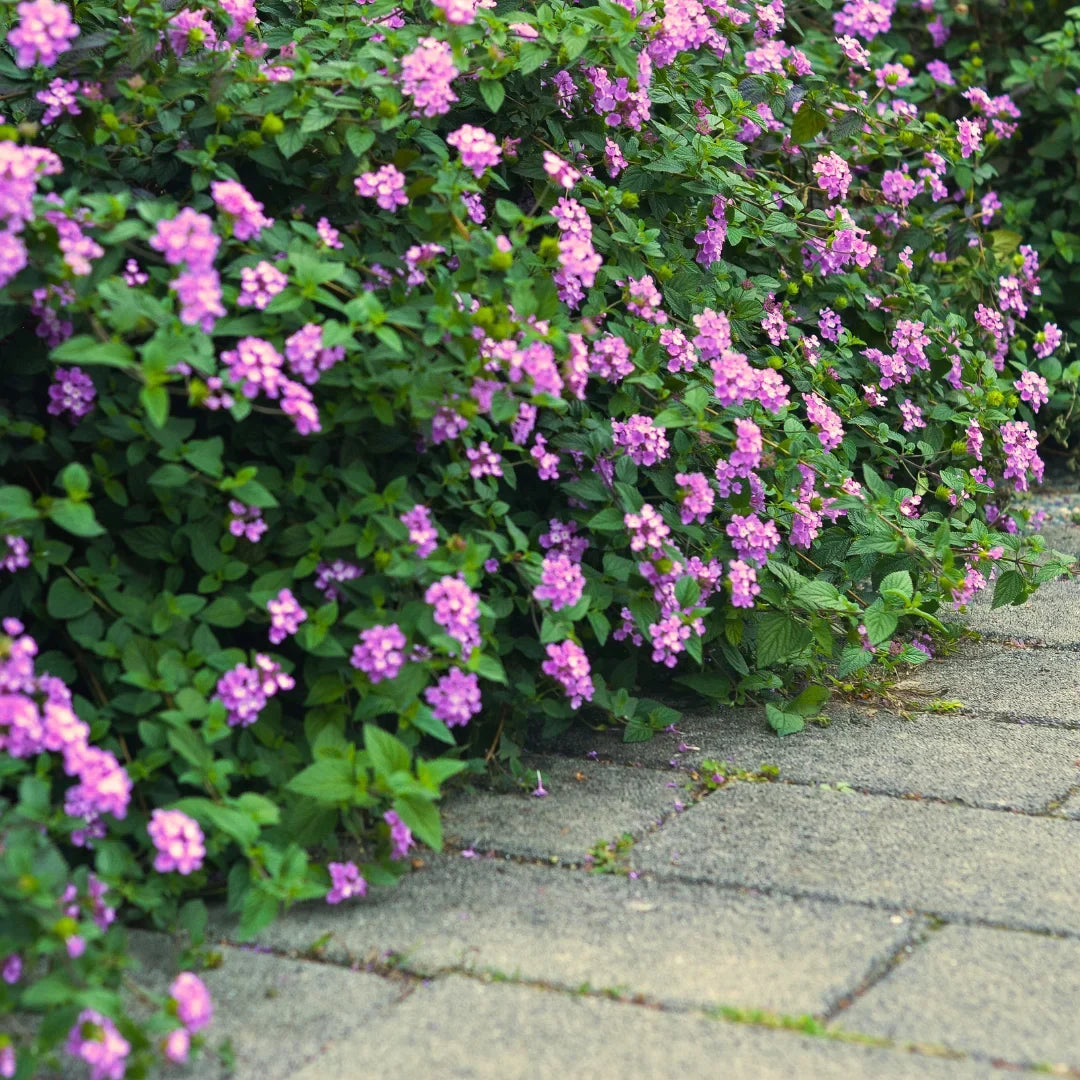
Purple Trailing Lantana is prized for its lavender-purple flowers and long, spreading stems.
Unlike more upright lantana varieties, this plant naturally grows outward and downward, making it particularly effective for covering soil or spilling over the edges of containers.
Purple trailing lantana is commonly associated with Lantana montevidensis, a low-growing species with a more prostrate growth habit than many common lantana cultivars.
Best uses:
- Hanging baskets
- Retaining walls
- Slopes and embankments
- Large patio containers
- Low-growing groundcover
What makes it different: Purple Trailing Lantana emphasizes horizontal spread and cascading growth rather than a compact mound. It is especially attractive where its flowering stems have room to extend naturally.
Dallas Red Lantana: Bold Red, Orange & Yellow Flowers

Dallas Red Lantana brings a bold combination of red, orange, and yellow flowers to sunny gardens.
Its warm flower colors create a strong visual impact, particularly when planted alongside green foliage, ornamental grasses, or plants with cooler-colored flowers.
Dallas Red generally develops a compact, bushy to mounded habit, making it suitable for beds and appropriately sized containers.
Best uses:
- Bright summer flower beds
- Warm-color planting schemes
- Patio containers
- Mixed borders
- Butterfly-friendly gardens
What makes it different: Dallas Red stands out for its dramatic warm colors and relatively compact habit. It provides a different visual effect from the uniform yellow of New Gold or the softer lavender-purple flowers of Purple Trailing Lantana.
White Trailing Lantana: Soft White Flowers for Groundcover

White Trailing Lantana produces clusters of white flowers with yellow centers, creating a softer, more understated display than brightly colored lantana varieties.
Like Purple Trailing Lantana, it develops a low, spreading growth habit that makes it useful as groundcover or for cascading over container edges.
Its white flowers can provide contrast against darker foliage, colorful flowering shrubs, or stone landscapes.
Best uses:
- White-themed gardens
- Sunny groundcover
- Hanging baskets
- Retaining walls
- Containers and mixed plantings
What makes it different: White Trailing Lantana offers a more neutral flower color and cascading habit, making it useful when you want texture and long-lasting blooms without introducing strong yellow, red, or purple tones.
Lantana Variety Comparison: Colors, Growth Habits & Best Uses
| Variety | Flower Color | Growth Habit | Best For |
|---|---|---|---|
| New Gold | Golden yellow | Low, spreading mound | Borders, mass plantings, containers |
| Confetti Spreading | Yellow, pink, magenta | Spreading and mounded | Colorful beds, large containers |
| Purple Trailing | Lavender-purple | Low and trailing | Groundcover, hanging baskets, walls |
| Dallas Red | Red, orange, yellow | Compact, bushy mound | Warm-color beds, patio planters |
| White Trailing | White with yellow centers | Low and trailing | Groundcover, containers, walls |
Choosing the right variety: For a compact mound of bright color, consider New Gold or Dallas Red. For multicolored flowers, Confetti is a strong option. If you want flowers cascading over a wall or container, Purple Trailing and White Trailing Lantana are especially suitable.
Mature size and winter hardiness vary by cultivar and growing conditions. Always allow enough room for the plant's expected spread.
3. How Much Sun Does Lantana Need?
Sunlight is one of the most important factors in successful lantana care.
Most varieties grow and bloom best in full sun, ideally receiving at least six hours of direct sunlight every day.
Abundant sunlight encourages compact growth, strong stems, and consistent flower production.
Can Lantana Grow in Full Sun?
Yes. Lantana is an excellent plant for sunny landscapes and generally tolerates hot summer temperatures very well.
Once established, many varieties perform successfully in areas where more delicate flowering plants struggle during summer heat.
However, newly planted lantanas should receive adequate moisture until their roots become established.
Can Lantana Grow in Partial Shade?
Some lantanas can tolerate partial shade, but flowering may decrease as sunlight becomes limited.
Plants growing in too much shade may develop:
- Long, leggy stems
- Fewer flower clusters
- Less compact growth
- Reduced flowering throughout the season
If your lantana looks healthy but produces few flowers, insufficient sunlight is one of the first factors to investigate.
4. How Often Should You Water Lantana?
Although lantana is drought-tolerant once established, proper watering is especially important for newly planted plants and those growing in containers.
The ideal approach is to water thoroughly when needed while allowing the soil to dry somewhat between waterings.
Watering Newly Planted Lantana
Newly planted lantanas need regular moisture while their root systems establish.
Immediately after planting, water the root ball and surrounding soil thoroughly.
During establishment:
- Check soil moisture frequently.
- Water when the root zone begins to dry.
- Avoid allowing the root ball to remain completely dry for extended periods.
- Ensure excess water drains away.
- Adjust watering frequency based on heat, wind, rainfall, and soil type.
The goal is to support new root growth without keeping the soil constantly saturated.
Watering Established Lantana
Established lantana plants generally need less supplemental watering.
In suitable climates, they may tolerate extended dry periods, particularly when planted directly in the ground.
However, prolonged drought can reduce flower production and cause wilting or premature foliage loss.
During hot, dry weather, occasional deep watering can help maintain vigorous flowering.
Can You Overwater Lantana?
Yes. Lantana prefers well-draining soil and can develop root problems when exposed to prolonged saturation.
Signs of excessive watering may include:
- Yellowing leaves
- Weak growth
- Wilting despite wet soil
- Soft or decaying roots
- Premature leaf drop
Always check soil moisture before adding more water to a struggling plant.
5. Best Soil for Lantana Plants
Lantana grows well in a variety of soil types, provided drainage is adequate.
Established plants often tolerate sandy or relatively lean soils better than many traditional flowering shrubs.
What Type of Soil Is Best?
The best soil for lantana should:
- Drain efficiently after watering or rainfall
- Provide adequate air around the roots
- Retain enough moisture for newly developing roots
- Avoid prolonged waterlogging
In heavy clay soils, improving drainage across the planting area or using a raised bed may help prevent root problems.
Does Lantana Need Rich Soil?
Not necessarily. Lantana often performs well in moderately fertile or relatively lean soil.
Excessively rich soil or heavy fertilizer applications may encourage abundant foliage without a corresponding increase in flowering.
Avoid adding large quantities of fertilizer or compost simply to encourage faster growth.
6. How to Plant Lantana in the Garden
Proper planting gives lantana the best opportunity to establish healthy roots and produce vigorous new growth.
When Is the Best Time to Plant Lantana?
Spring is generally an ideal time to plant lantana after the danger of frost has passed and temperatures have begun to warm.
Because lantana prefers warm conditions, planting into cold, wet soil may slow establishment.
In regions with mild winters, planting opportunities may extend into other parts of the year when conditions are suitable.
Step-by-Step Planting Instructions
- Choose a sunny location: Select an area receiving at least six hours of direct sunlight.
- Check drainage: Avoid locations where water remains standing after rainfall.
- Dig the planting hole: Make it approximately twice as wide as the root ball and no deeper than the root ball.
- Remove the container: Inspect the roots and gently loosen significant circling roots if needed.
- Position the plant: Keep the top of the root ball level with or slightly above the surrounding soil.
- Backfill: Replace soil around the roots without burying the plant's crown.
- Water thoroughly: Moisten the entire root ball and surrounding soil.
- Monitor establishment: Check moisture regularly until the plant begins producing healthy new growth.
Spacing depends on the variety. Compact mounding lantanas can be planted closer together than vigorous spreading or trailing selections.
7. How to Care for Lantana in Pots
Lantana is an excellent choice for patio containers, balcony planters, and hanging baskets because it tolerates heat and produces colorful flowers throughout much of the growing season.
However, lantana care in pots requires a slightly different approach from growing plants directly in the ground.
Container-grown lantanas depend entirely on the potting mix for moisture and nutrients, and their roots experience greater temperature fluctuations.
Choose the Right Pot Size
Select a container large enough to accommodate the plant's roots and expected growth.
For a single young, compact lantana, a pot approximately 10–12 inches wide may be a reasonable starting point. Vigorous or spreading varieties may eventually require a larger container.
The best container size depends on the size of the nursery plant, root system, and growth habit.
Avoid choosing an excessively oversized pot that holds moisture for long periods before the plant can use it.
Use a Container With Drainage Holes
Good drainage is essential for healthy potted lantana.
Choose a container with drainage holes that allow excess water to escape.
Do not allow the pot to remain submerged in a saucer filled with water.
Decorative containers without drainage holes are not ideal unless they hold a separate removable nursery pot that can drain freely.
Best Potting Mix for Lantana
Use a quality, well-draining container potting mix.
Unlike dense garden soil, potting mixes are designed to provide a balance of moisture retention and aeration within containers.
If your mix remains excessively wet, consider incorporating an appropriate drainage amendment or selecting a more suitable container mix.
How Often Should You Water Lantana in Pots?
Container-grown lantana usually requires more frequent watering than established lantana in garden beds.
During hot summer weather, small pots may dry quickly and require moisture checks every day.
However, checking daily does not mean watering daily is always necessary.
To determine when to water:
- Insert a finger approximately 1–2 inches into the potting mix.
- If the upper mix is dry and the root zone is beginning to dry, water thoroughly.
- Allow excess water to drain from the bottom.
- Wait until the mix dries appropriately before watering again.
Large containers, cooler weather, and shaded locations may require less frequent watering.
Where Should You Place Potted Lantana?
Place containers where the plants receive full sunlight for most of the day.
Sunny patios, decks, and open balconies are often suitable locations.
If a plant has been grown in shade, gradually acclimate it to stronger sunlight before placing it in an intensely exposed location.
Should You Fertilize Lantana in Pots?
Container-grown lantana may benefit from occasional light feeding because nutrients can gradually leach from potting mix during watering.
Use a balanced fertilizer according to label directions when needed.
Avoid excessive nitrogen applications, which may encourage leafy growth instead of flowers.
Which Lantana Varieties Are Best for Pots?
The best variety depends on the container's size and the desired appearance.
- New Gold: Great for low, bright yellow color in sunny planters.
- Confetti: Suitable for larger containers where multicolored growth can spread.
- Purple Trailing: Excellent for hanging baskets and cascading arrangements.
- Dallas Red: Good for mounded arrangements featuring bold warm colors.
- White Trailing: Ideal for white-flowering cascading containers.
For additional ideas on choosing plants and arranging outdoor containers, explore our guide to the best patio plants for your space.
8. Lantana Fertilizer: What to Use and When
Lantana generally requires less fertilizer than many other flowering plants.
In suitable garden soil, healthy established plants may produce abundant flowers with little supplemental feeding.
What Is the Best Fertilizer for Lantana?
A balanced, slow-release fertilizer may be appropriate when additional nutrients are needed.
For container plants, a suitable liquid or controlled-release fertilizer can help replace nutrients lost through watering.
However, more fertilizer does not necessarily produce more flowers.
When Should You Fertilize Lantana?
Spring, when plants resume active growth, is generally an appropriate time for light feeding if needed.
Container plants may benefit from additional applications during the growing season, depending on the fertilizer formulation and plant condition.
Always follow the manufacturer's instructions and avoid applying fertilizer to severely drought-stressed plants.
Why Does Too Much Fertilizer Reduce Flowering?
Excessive nitrogen can encourage vigorous leaf and stem development while reducing flower production.
If your lantana has lush green foliage but very few blooms, consider whether it is receiving too much fertilizer or insufficient sunlight.
9. How and When to Prune Lantana
Pruning helps lantana maintain an attractive shape and can encourage fresh flowering growth.
Because lantana grows quickly in warm conditions, some varieties may become leggy or overgrown during the season.
When Is the Best Time to Prune Lantana?
Light shaping can be performed during active growth when plants become too large or uneven.
In warm climates where lantana survives as a perennial, more substantial pruning is generally best performed in spring after the risk of severe frost has passed.
Avoid heavy fall pruning in regions where cold weather may damage new growth.
How to Prune Lantana Plants
- Inspect the plant for dead, damaged, or diseased stems.
- Remove unhealthy growth using clean pruning shears.
- Trim excessively long stems to maintain a balanced shape.
- Lightly reduce leggy growth to encourage branching.
- Avoid removing excessive healthy foliage during extreme heat or drought.
Lantana generally responds well to moderate pruning during the growing season.
Should You Deadhead Lantana?
Deadheading means removing spent flower clusters after they begin to fade.
Some lantana varieties continue flowering well without regular deadheading, especially low-seed or sterile selections.
However, removing faded flowers or lightly trimming the plant can improve appearance and may encourage additional flowering in certain cultivars.
Deadheading is particularly useful for varieties that produce berries, although it should not be relied upon as the only method of preventing unwanted spread.
How Do You Prune Trailing Lantana?
Trailing lantana generally benefits from selective trimming that maintains its natural cascading form.
Rather than cutting every stem to the same length, remove overly long or damaged stems and preserve the plant's spreading shape.
This helps maintain a natural appearance in hanging baskets, retaining walls, and groundcover plantings.
10. How to Keep Lantana Blooming All Summer
Lantana is valued for its long flowering season, but several factors influence how consistently it produces flowers.
Provide Plenty of Sunlight
Full sun is one of the most important requirements for abundant blooms.
Move container plants into brighter conditions or select a sunnier planting location if flowering is consistently poor.
Avoid Excessive Fertilizer
Too much nitrogen can encourage leafy growth instead of flowers.
Feed lightly and only when necessary.
Maintain Appropriate Moisture
Although established lantana tolerates drought, prolonged water stress can temporarily reduce flowering.
Water during extended dry periods while avoiding waterlogged soil.
Prune Leggy Growth
Light trimming can encourage branching and help refresh plants that have become overgrown.
However, flowering may pause briefly after pruning while new growth develops.
Choose the Right Variety
Different lantana cultivars vary in flowering habit, plant size, and seed production.
Some low-seed or sterile selections put more energy into continued flowering rather than fruit development.
11. Lantana Winter Care: Annual or Perennial?
Whether lantana returns year after year depends on the variety and your local climate.
In colder regions of the United States, lantana is commonly grown as an annual because freezing temperatures can damage or kill the plant.
In warmer climates, certain lantanas survive as perennials and return with new growth when temperatures rise.
Does Lantana Come Back Every Year?
In suitable warm climates, many lantanas can survive multiple growing seasons.
In colder climates, plants may die during winter unless protected or overwintered indoors.
Some perennial lantanas die back to the ground after cold weather and regrow from their roots in spring.
However, winter survival varies by species, cultivar, drainage conditions, and the severity of freezing temperatures.
How to Protect Lantana During Winter
- Check the cold tolerance of your specific variety.
- Maintain good drainage during cold, wet weather.
- Protect vulnerable plants during short frost events when practical.
- Apply appropriate mulch around perennial root zones.
- Wait until spring to remove winter-damaged stems where appropriate.
Can You Overwinter Lantana in Pots?
Yes. Container-grown lantana may be overwintered in a protected location where temperatures remain above freezing.
Before moving the plant indoors, inspect it for pests and remove damaged growth.
Place it in a bright, cool location when possible, and reduce watering as growth slows.
If the plant enters partial dormancy, it may lose some leaves. Avoid keeping the potting mix constantly wet during this period.
Gradually reintroduce overwintered lantana to outdoor sunlight and temperatures after frost danger has passed.
12. Common Lantana Problems and Solutions
Although lantana is generally low-maintenance, it can experience problems related to sunlight, moisture, pests, and disease.
Problem #1: Lantana Not Blooming
One of the most common lantana care problems is healthy green growth with few flowers.
Possible causes include:
- Insufficient sunlight
- Excessive nitrogen fertilizer
- Recent heavy pruning
- Prolonged drought stress
- Cool growing conditions
What to do: Prioritize full sunlight and appropriate watering before increasing fertilizer.
Problem #2: Lantana Leaves Turning Yellow
Yellow leaves may develop because of overwatering, poor drainage, nutrient problems, or environmental stress.
What to do: Check soil moisture and drainage. Avoid adding more water to soil that is already saturated.
Problem #3: Lantana Leaves Turning Brown
Brown leaves can result from drought, cold damage, pests, or disease.
What to do: Inspect the foliage, consider recent weather conditions, and evaluate root-zone moisture.
Problem #4: Lantana Leaves Wilting
Wilting may occur during intense heat or when roots cannot supply enough moisture to the foliage.
However, plants with damaged roots may also wilt in wet soil.
What to do: Check moisture before watering and inspect for signs of root problems.
Problem #5: Whiteflies, Lace Bugs & Spider Mites
Lantana may attract pests such as whiteflies, lace bugs, and spider mites.
Symptoms can include:
- Fine stippling or discolored leaves
- Premature leaf drop
- Visible insects on leaf undersides
- Sticky residue associated with sap-feeding pests
- Fine webbing in some mite infestations
What to do: Identify the pest before selecting a treatment. Minor infestations may not require intervention, while persistent problems may benefit from locally recommended management practices.
Problem #6: Powdery Mildew and Root Rot
Powdery mildew may develop in humid or shaded conditions, creating a pale, powdery coating on affected leaves.
Root rot is more likely when soil remains excessively wet or drainage is poor.
What to do: Improve sunlight and airflow, avoid unnecessary overhead irrigation, and correct drainage problems.
Lantana Troubleshooting Guide
| Symptom | Possible Cause | What to Check |
|---|---|---|
| Healthy leaves but no flowers | Shade or excessive fertilizer | Sunlight and feeding history |
| Yellow leaves with wet soil | Overwatering or poor drainage | Root-zone moisture |
| Brown or crispy foliage | Drought, cold, or pest damage | Soil and weather conditions |
| Wilting with dry soil | Moisture stress | Root-zone moisture |
| Grayish stippled leaves | Possible lace bugs or mites | Leaf undersides |
| White powder on foliage | Possible powdery mildew | Humidity and airflow |
| Soft roots or collapsing stems | Possible root rot | Drainage and root health |
| Leggy growth | Insufficient sun or lack of shaping | Light and pruning |
13. Is Lantana Safe for Pets and Wildlife?
Lantana attracts butterflies and other pollinators, making it a popular flowering plant for wildlife-friendly gardens.
However, its attractiveness to pollinators should not be confused with being safe for pets or livestock.
Lantana can be toxic if ingested, particularly certain species and plant parts. Keep plants away from animals that may chew on leaves or berries.
The ASPCA identifies common lantana as toxic to dogs, cats, and horses.
If you suspect that a pet has eaten lantana, contact your veterinarian promptly.
Can Lantana Become Invasive?
Yes. Certain non-native lantana species and fertile cultivars can spread aggressively in warm climates, particularly where birds disperse their seeds.
Common lantana has been identified as invasive in parts of the southeastern United States, including Florida.
Some sterile or low-seed cultivars have been developed to reduce this risk, but not all varieties have the same reproductive characteristics.
Before planting lantana, especially in regions with year-round warm temperatures, check local extension recommendations and invasive-plant restrictions.
Choose species and cultivars appropriate for your region rather than assuming every lantana is suitable for every landscape.
14. Lantana Care Through the Seasons
Spring Lantana Care
- Plant after frost danger has passed.
- Inspect perennial plants for healthy new growth.
- Remove dead or winter-damaged stems when appropriate.
- Provide light fertilizer only if needed.
- Monitor watering as temperatures rise.
Summer Lantana Care
- Maintain full sun exposure.
- Water during prolonged drought.
- Check container plants frequently for moisture.
- Lightly trim leggy growth when needed.
- Monitor foliage for insects and disease.
Fall Lantana Care
- Enjoy flowers until temperatures decline.
- Reduce feeding as growth slows.
- Prepare container plants for overwintering if desired.
- Avoid unnecessary heavy pruning before frost.
Winter Lantana Care
- Protect suitable perennial varieties from severe cold where practical.
- Maintain adequate drainage.
- Reduce watering for dormant or slow-growing plants.
- Keep overwintered containers in a protected location.
- Wait for spring regrowth before assessing winter damage.
15. Common Lantana Care Mistakes to Avoid
- Planting in too much shade: Can reduce flowering and encourage leggy growth.
- Overwatering: Saturated soil can damage roots.
- Using containers without drainage: Increases the risk of root rot.
- Overfertilizing: May encourage foliage instead of flowers.
- Ignoring mature growth habit: Spreading and trailing varieties need adequate space.
- Pruning too heavily in fall: Can stimulate tender growth ahead of freezing weather.
- Assuming all lantanas are winter hardy: Hardiness varies by cultivar and climate.
- Ignoring local invasive-plant guidance: Some fertile lantanas can spread beyond cultivated landscapes.
- Allowing pets to eat foliage or berries: Lantana can be toxic to animals.
Frequently Asked Questions About Lantana Plant Care
Are lantana plants easy to care for?
Yes. Lantana is generally easy to grow in sunny locations with well-draining soil. Once established, many varieties tolerate heat and drought with relatively little maintenance.
How do you care for lantana plants?
Provide at least six hours of sunlight, water regularly during establishment, maintain good drainage, fertilize lightly when needed, and trim overgrown stems to encourage healthy growth and flowering.
How often should you water lantana?
Newly planted lantana needs regular moisture until established. Mature plants generally tolerate drier conditions, but supplemental watering during prolonged drought can support continued flowering.
How do you care for lantana in pots?
Grow lantana in a container with drainage holes using quality potting mix. Provide full sun, check soil moisture regularly, water when the root zone begins to dry, and feed lightly during active growth when needed.
Can lantana grow in full sun?
Yes. Most lantana varieties thrive in full sunlight and produce the most flowers when receiving six or more hours of direct sun daily.
Why is my lantana not blooming?
Common causes include insufficient sunlight, excessive nitrogen fertilizer, drought stress, or recent heavy pruning. Improving sunlight and adjusting care often helps restore flowering.
Does lantana come back every year?
Some lantanas return as perennials in warm climates, while others are grown as annuals in colder regions. Winter survival depends on the specific variety, local temperatures, and growing conditions.
When should you prune lantana?
Light pruning can be performed during active growth. In climates where lantana survives winter, more substantial pruning is generally best reserved for spring after severe frost danger passes.
Should you deadhead lantana?
Deadheading is not always necessary, particularly for sterile or low-seed cultivars. However, removing faded flowers can improve appearance and may support continued flowering in some varieties.
What is the best fertilizer for lantana?
A balanced, slow-release fertilizer can be used when additional nutrients are needed. Avoid excessive nitrogen because it may promote foliage growth at the expense of flowers.
What is the difference between trailing and mounding lantana?
Trailing lantana produces long, spreading stems that are ideal for hanging baskets, walls, and groundcover. Mounding lantana develops a bushier, more compact form suited to borders and patio planters.
Which lantana is best for hanging baskets?
Purple Trailing Lantana and White Trailing Lantana are especially suitable for hanging baskets because their spreading stems can cascade over container edges.
Which lantana is best for bright yellow flowers?
New Gold Lantana is a popular option for gardeners who want a strong display of bright golden-yellow blooms.
Which lantana has red and orange flowers?
Dallas Red Lantana produces colorful clusters of red, orange, and yellow flowers, making it useful for warm-colored landscape designs.
Are lantana plants toxic to dogs and cats?
Yes. Certain lantana species and plant parts are toxic to pets. Keep plants away from animals that may chew the foliage or berries, and contact a veterinarian if ingestion is suspected.
Are all lantana varieties invasive?
No. Invasive potential varies by species and cultivar. Some fertile types can spread aggressively in warm regions, while sterile cultivars have been developed to reduce seed production. Check local guidance before planting.
Final Thoughts: Growing Beautiful Lantana Plants
Lantana is an excellent choice for gardeners looking for vibrant flowers, exceptional heat tolerance, and relatively low-maintenance landscaping.
Whether you're growing lantana in garden beds, sunny borders, hanging baskets, or patio containers, successful lantana plant care begins with full sunlight, well-draining soil, and appropriate watering.
Choosing the right variety is equally important. Mounding selections create colorful displays in beds and containers, while trailing varieties are especially effective for groundcover and cascading arrangements.
With proper planting, light pruning, and attention to local growing conditions, lantana can provide beautiful flowers and attract pollinators throughout much of the growing season.
Beautiful gardens start with healthy plants and the knowledge to help them thrive.