Introduction
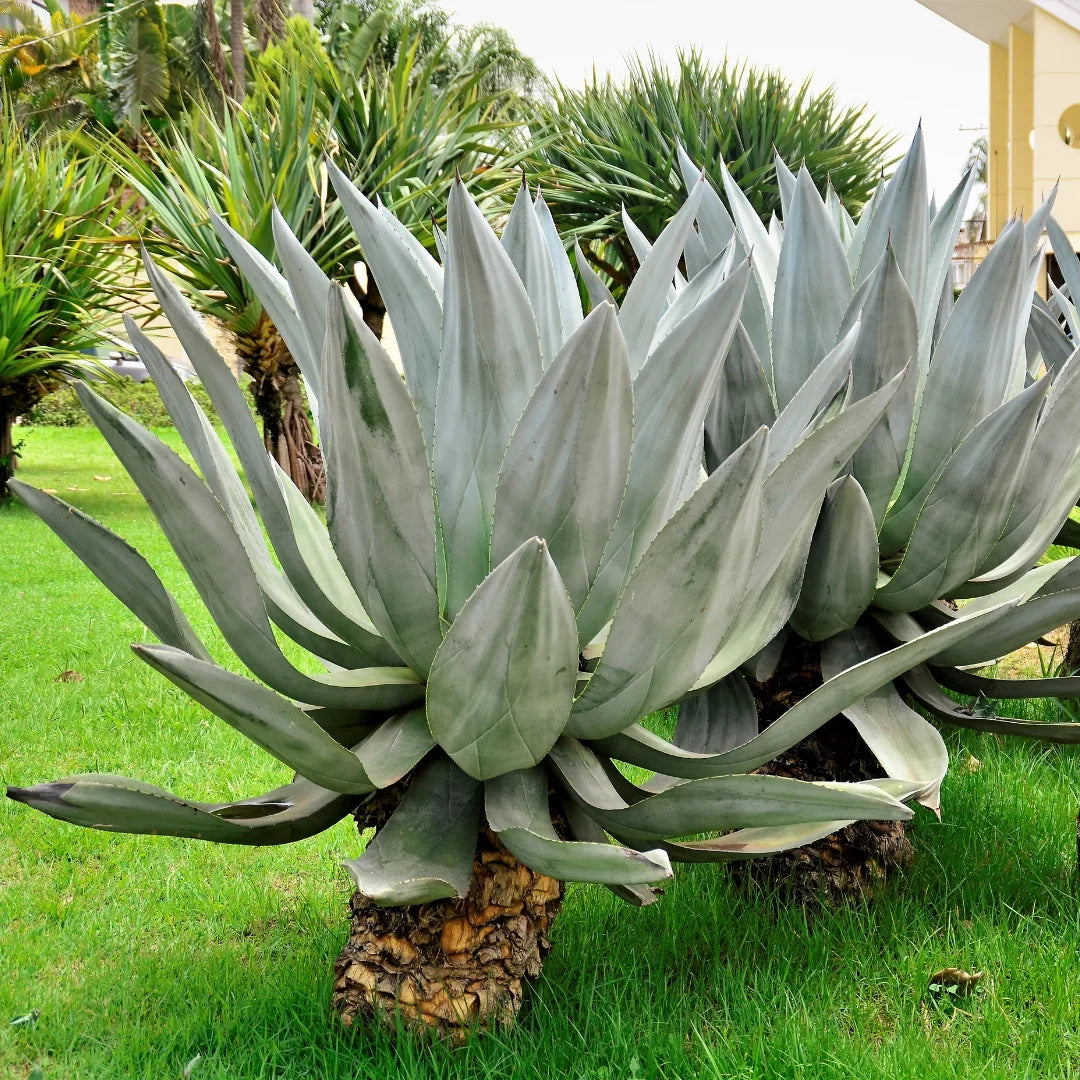
With their bold architectural shapes, thick succulent leaves, and remarkable drought tolerance, agave plants bring a striking desert-inspired look to gardens and outdoor spaces. Whether you're designing a water-wise landscape, creating a rock garden, or adding a sculptural accent to your patio, agaves offer beauty with relatively little maintenance.
Successful agave plant care comes down to a few essential requirements: plenty of sunlight, excellent soil drainage, and careful watering. Although agaves are famous for thriving in dry environments, they still need appropriate growing conditions to establish healthy roots and develop their distinctive rosette shapes.
At Simply Trees, you'll find several varieties suited to different landscape styles, including the compact Blue Glow Agave, the gracefully curved Blue Flame Agave, and the impressive Century Plant. Each offers a different appearance and mature size, making it important to choose the right agave for your space.
In this complete guide, we'll explore everything you need to know about agave care, including sunlight, soil, watering, fertilization, pruning, common problems, how big agave plants get, and how long they live.
Agave Plant Care at a Glance
Before diving into the details, here's a quick overview of the ideal growing conditions for most commonly cultivated agaves.
| Care Requirement | Ideal Conditions |
|---|---|
| Botanical Name | Agave spp. |
| Plant Type | Perennial succulent |
| Sunlight | Full sun; some varieties tolerate partial shade |
| Soil | Fast-draining sandy, gritty, or rocky soil |
| Watering | Deep but infrequent; allow soil to dry between waterings |
| Fertilizer | Usually minimal or unnecessary |
| Mature Size | From compact rosettes to plants several feet across |
| Lifespan | Several years to multiple decades, depending on species |
| Flowering Habit | Most rosettes flower once and then die |
| Pruning | Remove dead or damaged foliage when necessary |
| USDA Hardiness Zones | Varies significantly by species and cultivar |
| Maintenance | Generally low once established |
1. How to Care for Agave Plants
Agaves are perennial succulents belonging to the family Asparagaceae. They are native primarily to the Americas, with many species originating in Mexico and the southwestern United States.
These plants are recognized by their distinctive rosette-shaped growth habit, with thick, fleshy leaves arranged around a central growing point.
Many species feature sharp terminal spines or toothed leaf margins, while others have smoother, gently curving foliage.
Unlike ordinary garden shrubs, agaves store water in their leaves, allowing them to survive extended periods of drought.
However, successful agave care requires more than simply withholding water. Proper sunlight, drainage, and climate suitability are equally important.
Where Should You Plant Agave?
Agaves grow best in locations that provide abundant sunlight and excellent drainage.
Suitable planting locations include:
- Sunny rock gardens
- Desert-inspired landscapes
- Water-wise and xeriscaped yards
- Raised garden beds with well-draining soil
- Outdoor containers with adequate drainage holes
- Modern landscapes featuring gravel, stone, and architectural plants
When choosing a location, consider the plant's mature size and whether its leaves have sharp spines.
Larger agaves should be planted away from narrow walkways, entryways, and frequently used outdoor spaces.
Agaves are particularly useful in landscapes designed to conserve water. For additional inspiration, explore our guide to xeriscaping and water-wise landscaping, including ways to create attractive gardens with drought-tolerant plants.
2. How Much Sunlight Do Agave Plants Need?
Sunlight plays an important role in maintaining healthy agave growth, leaf coloration, and compact rosette development.
Most agave species prefer full sun, generally receiving six or more hours of direct sunlight daily.
However, sunlight requirements can vary depending on the species and climate.
Can Agave Plants Grow in Full Sun?
Yes. Many outdoor agaves thrive in full sun once properly acclimated.
Strong sunlight helps maintain the dense, symmetrical rosettes that make these plants so visually appealing.
However, newly purchased agaves or plants previously grown in greenhouses may need gradual exposure to direct sunlight.
Suddenly moving a shade-grown agave into intense afternoon sun can cause leaf scorch, particularly during extremely hot weather.
To prevent sunburn, gradually increase sunlight exposure over several days or weeks.
Can Agave Grow in Partial Shade?
Some varieties tolerate partial shade, especially in regions with exceptionally hot summers.
However, excessive shade can cause:
- Stretched or elongated leaves
- Loose, less compact rosettes
- Reduced leaf coloration
- Slower growth
- Weaker overall appearance
If your agave begins stretching or leaning toward a light source, it may benefit from a brighter location.
Can You Grow Agave Indoors?
Some compact agaves can grow indoors when provided with sufficient light.
Place indoor plants near a bright south- or west-facing window where they can receive strong sunlight.
In homes with limited natural light, a suitable grow light may help maintain healthy growth.
Indoor agaves generally grow more slowly and need less frequent watering than plants growing outdoors in warm conditions.
3. How to Water Agave Plants
One of the most important aspects of agave plant care is knowing when and how much to water.
Agaves are drought-tolerant succulents that store moisture in their thick, fleshy leaves, allowing them to survive extended periods without rainfall.
However, drought tolerance doesn't mean agaves never need water. Newly planted agaves require moisture to establish healthy roots, while mature plants may benefit from occasional watering during prolonged dry conditions.
The key is to water deeply but infrequently, allowing the soil to dry between watering sessions.
Watering Newly Planted Agaves
Newly planted agaves need more attention than established plants because their roots have not yet spread into the surrounding soil.
After planting, water thoroughly to settle the soil around the root ball. Allow excess moisture to drain away before watering again.
During establishment:
- Check soil moisture regularly, particularly during hot weather.
- Allow the soil to dry sufficiently between waterings.
- Water thoroughly rather than applying frequent small amounts.
- Avoid keeping the root ball constantly wet.
- Ensure the planting area drains well after rainfall or irrigation.
Watering frequency depends on temperature, rainfall, soil composition, and plant size.
Rather than following a fixed schedule, let soil moisture guide your decisions.
How Often Should You Water Established Agaves?
Once established, most agaves require relatively little supplemental watering.
In climates with suitable seasonal rainfall, established agaves may thrive largely on natural precipitation.
During prolonged periods of hot, dry weather, occasional deep watering can help maintain healthy growth and prevent excessive stress.
Before watering, check the soil several inches below the surface. If the root zone remains damp, allow additional drying time.
Remember that different agave species have different moisture requirements. Plants growing in sandy or rocky soils may dry more quickly than those growing in moisture-retentive soil.
How to Water Agaves in Containers
Container-grown agaves require slightly different care because potting mix can dry out more quickly than garden soil.
For healthy container plants:
- Use a pot with adequate drainage holes.
- Check moisture below the soil surface before watering.
- Allow the potting mix to dry thoroughly between waterings.
- Water slowly and evenly until excess water drains from the bottom.
- Empty any standing water from saucers or decorative containers.
Large containers may retain moisture deeper in the pot even when the surface feels dry. Checking the root zone can help prevent unnecessary watering.
Seasonal Watering Tips for Agaves
Agave watering requirements change throughout the year depending on temperature, rainfall, and active growth.
| Season | Watering Advice |
|---|---|
| Spring | Monitor soil moisture as growth becomes more active. Water when the root zone has dried sufficiently. |
| Summer | Provide occasional deep watering during prolonged drought, allowing soil to dry between sessions. |
| Fall | Reduce watering as temperatures cool and growth slows. |
| Winter | Keep soil relatively dry, especially during cold weather. Avoid unnecessary watering when growth is minimal. |
Care tip: Many agaves are particularly vulnerable to cold, wet soil. During winter, good drainage and reduced irrigation are especially important for preventing root and crown rot.
Signs of Overwatering
Overwatering is one of the most common causes of agave decline.
Warning signs include:
- Yellowing or unusually pale leaves
- Soft, mushy tissue near the leaf bases
- Leaves collapsing around the center of the rosette
- Dark discoloration near the crown
- Rotting roots or an unpleasant odor from the soil
If you notice these symptoms, check the root zone and drainage immediately.
Severe root or crown rot can be difficult to reverse, making prevention particularly important.
Signs of Underwatering
Although agaves tolerate drought exceptionally well, prolonged moisture deprivation can eventually affect their health.
Signs of insufficient moisture may include:
- Wrinkled or deflated leaves
- Loss of leaf firmness
- Excessive drying of lower foliage
- Slowed growth during otherwise favorable conditions
Before watering, check the soil and overall condition of the plant.
Some drying of older lower leaves is a natural part of agave growth and does not necessarily indicate drought stress.
With proper drainage and a sensible watering routine, agaves can maintain healthy roots and attractive foliage while requiring considerably less irrigation than many traditional landscape plants.
4. What Is the Best Soil for Agave Plants?
Proper drainage is essential for healthy agave roots.
Agaves generally prefer gritty, well-draining soil that allows water to move away from the root zone quickly.
Heavy soil that remains wet for extended periods can encourage root rot, especially during cool weather.
What Type of Soil Is Best for Agave?
The best soil for most agave plants is a fast-draining mixture with good aeration.
Suitable materials include:
- Sandy or gritty soil: Supports drainage and reduces prolonged moisture retention.
- Pumice: Improves aeration and provides long-lasting soil structure.
- Perlite: Helps prevent compaction in container mixes.
- Coarse mineral amendments: Can improve drainage when appropriately incorporated.
For container-grown agaves, a quality cactus or succulent potting mix is usually a practical starting point.
In climates with frequent rain or high humidity, additional mineral amendments may help the mixture dry more efficiently.
Can Agave Grow in Clay Soil?
Agaves can struggle in heavy clay soil when drainage is poor.
Clay retains moisture longer than sandy or rocky soil, potentially keeping the roots saturated after rain.
If your landscape has heavy clay, consider a raised planting area or mound that allows water to drain away from the crown and roots.
Avoid simply adding a small pocket of sand to a poorly draining planting hole, as this may not solve the surrounding drainage problem.
Do Agaves Need Special Soil pH?
Many agave species tolerate a reasonably broad range of soil pH conditions.
They generally do not require the strongly acidic soil preferred by certain ornamental plants.
For most garden agaves, good drainage and appropriate sunlight are more important than maintaining an exact soil pH.
5. How Big Do Agave Plants Get?
One of the most important questions to ask before planting is: How big do agave plants get?
The answer depends heavily on the species or cultivar.
Some agaves form compact rosettes suitable for small containers, while others grow into enormous architectural plants several feet tall and wide.
Compact vs. Large Agave Plants
Smaller agave varieties can make excellent accents for patio containers, rock gardens, and modern landscapes.
Larger agaves require significantly more space, especially because their broad leaves may have sharp tips or spiny margins.
When choosing an agave, always consider its mature spread rather than relying on the size of the plant at purchase.
How Big Does Blue Glow Agave Get?
Blue Glow Agave is a compact, slow-growing hybrid known for its symmetrical rosette of blue-green leaves edged with striking red and yellow tones.
It typically grows approximately 1–2 feet tall and wide, although mature size can vary with growing conditions.
Its relatively small size makes it well-suited to containers, rock gardens, and landscape areas where space is limited.
How Big Does Blue Flame Agave Get?
Blue Flame Agave is known for its gently curving blue-green leaves, which create a softer and more flowing appearance than many sharply spined agaves.
Individual rosettes can reach approximately 2–3 feet tall and several feet wide, with mature clumps spreading farther as offsets develop.
Because it can develop a broader clumping habit, allow adequate room around nearby plants and walkways.
How Big Does a Century Plant Get?
Century Plant (Agave americana) is one of the larger agave species commonly used in landscaping.
Under favorable conditions, it can reach approximately 6–10 feet tall and wide.
Its long, thick leaves and imposing shape make it a dramatic focal point in large, open landscapes.
However, its mature size and sharp leaf tips make it unsuitable for many confined spaces.
Agave Size Comparison
| Agave Variety | General Mature Size | Landscape Use |
|---|---|---|
| Blue Glow Agave | Approximately 1–2 feet tall and wide | Containers, rock gardens, compact spaces |
| Blue Flame Agave | Approximately 2–3 feet tall; wider as clumps develop | Modern landscapes, group plantings, large containers |
| Century Plant | Approximately 6–10 feet tall and wide | Large landscapes, specimen plantings, xeriscapes |
Care tip: Allow additional clearance around spiny agaves. A mature plant's leaves may extend into pathways or other frequently used spaces.
6. How Long Do Agave Plants Live?
Another common question is: How long do agave plants live?
Agaves are perennial plants capable of living for many years. However, their lifespan varies significantly depending on the species, climate, and growing conditions.
Some agaves may flower within several years, while others can grow for decades before producing their first flower stalk.
Understanding the agave life cycle helps explain why a seemingly healthy, mature plant may eventually flower and die.
Why Are Agaves Called Century Plants?
The name "Century Plant" comes from the historical belief that these agaves required 100 years to bloom.
In reality, most do not take anywhere near a century.
Century Plant (Agave americana) may take approximately 10–30 years to flower, depending on its growing environment.
Other agave species can follow very different timelines.
Do Agave Plants Die After Flowering?
Most agave rosettes are monocarpic, meaning they flower once during their lifetime and then die.
When an agave reaches reproductive maturity, it may produce a tall, dramatic flower stalk from the center of its rosette.
The flower stalk can grow many feet above the plant, depending on the species.
After flowering and seed development, the main rosette gradually declines.
This is a natural part of the agave life cycle rather than a sign of poor care.
Can Agaves Live On Through Offsets?
Yes. Many agaves produce smaller plants, commonly called offsets or pups, around the base of the parent plant.
These offsets can continue growing after the original rosette dies.
However, not every agave produces offsets consistently. Some species or individual plants reproduce primarily through seeds or plantlets formed on the flower stalk.
When offsets are available and sufficiently developed, they can be carefully separated and grown into new plants.
Does Better Agave Care Make the Plant Live Longer?
Proper care helps agaves remain healthy throughout their natural lifespan, but it cannot prevent the normal flowering and death cycle of a monocarpic rosette.
Factors that can affect longevity include:
- Species and genetics
- Sunlight and growing temperatures
- Soil drainage
- Watering practices
- Root health
- Pests and disease
Even a perfectly healthy agave will eventually complete its natural life cycle.
7. How Fast Do Agave Plants Grow?
Most agaves are relatively slow-growing compared with many common garden plants.
However, growth rates vary by species, climate, soil conditions, and available sunlight.
Compact varieties may take several years to reach their mature size, while larger species can develop more substantial foliage under favorable conditions.
How Can You Encourage Healthy Agave Growth?
To support healthy growth:
- Provide adequate sunlight.
- Plant in well-draining soil.
- Water appropriately during active growth.
- Protect cold-sensitive varieties from freezing temperatures.
- Avoid excessive fertilizer.
- Monitor the plant for pests and root problems.
While these practices support healthy growth, attempting to force rapid growth through excessive irrigation or fertilization can create more problems than benefits.
8. Agave Fertilizer: What to Use and When
Agaves generally have modest nutritional requirements and often grow successfully without regular fertilizer applications.
In many landscapes, especially those with suitable mineral soils, additional fertilizer is unnecessary.
What Is the Best Fertilizer for Agave?
If fertilizer is needed, a diluted or lightly applied balanced fertilizer formulated for succulents may be appropriate.
Important nutrients include:
- Nitrogen: Supports leaf growth.
- Phosphorus: Contributes to root development and essential plant processes.
- Potassium: Supports overall plant health.
- Micronutrients: Help maintain normal growth and function.
However, more fertilizer does not necessarily produce a healthier agave.
When Should You Fertilize Agave Plants?
If additional nutrients are required, spring or early summer is generally the most appropriate time to fertilize, when the plant is actively growing.
Avoid fertilizing during winter dormancy or when the plant is severely stressed.
Always follow the fertilizer manufacturer's instructions and avoid excessive applications.
Can Too Much Fertilizer Damage Agave?
Yes. Excessive fertilization can damage roots and encourage growth that is more susceptible to environmental stress.
Agaves are naturally adapted to relatively low-nutrient environments, so regular heavy feeding is rarely necessary.
9. How to Prune and Maintain Agave Plants
Agaves are generally low-maintenance plants that require little pruning.
Unlike many shrubs, they do not need regular shaping to maintain their attractive rosette form.
Should You Cut Dead Agave Leaves?
Dead or severely damaged lower leaves can be removed when necessary.
Use clean, sharp pruning tools and avoid cutting into healthy tissue.
Some agaves naturally retain older dried leaves around the base of the rosette. Removing them is often a matter of appearance and accessibility rather than a requirement for plant health.
Can You Cut Back an Agave?
Agaves generally should not be cut back like ordinary shrubs.
The central growing point is essential to leaf production. Damaging or removing it can severely injure or kill the plant.
Avoid cutting healthy leaves simply to reduce the plant's overall size.
If an agave has outgrown its location, relocating a manageable specimen or replacing it with a smaller variety may be preferable.
Safety Tips When Handling Agave
Many agave species have sharp spines or toothed leaf margins, and their sap can irritate skin.
When pruning or transplanting:
- Wear thick gloves and protective clothing.
- Use eye protection when working around pointed leaves.
- Keep children and pets away from sharp leaf tips.
- Avoid direct contact with sap.
- Use appropriate tools when handling large plants.
10. Common Agave Plant Problems and Solutions
Although agaves are hardy and drought-tolerant, they can develop problems when growing conditions are unsuitable.
Problem #1: Agave Leaves Turning Yellow
Yellowing leaves may result from excessive moisture, root problems, environmental stress, or natural aging.
If several leaves are turning yellow and the soil remains wet, investigate drainage and watering first.
However, occasional yellowing of older lower leaves may be part of the plant's normal growth cycle.
What to do: Check root-zone moisture and look for signs of soft tissue or rot before making changes.
Problem #2: Agave Leaves Turning Brown
Brown leaves or patches may develop because of sunburn, freezing temperatures, drought stress, or physical damage.
Sudden exposure to intense sunlight can cause pale or brown damaged areas, particularly on plants previously grown under shade.
What to do: Review recent weather and sunlight changes, and inspect the condition of the leaves and growing point.
Problem #3: Agave Root Rot
Root rot is among the most serious agave problems and frequently develops in poorly drained or excessively wet soil.
Symptoms may include soft leaves, rotting roots, a collapsing rosette, or discoloration near the crown.
What to do: Improve drainage immediately and stop unnecessary watering. Severely affected plants may not recover.
Problem #4: Agave Snout Weevil
Agave snout weevils can cause severe damage by feeding on plants and introducing microorganisms associated with tissue decay.
Infested agaves may develop softening near the base, collapsing leaves, or sudden crown failure.
What to do: Inspect affected plants promptly. If snout weevil damage is suspected, consult a local extension service or qualified landscape professional for appropriate management recommendations.
Problem #5: Agave Leaves Becoming Soft or Wrinkled
Wrinkled or deflated leaves may indicate prolonged drought stress.
However, soft or mushy leaves can also be associated with rot.
What to do: Check the condition of the soil and plant tissues before watering. Dry, firm roots and wet, decaying roots require very different responses.
Agave Troubleshooting Guide
| Symptom | Possible Cause | What to Check |
|---|---|---|
| Yellow leaves and wet soil | Overwatering or root damage | Drainage and root condition |
| Soft or collapsing rosette | Crown rot or possible pest damage | Growing point and plant base |
| Brown patches after sun exposure | Sunburn | Recent lighting changes |
| Wrinkled, firm leaves | Possible drought stress | Root-zone moisture |
| Brown foliage after frost | Cold damage | Temperature exposure |
| Elongated, weak growth | Insufficient light | Sunlight availability |
| Older lower leaves drying | Natural leaf aging | Overall plant health |
11. Agave Care Through the Seasons
Although agaves are generally low-maintenance, adjusting their care throughout the year can help prevent moisture stress, cold damage, and root problems.
Spring Agave Care
- Inspect plants for winter damage.
- Check drainage before increasing irrigation.
- Resume occasional watering as growth becomes active.
- Repot container plants when necessary.
- Fertilize lightly only if needed.
Summer Agave Care
- Monitor newly planted agaves during extreme heat.
- Water established plants during prolonged drought when necessary.
- Protect recently moved plants from sudden intense sunlight.
- Inspect leaves and crowns for pests or damage.
Fall Agave Care
- Reduce watering as temperatures cool.
- Avoid unnecessary fertilizer applications.
- Check drainage before wetter weather arrives.
- Prepare cold-sensitive container plants for winter protection.
Winter Agave Care
- Keep soil relatively dry during cold periods.
- Protect frost-sensitive varieties from freezing temperatures.
- Avoid watering when soil is frozen.
- Move suitable container plants into a bright, protected location if necessary.
- Monitor for cold-related leaf damage.
Because agave cold tolerance varies considerably, always check the hardiness requirements of your specific species or cultivar.
12. Using Agave in Water-Wise Landscape Design
Agaves are particularly valuable in landscapes designed to reduce irrigation and maintenance.
Their strong architectural shapes provide structure throughout the year, while their drought tolerance makes them useful in dry-climate gardens.
They pair beautifully with gravel, stone, ornamental grasses, and other plants that prefer well-drained soil.
Agaves are also popular in Mediterranean-inspired landscapes, where sculptural plants contrast with softer foliage and natural materials.
For more inspiration, read our guide on how to design a Mediterranean garden, including plant combinations and landscaping ideas.
13. Common Agave Care Mistakes to Avoid
Agaves are relatively forgiving plants, but several common mistakes can shorten their lifespan or affect their appearance.
- Overwatering: Excess moisture can cause root and crown rot.
- Using poorly draining soil: Heavy, wet soil increases the risk of root damage.
- Providing too little sunlight: Insufficient light can cause elongated, weak growth.
- Suddenly exposing plants to intense sun: Abrupt changes may cause leaf scorch.
- Overfertilizing: Excess nutrients can damage roots and encourage undesirable growth.
- Ignoring mature size: Large agaves may overwhelm small garden spaces.
- Planting spiny varieties near walkways: Sharp leaves can create safety hazards.
- Overwatering in winter: Cold, saturated soil is especially damaging to many agaves.
- Cutting the central growing point: Severe damage to the crown can kill the plant.
Frequently Asked Questions About Agave Plant Care
Are agave plants easy to care for?
Yes. Agaves are generally low-maintenance succulents when grown in suitable conditions. They require plenty of sunlight, well-draining soil, and relatively infrequent watering.
How often should you water agave plants?
Agaves should be watered deeply but infrequently, allowing the soil to dry between waterings. Newly planted agaves may need more frequent watering during establishment, while mature plants often require little supplemental irrigation. Adjust watering according to rainfall, temperature, soil drainage, and plant size.
How big do agave plants get?
Agave size varies significantly. Compact varieties such as Blue Glow may remain around 1–2 feet tall and wide, while larger species such as Century Plant can reach approximately 6–10 feet tall and wide.
How long do agave plants live?
Agave lifespan varies by species and conditions. Some may flower within several years, while others live for decades before flowering. Many agaves are monocarpic, meaning the main rosette dies after its single flowering event.
Do agave plants die after flowering?
Most agave rosettes die after flowering. However, some species produce offsets or other reproductive structures that allow new plants to continue growing.
Why is agave called a century plant?
The name comes from the historical belief that the plant takes 100 years to flower. In reality, Century Plant commonly flowers after approximately 10–30 years, depending on growing conditions.
Do agave plants need full sun?
Most agaves prefer full sun, although some tolerate partial shade. Newly purchased or shade-grown plants should be gradually acclimated to intense direct sunlight.
Can agave plants grow in pots?
Yes. Many compact agaves grow well in containers with drainage holes and a fast-draining cactus or succulent potting mix. Container size should accommodate the plant's mature growth.
What is the best soil for agave?
Agaves prefer well-draining sandy, gritty, or rocky soil. For containers, a cactus or succulent mix with adequate mineral content is often suitable.
Do agave plants need fertilizer?
Agaves generally require little fertilizer. Healthy plants growing in suitable soil may not need supplemental feeding. If nutrients are deficient, a light application during active growth may be appropriate.
Why are my agave leaves turning yellow?
Yellow leaves may indicate overwatering, root problems, or natural aging. Check the root zone and look for signs of soft tissue or rot, especially if several leaves are affected.
Can agave survive winter?
Winter survival depends on the species and local climate. Some agaves tolerate freezing temperatures, while others require protection. Good drainage is particularly important during cold weather.
How fast do agave plants grow?
Most agaves grow relatively slowly, although growth rates vary by species. Adequate sunlight, good drainage, and appropriate watering support healthy development.
Can you grow agave indoors?
Yes. Some compact agaves can grow indoors with sufficient bright light and excellent drainage. Indoor plants generally need less frequent watering than agaves growing outdoors in warm weather.
Final Thoughts: Growing Healthy Agave Plants
Agaves are an excellent choice for gardeners who appreciate bold foliage, distinctive shapes, and low-water landscaping.
Whether you're growing a compact agave in a patio container or a large specimen in a desert-inspired landscape, successful agave plant care begins with sufficient sunlight, fast-draining soil, and appropriate watering.
Understanding how big agave plants get and how long they live is equally important. Different varieties have dramatically different mature sizes, and most follow a unique life cycle that ends after flowering.
With thoughtful placement and proper care, agaves can provide years of striking architectural beauty while requiring relatively little maintenance.
Beautiful gardens start with healthy plants and the knowledge to help them thrive.