Introduction
Looking for a low-maintenance plant that adds texture, greenery, and year-round structure to your landscape? Liriope is a popular choice for garden borders, groundcover plantings, pathways, and shaded areas where traditional lawn grass may struggle.
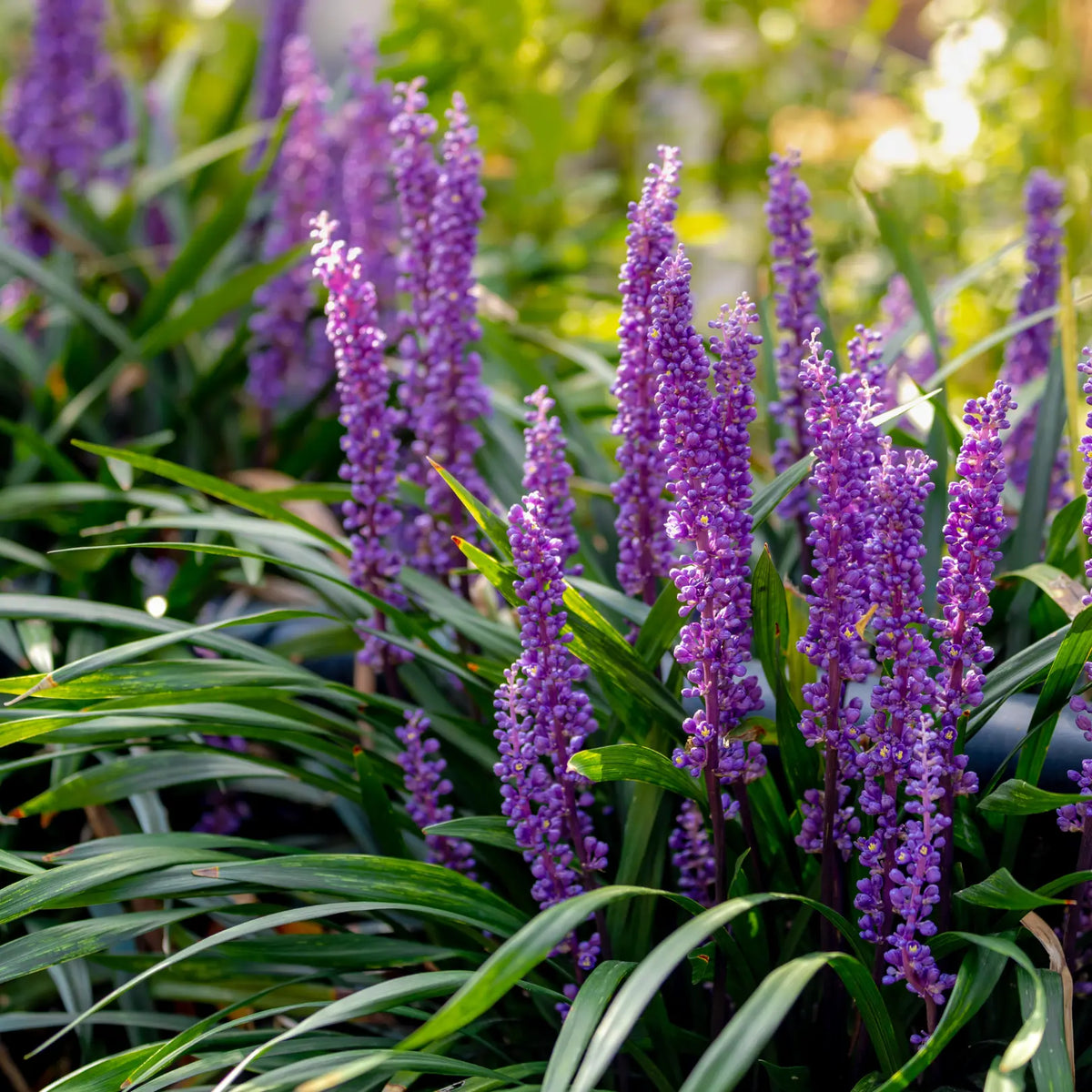
Also known as lilyturf or monkey grass, liriope features graceful, grass-like leaves that form attractive clumps or spreading mats, depending on the species. Many varieties produce beautiful purple or lavender flower spikes in late summer, followed by dark berries that add seasonal interest.
One of the best things about liriope is its adaptability. Once established, many varieties tolerate a range of sunlight conditions, require relatively little maintenance, and withstand periods of dry weather.
However, successful liriope care still depends on understanding the plant's sunlight, watering, drainage, and pruning needs. Different varieties also offer distinctive foliage colors and growth habits.
For example, dark-green varieties such as Super Blue Liriope from Simply Trees create a lush, uniform appearance, while Variegated Liriope features striped foliage that brings brightness and contrast to garden beds.
In this complete guide, we'll explain how to care for liriope, including planting, watering, fertilizing, pruning, winter maintenance, and common growing problems. We'll also cover variegated liriope care and how it compares with traditional green-leaved varieties.
Liriope Care at a Glance
| Care Requirement | Ideal Conditions |
|---|---|
| Botanical Genus | Liriope |
| Common Names | Lilyturf, Monkey Grass, Border Grass |
| Plant Type | Grass-like evergreen or semi-evergreen perennial |
| Common Species | Liriope muscari and Liriope spicata |
| Sunlight | Full sun to partial shade; some tolerate deeper shade |
| Soil | Well-draining soil; adaptable once established |
| Watering | Regular during establishment; moderate to low once established |
| Drought Tolerance | Good in many established varieties |
| Fertilizer | Usually minimal in reasonably fertile soil |
| Flowering Season | Typically late summer to early fall |
| Flowers | Usually purple, lavender, or white, depending on cultivar |
| Growth Habit | Clumping or spreading, depending on species |
| Pruning | Late winter or early spring, before new growth |
| Propagation | Division of mature clumps |
| Best Uses | Groundcover, edging, borders, mass planting, and shade gardens |
1. What Is Liriope?
Liriope is a genus of perennial plants valued for their narrow, arching leaves and ability to thrive in a variety of landscape conditions.
Although liriope resembles ornamental grass, it is not a true grass. It belongs to the asparagus family, Asparagaceae.
Many liriope varieties develop dense clumps of strap-like foliage, creating a tidy, fountain-shaped appearance. Others spread more aggressively through underground rhizomes.
During late summer or early fall, liriope may produce short spikes of purple, lavender, or white flowers that rise above or among the leaves.
These flowers are often followed by dark, berry-like fruits.
Is Liriope a Perennial?
Yes. Liriope is a perennial that can return year after year in suitable growing conditions.
Many varieties retain green foliage throughout mild winters, although colder temperatures may cause leaves to turn brown or become damaged.
Fresh foliage generally emerges during spring, making late winter a useful time to remove old leaves.
Is Liriope an Ornamental Grass?
Not botanically. Although frequently grouped with ornamental grasses in landscape design, liriope is a grass-like perennial rather than a member of the true grass family.
Its narrow leaves provide a similar visual effect, making it useful for edging, mass plantings, and adding texture beneath shrubs and trees.
What Is the Difference Between Liriope muscari and Liriope spicata?
Two common species are frequently used in landscapes:
- Liriope muscari: Generally develops defined clumps and gradually expands outward. Popular for borders, edging, and ornamental mass plantings.
- Liriope spicata: Spreads more readily through underground rhizomes and is often used for groundcover, particularly in challenging shaded locations.
This distinction matters because Liriope spicata can spread aggressively and may be difficult to contain in some landscapes.
For more controlled ornamental plantings, clumping Liriope muscari varieties are often preferred.
2. Liriope Varieties: Green vs. Variegated Liriope
Not all liriope plants look the same. Some are grown for their rich, dark-green foliage, while others feature decorative stripes that brighten shaded beds and garden borders.
Understanding these differences can help you select the right liriope for your landscape.
Super Blue Liriope: Rich Green Foliage and Purple Flowers

The Super Blue Liriope is an attractive evergreen or semi-evergreen groundcover valued for its rich green foliage and blue-violet flowers.
Its arching leaves create a lush, textured appearance, making it especially useful for garden borders, mass plantings, and landscape edging.
Best for:
- Garden borders and edging
- Mass plantings
- Groundcover beneath taller plants
- Creating contrast with flowering shrubs
- Low-maintenance landscape designs
Care consideration: Super Blue Liriope performs best in well-draining soil with appropriate moisture during establishment. Once established, it generally requires relatively little maintenance beyond occasional watering and late-winter foliage cleanup.
Variegated Liriope: Striped Foliage for Bright, Textured Landscapes

Variegated Liriope is known for its attractive leaves featuring green and creamy-yellow or cream-colored stripes.
This decorative foliage creates a brighter appearance than solid-green varieties, making Variegated Liriope particularly useful for adding contrast to garden borders and partially shaded landscapes.
Many variegated forms are cultivars of Liriope muscari, although the exact cultivar should be confirmed when selecting plants.
Depending on the variety, plants may produce lavender or purple flower spikes during late summer.
Best for:
- Brightening partially shaded garden beds
- Decorative landscape borders
- Contrasting with dark-green shrubs
- Walkway edging
- Mass plantings with mixed foliage colors
- Low-maintenance perennial gardens
Care consideration: Variegated Liriope generally shares the basic care requirements of green-leaved liriope, but sunlight exposure is especially important for maintaining attractive foliage without excessive heat stress.
Super Blue Liriope vs. Variegated Liriope
| Feature | Super Blue Liriope | Variegated Liriope |
|---|---|---|
| Foliage | Solid, dark green | Green with cream or yellow striping |
| Visual Effect | Lush, uniform greenery | Bright, contrasting foliage |
| Flowers | Blue-violet | Often lavender or purple |
| Sunlight | Sun to partial shade; adaptability varies by site | Sun to partial shade; protect from extreme afternoon heat when needed |
| Soil | Well-draining | Well-draining |
| Watering | Regular during establishment | Regular during establishment |
| Maintenance | Late-winter cleanup | Late-winter cleanup |
| Best Landscape Use | Uniform borders and groundcover | Decorative edging and foliage contrast |
Which should you choose? Super Blue Liriope offers a rich-green look with colorful flowers, while Variegated Liriope is ideal for gardeners who want brighter, striped foliage. Both can create attractive, low-maintenance plantings when placed in suitable growing conditions.
3. Variegated Liriope Care: What Is Different?
Although variegated liriope care is very similar to caring for traditional green-leaved liriope, a few considerations can help keep its striped foliage looking its best.
How Much Sun Does Variegated Liriope Need?
Variegated Liriope generally grows well in partial shade or locations with a combination of sun and shade.
Morning sun and some afternoon protection can be especially useful in hot climates.
In cooler regions, many variegated cultivars also tolerate substantial direct sunlight when adequately watered.
However, plants exposed to intense summer heat may develop browned or scorched leaf tips, particularly during drought.
In very deep shade, growth may become less vigorous, and flowering may decrease.
Best practice: Choose a location that provides enough light for healthy growth without exposing the plant to excessive heat and moisture stress.
How Do You Keep Variegated Liriope Looking Bright?
The striped foliage is the primary ornamental feature of Variegated Liriope.
To keep it attractive:
- Provide suitable sunlight for the cultivar.
- Prevent prolonged drought during establishment.
- Avoid poorly drained soil.
- Remove brown or damaged foliage when necessary.
- Reduce competition from overcrowded neighboring plants.
- Replace aging foliage through appropriate late-winter maintenance.
The specific variegation pattern is genetically determined by the cultivar. Light levels can influence plant vigor and leaf appearance, but fertilizer or pruning cannot reliably turn a solid-green cultivar into a variegated one.
Why Is My Variegated Liriope Turning Brown?
Brown foliage or leaf tips may develop because of:
- Excessive direct sunlight during extreme heat
- Drought stress
- Overwatering or poor drainage
- Winter injury
- Fungal leaf disease
- Normal aging of older foliage
Before treating the plant, check soil moisture, sunlight exposure, and the time of year.
If browning occurs after winter, removing damaged leaves before spring growth emerges is often sufficient.
Does Variegated Liriope Need Different Fertilizer?
Generally, no.
Variegated Liriope typically has similar fertilizer requirements to other clumping liriope varieties.
When grown in reasonably fertile soil, extensive feeding is often unnecessary.
If growth is unusually weak, consider soil testing before applying fertilizer.
Should You Cut Back Variegated Liriope?
Yes, when needed.
Like green-leaved liriope, Variegated Liriope can benefit from late-winter foliage cleanup.
Removing old or damaged leaves before new shoots emerge allows fresh variegated growth to become the focus of the planting.
Avoid cutting into newly emerging spring foliage, as damaged leaves may remain visibly clipped throughout the growing season.
4. How Much Sun Does Liriope Need?
One of the reasons liriope is so popular is its ability to grow in a range of lighting conditions.
However, sunlight tolerance depends on the species, cultivar, soil moisture, and regional climate.
Can Liriope Grow in Full Sun?
Yes. Many liriope varieties tolerate full sun, especially when growing in suitable soil with adequate moisture.
In hot climates, however, prolonged exposure to intense afternoon sunlight can stress some plants.
Monitor for browned leaf tips, thinning growth, or excessive drying during summer.
Can Liriope Grow in Partial Shade?
Yes. Partial shade is often an excellent environment for liriope.
Many varieties perform well under high tree canopies, beside shrubs, or along garden beds that receive filtered sunlight.
Partial shade can be especially helpful in warmer regions where intense afternoon sun increases moisture stress.
Will Liriope Grow in Full Shade?
Some liriope varieties tolerate fairly deep shade, particularly creeping liriope.
However, extremely low light can reduce growth density and flowering.
If you want abundant flowers and dense foliage, some filtered or direct sunlight is generally beneficial.
5. How Often Should You Water Liriope?
Proper watering is important for establishing healthy liriope, but mature plants are often relatively drought-tolerant.
As with other landscape perennials, watering needs depend on rainfall, soil type, temperature, and plant maturity.
Watering Newly Planted Liriope
Newly planted liriope requires regular moisture while its roots spread into the surrounding soil.
Water thoroughly immediately after planting.
During establishment:
- Check soil moisture regularly.
- Water when the root zone begins to dry.
- Keep soil adequately moist without prolonged saturation.
- Increase monitoring during hot or windy weather.
- Use mulch appropriately to reduce evaporation.
Rather than watering lightly every day, aim to moisten the root zone thoroughly when needed.
Watering Established Liriope
Once established, many liriope varieties tolerate moderate periods of dry weather.
In suitable growing conditions, natural rainfall may provide much of the moisture needed.
During prolonged drought, supplemental watering can help maintain healthy foliage and prevent excessive browning.
Variegated and green-leaved liriope generally have comparable moisture requirements when growing in similar conditions.
Can You Overwater Liriope?
Yes. Although liriope adapts to various soil conditions, prolonged waterlogging can damage roots and crowns.
Possible warning signs include:
- Yellowing or browning foliage
- Weak or thinning growth
- Soft or deteriorating crowns
- Wilting despite moist soil
- Declining clumps
If the soil remains wet for long periods, investigate drainage before increasing irrigation.
6. What Is the Best Soil for Liriope?
Liriope is adaptable to many garden soil types, but good drainage encourages healthy, long-lasting growth.
Does Liriope Need Well-Draining Soil?
Yes. Well-draining soil reduces the risk of root and crown problems.
Liriope generally grows well in ordinary garden soil that retains some moisture while allowing excess water to drain away.
A slightly acidic to near-neutral soil environment is suitable for many common varieties.
Can Liriope Grow in Clay Soil?
Yes. Many established liriope plants tolerate clay soils provided they do not remain saturated for prolonged periods.
In poorly drained locations, consider improving the overall planting area or using raised beds.
Avoid planting liriope in low spots where water consistently accumulates.
Does Liriope Need Rich Soil?
Liriope generally performs well in moderately fertile soil and does not require unusually rich conditions.
Organic matter can help improve soil structure where needed, but excessive fertilizer is usually unnecessary.
7. How to Plant Liriope
Proper planting is important whether you're using liriope along a walkway, beneath taller shrubs, or across a large groundcover bed.
When Is the Best Time to Plant Liriope?
Spring and early fall are often favorable planting seasons, depending on your climate.
Moderate temperatures allow roots to establish while reducing the stress associated with extreme summer heat.
In regions with severe winters, spring planting may provide more time for establishment before freezing temperatures arrive.
Step-by-Step Liriope Planting Instructions
- Choose a location: Select an area with suitable sun or partial shade.
- Check drainage: Avoid planting in consistently saturated soil.
- Prepare the planting area: Remove weeds and loosen compacted soil where appropriate.
- Dig a planting hole: Make the hole approximately twice as wide as the root ball.
- Remove the container: Gently inspect roots and loosen significant circling roots.
- Position the plant: Keep the crown at approximately the same level as the surrounding soil.
- Backfill: Replace soil around the root ball without burying the crown too deeply.
- Water thoroughly: Settle the soil around the roots.
- Apply mulch: Add a light layer around the planting area, keeping it away from the crown.
- Monitor establishment: Maintain appropriate moisture until healthy new growth develops.
How Far Apart Should You Plant Liriope?
Spacing depends on the cultivar's mature spread and the desired landscape effect.
For many clumping liriope varieties, spacing approximately 12–18 inches apart can create a relatively dense planting over time.
Wider spacing may be appropriate for larger cultivars, while closer spacing can create quicker visual coverage but requires more plants.
Always consider the expected mature width of your selected variety.
Can You Plant Liriope Under Trees?
Yes. Liriope is frequently used beneath trees because many varieties tolerate partial shade.
However, established tree roots can compete with liriope for water and nutrients.
New plantings beneath trees may need additional moisture monitoring until established.
Take care not to damage large tree roots when preparing the planting area.
8. How to Prune Liriope
One of the most useful maintenance practices for liriope is removing aging or winter-damaged foliage before new spring growth appears.
This helps keep plants looking clean and encourages fresh foliage to become the most visible part of the planting.
When Should You Cut Back Liriope?
Late winter or early spring is generally the best time to cut back liriope.
The goal is to remove old foliage before new shoots begin emerging from the crown.
In many regions, this falls around February or March, although the exact timing varies by climate.
How Short Should You Cut Liriope?
For established clumps with damaged foliage, old leaves can generally be cut back to a few inches above the crown.
A height of approximately 2–3 inches is commonly used, provided the cutting does not damage the crown or emerging growth.
Smaller plantings can be trimmed with clean, sharp garden shears.
Larger, uniform groundcover plantings are sometimes maintained with a mower set high enough to avoid damaging the crowns.
Step-by-Step Liriope Pruning
- Inspect the clump for new spring shoots.
- Remove dead, brown, or winter-damaged foliage.
- Cut back old foliage before fresh leaves emerge.
- Avoid cutting into the plant's crown.
- Remove clippings from the planting area.
- Allow fresh growth to develop naturally.
Can You Cut Liriope Back in Fall?
Although dead leaves can be removed as needed, major cutback is generally best reserved for late winter or early spring.
Healthy foliage can continue to provide ornamental value and may offer some protection during cooler weather.
In climates with very mild winters, extensive cutting may not be necessary every year.
Should You Trim Liriope Flower Stalks?
Removing spent flower stalks is optional.
Some gardeners leave them for their seasonal appearance, while others remove them to maintain a tidy planting.
Flower stalk removal is generally separate from the annual late-winter foliage cleanup.
9. Does Liriope Need Fertilizer?
Established liriope growing in suitable garden soil usually requires relatively little supplemental fertilizer.
However, feeding may help when plants grow in nutrient-poor conditions or show signs of deficiency.
What Is the Best Fertilizer for Liriope?
A balanced, slow-release fertilizer may be suitable when soil nutrients are inadequate.
Apply fertilizer according to the product instructions and avoid excessive rates.
Overfertilization can encourage unnecessarily soft growth and may contribute to nutrient imbalances.
When Should You Fertilize Liriope?
Early spring is generally an appropriate time to fertilize if necessary.
A soil test can help determine whether supplemental nutrients are actually needed.
Variegated Liriope does not ordinarily require a special fertilizer simply because its leaves are striped.
10. Liriope Groundcover and Landscape Uses
Liriope is popular because it provides dependable foliage texture in landscapes where gardeners want an attractive, relatively low-maintenance planting.
Using Liriope for Garden Borders
Clumping liriope is especially useful for creating defined borders along walkways, driveways, and flower beds.
Its arching leaves help soften hard edges while creating a consistent visual line.
Super Blue Liriope provides a rich-green effect, while Variegated Liriope offers brighter foliage contrast.
Using Liriope as Groundcover
Liriope can be planted in groups to cover larger landscape areas.
Clumping varieties gradually fill spaces between plants, while creeping liriope spreads more readily through underground rhizomes.
Choose the growth habit carefully because vigorous spreading varieties may be difficult to contain.
For additional planting inspiration, explore our guide to the best groundcover plants for your landscape.
Using Liriope in Shaded Landscapes
Many liriope varieties tolerate partial shade, making them useful beneath trees, beside buildings, and along shaded garden borders.
However, plants in deep shade may flower less frequently and grow less densely.
Combining Liriope With Other Plants
Liriope works well as a low-growing companion to flowering shrubs, ornamental trees, and taller perennials.
Green-leaved liriope can create a consistent backdrop, while variegated foliage adds contrast against dark evergreen plants.
11. How to Divide and Propagate Liriope
Division is a practical way to propagate clumping liriope and maintain healthy established plants.
Over time, mature clumps may become dense and benefit from being separated into smaller sections.
When Is the Best Time to Divide Liriope?
Spring is often a favorable time to divide liriope as active growth begins.
Early fall may also work in regions where temperatures remain moderate long enough for new roots to establish.
Avoid division during extreme heat or prolonged drought.
Step-by-Step Liriope Division
- Choose a healthy, established clump.
- Carefully dig around and lift the plant with its root system.
- Separate the clump into smaller sections using a clean garden tool.
- Make sure each division contains healthy roots and growing points.
- Replant divisions at the original crown depth.
- Water thoroughly and maintain appropriate moisture during establishment.
Does Variegated Liriope Stay Variegated After Division?
Yes. Dividing a healthy variegated cultivar generally preserves the foliage characteristics of the original plant because division produces vegetative copies.
However, seedlings may not necessarily reproduce the same variegated appearance.
If an established variegated plant develops a consistently solid-green shoot, removing that reversion may help preserve the desired appearance of the clump.
12. Liriope Winter Care
Liriope is often valued for its evergreen or semi-evergreen appearance in suitable climates.
However, cold winters can damage foliage even when the plant's roots and crown remain healthy.
Does Liriope Come Back Every Year?
Yes. In suitable USDA hardiness zones, liriope is a perennial that can return with fresh foliage year after year.
After a cold winter, older leaves may appear brown or ragged before new shoots emerge.
Does Liriope Stay Green in Winter?
In mild climates, many liriope varieties retain much of their green foliage during winter.
In colder regions, foliage may turn brown or deteriorate after freezing temperatures.
This seasonal damage does not always indicate that the entire plant has died.
Should You Cut Back Liriope Before Winter?
Routine cutting before winter is usually unnecessary.
Late winter or early spring is generally preferable because old foliage can be removed before fresh spring growth appears.
How to Protect Newly Planted Liriope in Winter
- Maintain adequate soil drainage.
- Apply an appropriate mulch layer without burying the crown.
- Monitor moisture during prolonged dry weather when soil is not frozen.
- Avoid unnecessary late-season fertilization.
- Protect container-grown plants from extreme root temperatures.
13. Common Liriope Problems and Solutions
Liriope is generally a durable landscape plant, but environmental stress and certain diseases can affect its appearance.
Problem #1: Liriope Turning Brown
Brown foliage can result from winter injury, drought stress, excessive heat, normal leaf aging, or fungal disease.
What to do: Check the season, soil moisture, and leaf condition. If browning follows winter, remove old foliage before new growth begins.
Problem #2: Liriope Turning Yellow
Yellowing leaves may indicate overwatering, root stress, nutrient imbalance, or environmental changes.
What to do: Inspect soil drainage and root-zone moisture before adding water or fertilizer.
Problem #3: Liriope Not Growing
Slow growth may result from poor establishment, deep shade, excessive competition from tree roots, or unsuitable soil conditions.
What to do: Evaluate sunlight, soil moisture, and root health.
Problem #4: Liriope Not Flowering
Some liriope plants produce fewer flowers when growing in heavy shade.
Flowering also varies by cultivar, plant maturity, and environmental conditions.
What to do: Check sunlight exposure and avoid excessive nitrogen fertilizer.
Problem #5: Liriope Crown Rot
Crown rot can cause individual clumps to decline or collapse, sometimes with yellowing or brown foliage.
Prolonged wet soil and poor drainage can increase the risk of root and crown problems.
What to do: Improve drainage, avoid unnecessary irrigation, and remove severely affected plants when appropriate.
Problem #6: Liriope Leaves Developing Brown Spots
Brown leaf spots may result from fungal diseases, including anthracnose, or from environmental injury.
What to do: Remove badly damaged foliage, improve airflow, and avoid repeated overhead irrigation when possible.
Problem #7: Liriope Spreading Too Much
Some creeping liriope species spread aggressively through underground rhizomes.
What to do: Identify the species and remove unwanted spreading growth. For controlled borders, consider clumping varieties rather than creeping forms.
Liriope Troubleshooting Guide
| Symptom | Possible Cause | What to Check |
|---|---|---|
| Brown foliage after winter | Cold damage or leaf aging | Spring regrowth |
| Brown leaf tips in summer | Heat or drought stress | Sun exposure and soil moisture |
| Yellowing leaves | Moisture stress or root problems | Drainage and root condition |
| Few flowers | Heavy shade or cultivar differences | Light conditions |
| Declining clumps | Possible crown or root rot | Soil saturation and crowns |
| Brown leaf spots | Possible fungal disease | Foliage and watering practices |
| Thin growth | Shade or competition | Sunlight and nearby roots |
| Unwanted spreading | Rhizomatous growth | Species and planting boundaries |
14. Liriope Care Through the Seasons
Spring Liriope Care
- Remove old foliage before new growth emerges.
- Divide overcrowded clumps when necessary.
- Plant new liriope in suitable locations.
- Water new plantings regularly during establishment.
- Apply fertilizer only if needed.
Summer Liriope Care
- Monitor soil moisture during prolonged drought.
- Watch for heat-related leaf browning.
- Maintain good drainage.
- Inspect foliage for diseases or pests.
- Enjoy the seasonal flower display where applicable.
Fall Liriope Care
- Maintain adequate moisture for new plantings.
- Remove dead or badly damaged foliage as needed.
- Avoid excessive fertilization.
- Monitor spreading growth and planting boundaries.
Winter Liriope Care
- Allow healthy foliage to remain where appropriate.
- Monitor drainage during wet weather.
- Protect vulnerable containers from extreme cold.
- Prepare for late-winter pruning.
15. Common Liriope Care Mistakes to Avoid
- Assuming all liriope spreads the same way: Clumping and creeping species have different growth habits.
- Planting in poorly drained soil: Prolonged saturation increases the risk of root and crown problems.
- Overwatering established plants: Mature liriope often needs less supplemental watering than newly planted specimens.
- Cutting back too late in spring: Trimming new shoots can leave foliage with damaged tips.
- Planting too deeply: Burying the crown may encourage moisture-related deterioration.
- Ignoring sunlight requirements: Heavy shade can reduce flowering, while intense heat may stress some cultivars.
- Overfertilizing: Many established plants grow well with minimal feeding.
- Overcrowding plantings: Insufficient spacing may reduce airflow and create maintenance problems.
- Assuming winter-brown foliage means the plant is dead: New growth may emerge in spring.
- Choosing a spreading species for a narrow border: Creeping liriope may require ongoing containment.
Frequently Asked Questions About Liriope Care
How do you care for liriope?
Plant liriope in well-draining soil with suitable sunlight. Water regularly during establishment, then provide supplemental moisture during extended dry periods. Remove old foliage in late winter or early spring before new growth appears.
Is liriope easy to care for?
Yes. Liriope is generally a low-maintenance perennial when grown in suitable conditions. Once established, many varieties require relatively little irrigation or fertilization.
How often should you water liriope?
Newly planted liriope needs regular moisture while establishing. Mature plants often tolerate moderate drought but benefit from supplemental watering during prolonged dry weather.
Does liriope need full sun?
Many liriope varieties grow in full sun to partial shade. Some also tolerate deeper shade, although growth and flowering may decrease with insufficient light.
What is the difference between green and variegated liriope?
Green liriope has solid-colored foliage, while variegated liriope features striped leaves with green and cream or yellow coloring. Their basic care requirements are often similar, but individual cultivars may differ in sunlight tolerance and mature size.
How do you care for variegated liriope?
Grow Variegated Liriope in well-draining soil with suitable sun or partial shade. Water regularly during establishment, remove damaged foliage in late winter, and protect plants from excessive heat or moisture stress.
Can variegated liriope grow in full sun?
Many variegated cultivars tolerate substantial sunlight, particularly in cooler climates. In regions with extreme summer heat, some afternoon shade may help reduce leaf scorching.
Why is my variegated liriope turning brown?
Brown foliage may result from heat stress, drought, winter injury, poor drainage, or fungal disease. Examine sunlight exposure and soil conditions before making changes.
Does variegated liriope spread?
Many variegated forms of Liriope muscari grow in clumps that gradually expand. Their spreading behavior depends on the exact cultivar and species.
When should you cut back liriope?
Late winter or early spring is generally the best time to cut back liriope, ideally before new foliage begins to emerge.
How short should you cut liriope?
Old foliage can often be cut back to approximately 2–3 inches above the crown, provided new shoots and the crown are not damaged.
Does liriope come back every year?
Yes. Liriope is a perennial that can return each year in suitable growing zones. Winter-damaged leaves can be replaced by fresh spring growth.
Does liriope stay green all winter?
Many varieties remain evergreen or semi-evergreen in mild climates. In colder regions, foliage may turn brown during winter before new leaves emerge.
Does liriope spread quickly?
Growth depends on species. Liriope muscari generally develops expanding clumps, while Liriope spicata spreads more readily through underground rhizomes.
How far apart should you plant liriope?
Many clumping liriope varieties can be spaced approximately 12–18 inches apart, but spacing should be adjusted to the expected mature width of the cultivar.
Can liriope grow under trees?
Yes. Many varieties tolerate partial shade and can be planted beneath trees. Monitor moisture during establishment because mature tree roots may compete for water.
Why is my liriope turning yellow?
Yellow leaves may result from excessive moisture, drought, nutrient issues, or root stress. Inspect soil drainage and growing conditions before applying fertilizer or increasing irrigation.
Does liriope need fertilizer?
Established liriope generally needs little supplemental fertilizer when growing in reasonably fertile soil. If nutrient deficiencies are suspected, a soil test can help determine whether feeding is necessary.
Is liriope a good groundcover?
Yes. Liriope is often used as a groundcover because of its dense foliage and relatively low maintenance requirements. Choose a clumping or creeping species based on how much spreading you want.
Is liriope deer-resistant?
Liriope is often described as relatively deer-resistant, but deer may still browse it, especially when other food sources are limited.
Can liriope grow in pots?
Yes. Liriope can grow in containers with adequate drainage and appropriate potting mix. Container plants may require more frequent watering and additional winter root protection.
Final Thoughts: Growing Healthy Green and Variegated Liriope
Liriope is a versatile landscape plant that adds texture, greenery, and seasonal flowers to borders, pathways, shaded gardens, and groundcover plantings.
Although liriope is generally low-maintenance, successful care begins with choosing the right location, providing adequate drainage, and maintaining appropriate moisture while plants establish.
Green-leaved varieties such as Super Blue Liriope create a lush, uniform appearance, while Variegated Liriope offers decorative stripes that brighten the landscape.
Both can thrive with similar basic care, although cultivar differences and regional growing conditions should always be considered.
With proper planting, occasional watering, and timely late-winter pruning, liriope can provide attractive foliage and dependable landscape structure for years to come.
Beautiful gardens start with healthy plants and the knowledge to help them thrive.