Introduction
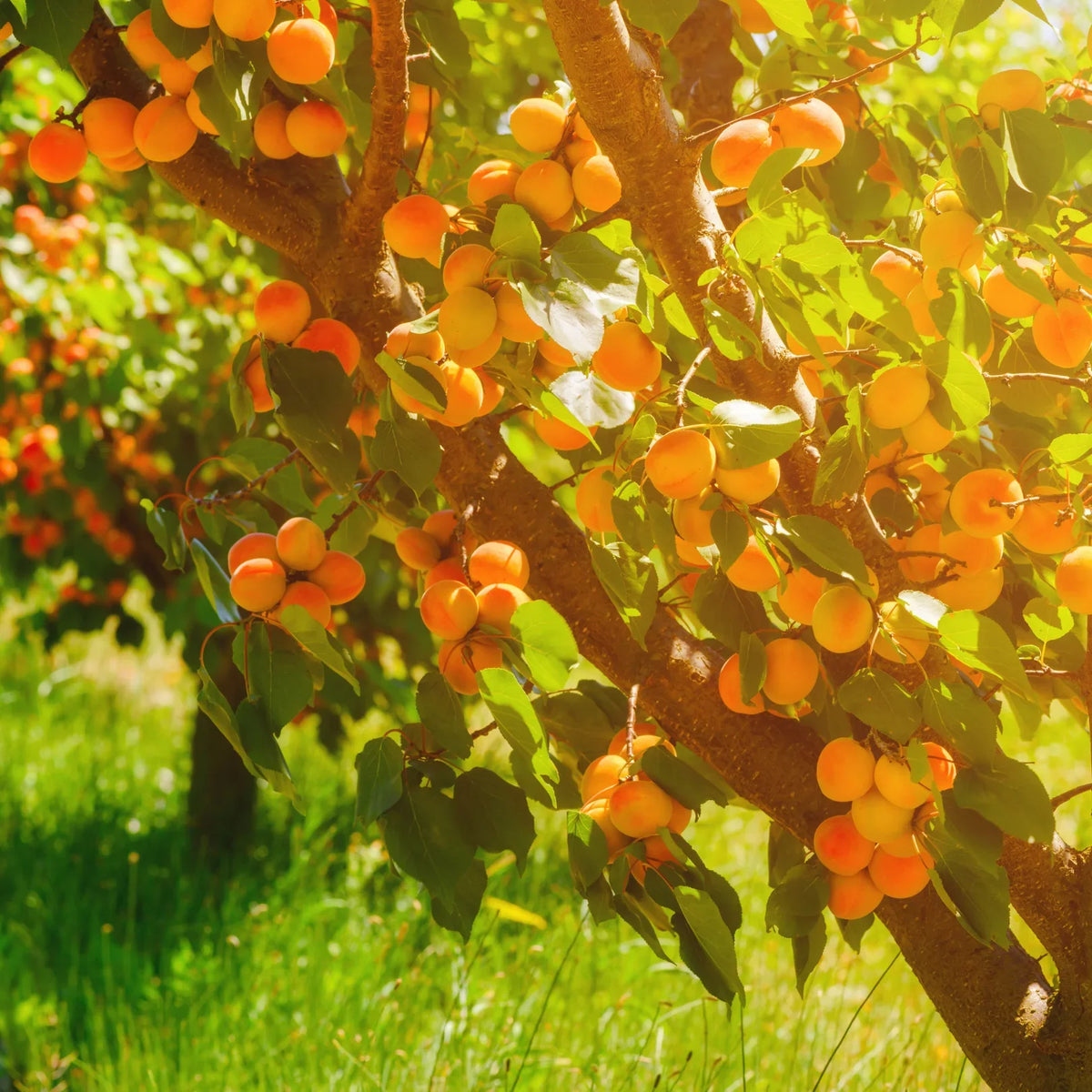
Growing an apricot tree is a rewarding way to bring fresh fruit, beautiful spring blossoms, and seasonal interest to your backyard. With their delicate pinkish-white flowers and sweet, golden-orange fruit, apricot trees offer both ornamental beauty and delicious harvests.
However, successful apricot tree care involves more than simply planting a tree and waiting for fruit. Apricots need abundant sunlight, well-draining soil, consistent watering, proper pruning, and protection from late spring frost that can damage their early flowers.
For gardeners looking to start a home orchard, the Moorpark Apricot Tree from Simply Trees is a self-fruitful variety known for producing sweet, flavorful apricots suitable for fresh eating, baking, and preserving.
In this complete guide, we'll cover how to plant and care for an apricot tree, what to expect from a full grown apricot tree, how and when to prune, and when apricot trees typically begin bearing fruit. We'll also explain common growing problems and how to encourage healthier harvests.
Apricot Tree Care at a Glance
Before exploring the details, here's a quick overview of the ideal growing conditions for apricot trees.
| Care Requirement | Ideal Conditions |
|---|---|
| Botanical Name | Prunus armeniaca |
| Plant Type | Deciduous fruit tree |
| Sunlight | Full sun, ideally 6–8 or more hours daily |
| Soil | Fertile, well-draining soil |
| Watering | Regular deep watering, especially during establishment and fruit development |
| Fertilizer | Apply when needed, generally in early spring |
| Mature Height | Commonly 15–25 feet for standard trees; varies by rootstock and pruning |
| Mature Spread | Approximately 15–25 feet for many standard trees |
| Time to Fruit | Often 2–5 years after planting a nursery-grown tree |
| Blooming Season | Late winter to early spring, depending on climate |
| Harvest Season | Generally late spring through summer, depending on region and variety |
| Pruning | During suitable dry weather, often after harvest |
| Pollination | Many varieties are self-fruitful; some require cross-pollination |
1. How to Care for an Apricot Tree
Apricot trees are members of the rose family, Rosaceae, and are closely related to peaches, plums, cherries, and almonds.
Like other stone fruit trees, apricots produce fruit containing a hard central pit surrounded by edible flesh.
Apricots are particularly attractive to home gardeners because they combine beautiful early spring blossoms with the potential for a flavorful summer harvest.
However, apricot trees have one important characteristic that makes their care slightly different from many other fruit trees: they tend to bloom very early in the growing season.
This early flowering makes them vulnerable to late winter and spring frosts, which can damage flowers before fruit has a chance to develop.
Successful apricot tree care depends on five essential practices:
- Planting in a sunny location with good air circulation
- Choosing well-draining soil and avoiding frost pockets
- Providing consistent moisture during establishment and fruit development
- Pruning to maintain a healthy, open canopy
- Protecting developing flowers and fruit from environmental stress where possible
Where Is the Best Place to Plant an Apricot Tree?
Choose a location that receives full sunlight throughout most of the day.
Apricot trees perform best in open landscapes with good air circulation and enough space for their mature canopy.
Avoid low-lying areas where cold air naturally collects. These locations, often called frost pockets, can expose apricot blossoms to damaging temperatures during spring.
For the best results, choose a location with:
- At least 6–8 hours of direct sunlight
- Well-draining soil
- Good air circulation
- Minimal risk of standing water
- Enough space for mature branches and roots
Because apricots flower earlier than many other fruit trees, choosing the right location can make a meaningful difference in how reliably they produce fruit.
2. How to Plant an Apricot Tree
Proper planting helps apricot trees establish healthy roots and adapt to their new environment.
When Is the Best Time to Plant Apricot Trees?
Late winter or early spring is often an ideal planting period, particularly for dormant bare-root apricot trees.
Container-grown trees may also be planted during other suitable periods, provided the ground is workable and adequate irrigation is available.
In colder regions, spring planting is often preferable because it gives the tree time to establish before the following winter.
For advice on receiving and establishing nursery-grown fruit trees, explore our guide to welcoming your fruit trees home.
Step-by-Step Apricot Tree Planting Instructions
- Choose a sunny location: Select an area with good drainage and adequate room for the mature canopy.
- Dig the planting hole: Make the hole approximately twice as wide as the root ball and no deeper than necessary for correct planting depth.
- Inspect the roots: Remove the nursery container and gently correct significant circling roots when appropriate.
- Position the tree: Keep the root flare near the surrounding soil surface. For grafted trees, ensure the graft union remains above the soil line.
- Backfill carefully: Use the excavated soil, avoiding excessive amendments confined to the planting hole.
- Water thoroughly: Slowly moisten the root ball and surrounding soil.
- Apply mulch: Spread approximately 2–3 inches of organic mulch around the root zone, keeping it several inches away from the trunk.
- Monitor establishment: Check soil moisture regularly during the first growing season.
Avoid planting too deeply. Burying the trunk flare can contribute to root and crown problems over time.
3. Apricot Tree Sunlight and Soil Requirements
How Much Sun Does an Apricot Tree Need?
Apricot trees grow best in full sun.
Aim for at least six to eight hours of direct sunlight daily, with additional sunlight generally beneficial when growing conditions are suitable.
Adequate sunlight supports:
- Healthy leaf development
- Flower bud formation
- Fruit production
- Improved fruit ripening
- Stronger overall growth
Trees growing in excessive shade may develop weak branches, produce fewer flowers, and struggle to ripen fruit consistently.
What Is the Best Soil for Apricot Trees?
Apricot trees prefer fertile, well-draining soil with good aeration.
Loamy soil is particularly suitable because it provides a balance between moisture retention and drainage.
Apricots can struggle in heavy clay soil that remains saturated after rainfall.
Prolonged waterlogging can damage roots and increase the risk of root and crown diseases.
If your garden has poorly drained soil, improve drainage before planting or select a more suitable location.
What Soil pH Do Apricot Trees Prefer?
Apricot trees generally perform well in slightly acidic to near-neutral soil, often around pH 6.0–7.0.
A soil test can help identify pH problems and nutrient deficiencies before planting.
Avoid applying lime, sulfur, or fertilizer solely based on assumptions about your soil.
4. How Often Should You Water an Apricot Tree?
Consistent watering is especially important for newly planted apricot trees and during fruit development.
Although established apricots can tolerate some dry conditions, prolonged drought may reduce fruit size, cause premature fruit drop, and stress the tree.
Watering Newly Planted Apricot Trees
Young trees need regular moisture while their root systems establish.
After planting, thoroughly water the root ball and surrounding soil.
During the first growing season:
- Check soil moisture regularly.
- Water deeply when the root zone begins to dry.
- Keep the soil adequately moist without allowing prolonged saturation.
- Increase moisture monitoring during hot or windy weather.
- Use mulch to help reduce evaporation and moderate soil temperature.
The exact watering schedule depends on rainfall, soil type, temperature, and tree size.
Rather than following a fixed schedule, check soil moisture several inches below the surface before watering.
Watering Established Apricot Trees
Established trees generally benefit from deep watering rather than frequent shallow irrigation.
Water should reach the root zone instead of repeatedly wetting only the soil surface.
During flowering and fruit development, consistent moisture supports healthy fruit growth and helps prevent unnecessary stress.
Avoid large fluctuations between prolonged drought and excessive watering.
Can You Overwater an Apricot Tree?
Yes. Apricot trees are sensitive to poorly drained soil and prolonged saturation.
Possible signs of excessive moisture include:
- Yellowing leaves
- Weak or stunted growth
- Wilting despite wet soil
- Premature leaf drop
- Declining root health
If the root zone remains wet, allow additional drying time and investigate drainage problems before adding more water.
5. How Big Does a Full Grown Apricot Tree Get?
Before planting, it's important to understand the space required by a full grown apricot tree.
Mature size depends on the variety, rootstock, climate, soil conditions, and pruning practices.
Some apricot trees develop broad, spreading canopies, while others can be maintained at a more manageable height through appropriate training and pruning.
How Tall Do Apricot Trees Grow?
Standard apricot trees commonly reach approximately 15–25 feet tall, although some may grow larger under favorable conditions.
Trees grown on size-controlling rootstocks or maintained through regular pruning may remain significantly shorter.
Because apricot trees develop spreading branches, mature canopy width is just as important as height.
How Wide Do Apricot Trees Grow?
Many standard apricot trees develop a canopy approximately 15–25 feet wide.
The exact spread depends on the growing system and how the tree is trained.
Open-center pruning encourages a broad, vase-shaped canopy that allows sunlight and air to reach the interior branches.
How Big Does a Moorpark Apricot Tree Get?
Moorpark Apricot is a traditional fruiting variety known for sweet, flavorful apricots and attractive spring blossoms.
When grown as a standard tree, Moorpark can reach approximately 15–20 feet tall and wide, depending on its rootstock and growing conditions.
Regular pruning can help maintain a more manageable canopy for backyard harvesting.
Can You Keep an Apricot Tree Small?
Yes. Apricot trees can be maintained at a more manageable size through appropriate rootstock selection, structural training, and regular pruning.
However, pruning alone cannot permanently transform every vigorous standard tree into a naturally compact specimen without ongoing maintenance.
If your yard has limited space, choose a cultivar and rootstock suited to smaller landscapes.
For additional ideas, explore our guide to small fruit trees for yards, patios, and containers.
Apricot Tree Size Comparison
| Tree Type | Approximate Mature Height | Best For |
|---|---|---|
| Standard Apricot Tree | 15–25 feet or more | Larger gardens and home orchards |
| Size-Controlled Apricot Tree | Often approximately 8–15 feet, depending on rootstock and training | Smaller gardens and easier harvesting |
| Container-Grown Apricot | Varies with cultivar, rootstock, and maintenance | Patios and limited spaces when appropriate |
Care tip: Mature tree size should always be confirmed for the specific tree you're purchasing. Rootstock and pruning practices can significantly influence the final dimensions.
6. When Does an Apricot Tree Bear Fruit?
One of the most exciting parts of growing an apricot tree is anticipating its first harvest.
So, when does an apricot tree bear fruit?
Many nursery-grown apricot trees begin producing fruit approximately 2–5 years after planting, although timing varies with tree age, rootstock, climate, and growing conditions.
Some trees may produce a small crop earlier, while others take longer to establish regular production.
What Time of Year Do Apricot Trees Produce Fruit?
Apricot trees generally flower in late winter or early spring and produce fruit later in the growing season.
Harvest typically occurs from late spring through summer, depending on the variety and region.
In warmer growing regions, some varieties may ripen earlier, while cooler regions may experience later harvests.
How Long Does It Take an Apricot Tree to Produce Fruit?
| Tree Stage | What to Expect |
|---|---|
| Newly Planted Tree | Focus on root establishment and healthy growth |
| Years 2–3 | Some nursery-grown trees may begin flowering and producing small crops |
| Years 3–5 | Many grafted trees begin producing increasingly reliable harvests |
| Mature Tree | Potential for larger crops when flowers survive and growing conditions are favorable |
These timelines are estimates rather than guarantees.
A healthy apricot tree may fail to fruit in a particular year because of damaging weather, pollination problems, or other environmental factors.
Why Is My Apricot Tree Not Producing Fruit?
Apricot trees can occasionally produce healthy leaves and branches without developing a meaningful fruit crop.
Common causes include:
- Late spring frost: Freezing temperatures can damage flowers or developing fruit.
- Tree immaturity: Young trees may not yet be ready to produce.
- Insufficient sunlight: Shaded trees may develop fewer flower buds.
- Pollination problems: Some varieties require another compatible tree, while cold or rainy weather can limit pollinator activity.
- Excessive nitrogen: Too much fertilizer may encourage leafy growth instead of fruiting.
- Improper pruning: Removing too much fruiting wood can reduce the following crop.
Because apricots bloom early, frost damage is one of the most important causes of inconsistent harvests in colder climates.
Do Apricot Trees Need Two Trees to Produce Fruit?
Many apricot varieties are self-fruitful, meaning a single tree can produce fruit without another apricot variety nearby.
Moorpark Apricot is one example of a self-fruitful variety.
However, some apricot cultivars require cross-pollination, and planting another compatible variety may improve production in certain circumstances.
Always check the pollination requirements of your specific cultivar.
Why Do Apricot Trees Bloom but Not Fruit?
Sometimes an apricot tree produces abundant flowers but very little fruit.
This often happens when temperatures drop below freezing during flowering.
Apricot blossoms are particularly vulnerable because they open relatively early in spring.
Even if the tree survives without visible damage to its branches or leaves, the flower structures responsible for fruit development may be injured.
To improve the chances of fruit production, avoid planting in frost pockets and choose varieties suited to your regional climate.
7. How to Prune an Apricot Tree
Knowing how to prune an apricot tree is essential for maintaining a strong canopy, allowing sunlight to reach developing fruit, and reducing overcrowded growth.
Proper pruning also helps maintain a manageable tree size and encourages productive fruiting wood.
When Is the Best Time to Prune Apricot Trees?
Apricot pruning requires more attention to weather conditions than pruning many other landscape trees.
In regions with wet winters, pruning during dry spring or summer weather is often preferred because fresh pruning wounds can be vulnerable to diseases such as bacterial canker, silver leaf, and Eutypa dieback.
For established trees, pruning after harvest during a reliably dry period is often a good approach.
Young trees may also need limited structural pruning during suitable dry spring weather.
Some regional growing guides recommend dormant-season pruning in colder climates, so timing should account for local disease pressure and weather patterns.
Important: Avoid major pruning immediately before extended periods of rain. Local extension guidance should take priority when selecting the best pruning window.
How to Prune a Young Apricot Tree
Young apricot trees benefit from structural pruning during their first several years.
Many home gardeners train apricots using an open-center or vase-shaped system.
This encourages several strong main branches surrounding an open center, allowing sunlight and air to penetrate the canopy.
To establish an open-center structure:
- Inspect the young tree and identify healthy branches with wide attachment angles.
- Select approximately three to four well-spaced main scaffold branches when suitable growth is available.
- Remove or reduce competing branches that crowd the center.
- Eliminate damaged, crossing, or inward-growing shoots.
- Maintain balanced spacing between developing scaffold branches.
- Avoid excessive pruning that removes too much healthy growth.
Because the appropriate cuts depend on the tree's age and nursery training, avoid automatically heading back a newly purchased tree without first assessing its existing structure.
How to Prune a Mature Apricot Tree
Mature apricot trees benefit from regular, selective pruning to maintain healthy and productive fruiting wood.
Follow these steps:
- Remove dead or diseased branches: Identify wood that is clearly damaged or no longer healthy.
- Thin overcrowded growth: Remove selected branches that restrict airflow or block sunlight.
- Remove crossing branches: Prevent branches from rubbing against one another.
- Maintain an open canopy: Encourage sunlight to reach the interior fruiting branches.
- Manage vigorous shoots: Selectively reduce upright shoots that contribute little to the tree's productive structure.
- Preserve fruiting wood: Avoid removing excessive healthy branches and fruiting spurs.
Apricots often produce fruit on short-lived spurs and other suitable shoots, so overly aggressive pruning can reduce the next harvest.
Should You Cut the Top Off an Apricot Tree?
Indiscriminately topping an apricot tree is not recommended.
Severe topping can stimulate vigorous, poorly structured regrowth and may reduce fruit production.
If the tree has become too tall, selective reduction cuts to appropriate lateral branches are preferable to removing the entire upper canopy.
For large or overgrown trees, consult a qualified arborist experienced in fruit-tree pruning.
What Tools Do You Need to Prune Apricot Trees?
- Sharp bypass pruning shears for smaller branches
- Loppers for moderately sized limbs
- A pruning saw for larger cuts
- Protective gloves and eye protection
- Appropriate disinfectant when working with diseased material
Use clean, sharp tools and make cuts without damaging the branch collar.
For broader information about seasonal pruning practices, read our tree and shrub pruning guide. Keep in mind that apricots may require a different pruning schedule from many ornamental trees because of their susceptibility to canker diseases.
8. Apricot Tree Fertilizer: What to Use and When
Apricot trees need adequate nutrients to support healthy growth, flowering, and fruit production.
However, excessive fertilization can be counterproductive, particularly when it encourages vigorous vegetative growth at the expense of fruiting.
What Is the Best Fertilizer for Apricot Trees?
A fertilizer formulated for fruit trees may be suitable when soil nutrients are insufficient.
Important nutrients include:
- Nitrogen: Supports leaf and shoot growth.
- Phosphorus: Supports root function and essential plant processes.
- Potassium: Supports fruit development and overall tree health.
- Micronutrients: Help maintain normal growth and physiological function.
However, there is no single fertilizer formula that is ideal for every apricot tree.
A soil test can help identify nutrient deficiencies and guide fertilizer selection.
When Should You Fertilize Apricot Trees?
Early spring is generally a suitable time to fertilize when additional nutrients are needed.
Avoid excessive nitrogen applications later in the growing season, especially in regions with cold winters.
Late fertilization may encourage tender growth that does not mature adequately before freezing weather.
For a more detailed explanation of nutrient requirements and application timing, explore our guide to fertilizing fruit trees.
9. How to Encourage More Apricots on Your Tree
Once your apricot tree reaches fruiting age, several care practices can help support healthy and consistent production.
Provide Enough Sunlight
Apricot trees require abundant sunlight to develop productive flower buds and ripen fruit.
Make sure surrounding trees and structures do not excessively shade the canopy.
Protect Against Late Frost
Apricots bloom early, making them vulnerable to unexpected temperature drops.
When practical, protect small trees during forecast frost events using appropriate frost covers that do not damage the branches.
However, large established trees can be difficult to protect, and severe freezes may still damage flowers.
Maintain Consistent Moisture
Water stress during fruit development can reduce fruit size and quality.
Maintain adequate soil moisture without allowing prolonged saturation.
Thin Excess Fruit
Apricot trees sometimes set more fruit than their branches can support.
When young apricots reach approximately one inch in diameter, thinning excess fruit can help improve fruit size and reduce branch stress.
A practical target is to leave approximately 4–6 inches between developing fruits, adjusting for branch strength and overall crop load.
Avoid Excessive Pruning
Removing too much productive wood can significantly reduce fruit production.
Focus on maintaining an open canopy while preserving enough healthy fruiting shoots and spurs.
10. Common Apricot Tree Problems and Solutions
Apricot trees can experience several problems related to weather, disease, pests, and growing conditions.
Identifying the underlying cause is important because similar symptoms may result from different issues.
Problem #1: Apricot Tree Not Bearing Fruit
Common causes include late frost, tree immaturity, inadequate sunlight, pollination problems, and excessive pruning.
What to do: Review the tree's age, flowering history, sunlight exposure, and recent spring temperatures.
Problem #2: Apricot Leaves Turning Yellow
Yellowing leaves may result from overwatering, poor drainage, nutrient deficiencies, disease, or natural seasonal changes.
What to do: Check soil moisture and drainage before adding fertilizer.
Problem #3: Brown Rot on Apricots
Brown rot is a fungal disease affecting stone fruit trees.
Symptoms may include brown, decaying fruit, blossom blight, and shriveled fruit remaining attached to branches.
What to do: Remove diseased or mummified fruit, improve airflow through proper pruning, and follow locally recommended disease-management practices.
Problem #4: Bacterial Canker
Bacterial canker can cause damaged bark, sunken lesions, branch dieback, and gum-like exudates.
Apricot trees may be particularly vulnerable when stressed or exposed to wet conditions around pruning wounds.
What to do: Maintain good tree health, avoid unnecessary pruning during wet weather, and seek a professional diagnosis if cankers develop.
Problem #5: Aphids and Other Insect Pests
Apricot trees may attract aphids, mites, borers, and other pests that feed on leaves, shoots, or fruit.
What to do: Inspect foliage regularly and identify pests before selecting any treatment.
Apricot Tree Troubleshooting Guide
| Symptom | Possible Cause | What to Check |
|---|---|---|
| Flowers but no fruit | Late frost or pollination problems | Spring temperatures and flower condition |
| Healthy leaves but no flowers | Immaturity, insufficient sun, or pruning issues | Tree age, sunlight, pruning history |
| Yellow leaves | Water stress or nutrient problems | Soil drainage and fertility |
| Rotting fruit | Possible brown rot | Fruit and branch condition |
| Sunken bark lesions | Possible canker disease | Trunk and branch health |
| Small or dropping fruit | Water stress, overcrowding, or environmental damage | Moisture and fruit load |
| Weak new growth | Root problems, nutrients, or environmental stress | Soil and tree vigor |
11. Apricot Tree Care Through the Seasons
Adjusting your care routine throughout the year helps support healthy growth and fruit production.
Spring Apricot Tree Care
- Monitor flowers during late frost forecasts.
- Check soil moisture as new growth begins.
- Apply fertilizer if needed.
- Inspect new foliage for pests or disease.
- Thin excess fruit when appropriate.
Summer Apricot Tree Care
- Water deeply during prolonged dry periods.
- Monitor fruit development and ripening.
- Harvest fruit as it reaches maturity.
- Consider pruning during suitable dry weather after harvest.
- Remove damaged or diseased fruit promptly.
Fall Apricot Tree Care
- Allow leaves to change color and drop naturally.
- Avoid unnecessary late-season fertilization.
- Maintain moisture during prolonged dry weather.
- Remove fallen, diseased fruit and debris.
- Inspect the tree for structural problems before winter.
Winter Apricot Tree Care
- Allow the tree to remain dormant.
- Protect young trunks from animal damage where necessary.
- Avoid unnecessary watering when soil is frozen.
- Monitor for storm damage.
- Plan pruning according to local climate and disease risk.
12. Common Apricot Tree Care Mistakes to Avoid
Many common apricot problems can be prevented through thoughtful planting and consistent maintenance.
- Planting in frost pockets: Early flowers may be damaged by late spring freezes.
- Providing too little sunlight: Shaded trees may produce fewer flowers and fruit.
- Overwatering: Poor drainage can damage roots and encourage disease.
- Allowing severe drought: Water stress during fruit development can reduce fruit size and quality.
- Overfertilizing: Excessive nitrogen may encourage leafy growth rather than fruiting.
- Pruning during wet conditions: Fresh wounds may become more vulnerable to certain diseases.
- Removing too much fruiting wood: Heavy pruning can reduce future harvests.
- Ignoring mature size: Standard apricot trees require significant space.
- Expecting immediate fruit: Young nursery trees often need several seasons to establish and begin producing.
Frequently Asked Questions About Apricot Tree Care
Are apricot trees easy to care for?
Apricot trees can be relatively easy to maintain when grown in suitable conditions, but their early flowering makes fruit production vulnerable to late spring frost. Proper sunlight, drainage, watering, and pruning are essential.
How much sun does an apricot tree need?
Apricot trees grow best in full sun, ideally receiving at least 6–8 hours of direct sunlight daily.
How often should I water an apricot tree?
Water newly planted apricot trees regularly during establishment. Established trees benefit from deep watering during dry periods, particularly while fruit is developing. Adjust frequency according to rainfall, soil moisture, and temperature.
How big does a full grown apricot tree get?
A full grown standard apricot tree commonly reaches approximately 15–25 feet tall with a similar spread. Mature size varies depending on rootstock, variety, and pruning practices.
How big does a Moorpark Apricot Tree get?
Moorpark Apricot trees may reach approximately 15–20 feet tall and wide when grown as standard trees. Actual size depends on rootstock and growing conditions.
Can you keep an apricot tree small?
Yes. Size-controlling rootstocks and appropriate pruning can help maintain a more manageable tree. However, vigorous standard trees require ongoing maintenance to remain compact.
When does an apricot tree bear fruit?
Many nursery-grown apricot trees begin bearing fruit approximately 2–5 years after planting. The exact timeline depends on the tree's age, variety, growing conditions, and rootstock.
What month do apricot trees produce fruit?
Apricot harvest season generally falls between late spring and summer, often May through July in many U.S. growing regions. Exact timing varies by climate and variety.
Do apricot trees produce fruit every year?
Healthy, mature trees have the potential to produce fruit annually, but harvests may be inconsistent when late frost damages flowers or environmental conditions interfere with pollination and fruit development.
Do apricot trees need another tree to produce fruit?
Many apricot varieties, including Moorpark, are self-fruitful. However, some cultivars require cross-pollination, so check the requirements of your specific variety.
How do you prune an apricot tree?
Prune apricot trees selectively to remove damaged, crossing, or overcrowded branches while maintaining an open canopy. Preserve productive fruiting wood and avoid excessive pruning.
When should apricot trees be pruned?
In regions with wet winters, apricot trees are often best pruned during dry spring or summer weather, frequently after harvest. Exact timing should follow local guidance because disease risks vary by climate.
Why is my apricot tree flowering but not producing fruit?
Late spring frost is a common cause. Other possibilities include pollination problems, tree immaturity, insufficient sunlight, and excessive pruning.
What is the best fertilizer for apricot trees?
A suitable fruit-tree fertilizer may be helpful when soil nutrients are deficient. Soil testing is recommended before applying significant amounts of fertilizer.
How long do apricot trees live?
Apricot trees may live approximately 20–30 years or longer under favorable conditions, although their productive lifespan and overall longevity vary depending on climate, disease pressure, rootstock, and care.
Final Thoughts: Growing a Healthy Apricot Tree
Apricot trees are a beautiful and rewarding addition to home orchards, offering delicate spring blossoms followed by sweet, flavorful fruit.
Successful apricot tree care begins with choosing a sunny location, providing well-draining soil, and maintaining consistent moisture during establishment and fruit development.
Understanding the mature size of your tree, pruning it correctly, and protecting early flowers from damaging spring temperatures can make a significant difference in its long-term health and fruit production.
Although a newly planted apricot tree may take several years to begin producing fruit, proper care can help establish the foundation for healthy growth and future harvests.
With patience and the right growing conditions, your apricot tree can provide years of ornamental beauty and delicious homegrown fruit.
Beautiful gardens start with healthy trees and the knowledge to help them thrive.