Introduction
Looking for an indoor plant that looks beautiful without demanding constant attention? The ZZ Plant is one of the easiest houseplants to grow, thanks to its glossy green leaves, upright growth, and remarkable ability to tolerate periods of drought.
Also known by its botanical name, Zamioculcas zamiifolia, the ZZ Plant is especially popular in homes and offices because it can adapt to lower light levels and doesn't need frequent watering.
However, being low maintenance doesn't mean a ZZ Plant is impossible to overwater or damage. Yellow leaves, soggy soil, and root rot are among the most common problems owners experience, often because the plant receives more water than it can use.
This comprehensive ZZ plant care guide explains how to care for a ZZ Plant indoors, how often to water a ZZ Plant, the best soil for ZZ Plants, ZZ plant light requirements, and why ZZ plant leaves turn yellow. We'll also cover fertilizer, repotting, propagation, and troubleshooting to help keep your plant healthy.
ZZ Plant Care at a Glance
| Care Requirement | ZZ Plant Preference |
|---|---|
| Botanical Name | Zamioculcas zamiifolia |
| Common Names | ZZ Plant, Zanzibar Gem, Eternity Plant |
| Plant Type | Tropical evergreen perennial |
| Light | Low to bright indirect light; moderate to bright indirect light preferred |
| Watering | Allow the soil to dry out between waterings |
| Soil | Loose, well-draining indoor potting mix |
| Temperature | Approximately 65–85°F |
| Humidity | Average indoor humidity is usually sufficient |
| Fertilizer | Light feeding during active growth |
| Growth Rate | Slow to moderate, depending on light and conditions |
| Pruning | Remove yellow, damaged, or dead stems |
| Propagation | Division, stem cuttings, or leaf cuttings |
| Common Problems | Yellow leaves, overwatering, root rot, brown tips, and slow growth |
What Is a ZZ Plant?
The ZZ Plant (Zamioculcas zamiifolia) is a tropical perennial native to eastern and southeastern Africa. It belongs to the Araceae family, which also includes popular houseplants such as Peace Lilies and Philodendrons.
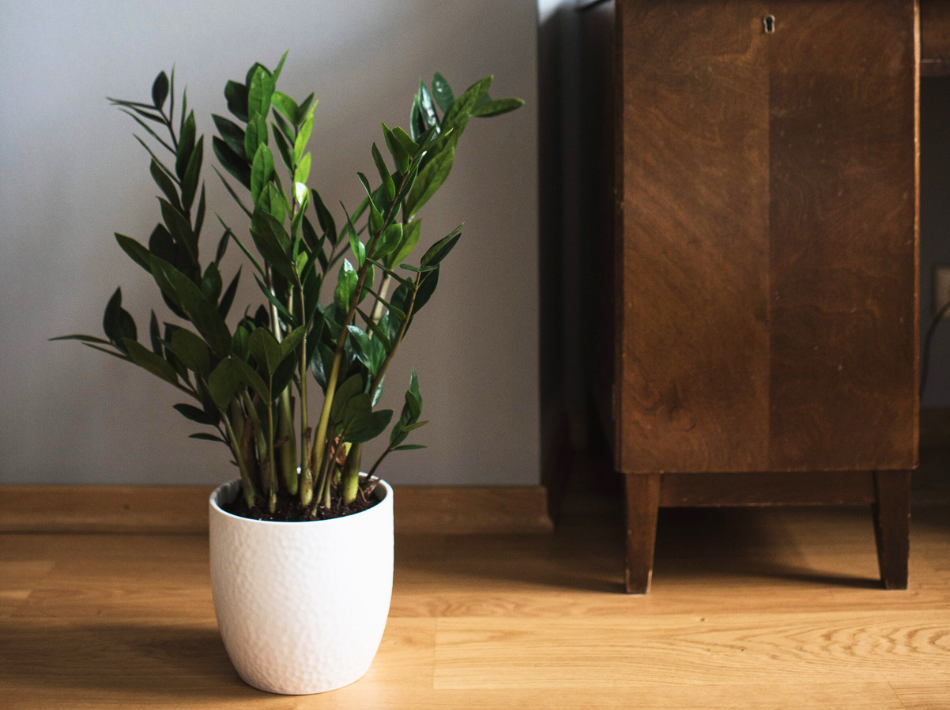
ZZ Plants are recognizable by their thick, upright leaf stalks and glossy, oval-shaped leaflets. The foliage has a naturally polished appearance, making the plant an attractive addition to living rooms, offices, bedrooms, and other indoor spaces.
One of the most important features of a ZZ Plant is its underground rhizomes. These thick, fleshy structures store water and help the plant survive periods of drought.
The leaf stalks and leaflets also store moisture, making ZZ Plants much more drought tolerant than many other tropical houseplants.
However, this adaptation comes with an important tradeoff: ZZ Plants are especially vulnerable to prolonged overwatering.
Because the rhizomes store water, the plant does not need its soil to remain constantly moist. Allowing the potting mix to dry out between waterings is essential for healthy growth.
Why ZZ Plants Are Popular Indoor Plants
The ZZ Plant from Simply Trees is an attractive indoor foliage plant with upright stems and glossy, deep green leaves.
Its biggest advantages include:
- Low maintenance: ZZ Plants require less frequent watering than many tropical houseplants.
- Low-light tolerance: They can survive in indoor spaces with limited natural sunlight.
- Drought tolerance: Their rhizomes store water for periods when the soil becomes dry.
- Attractive foliage: Glossy green leaflets provide a clean, architectural appearance.
- Slow growth: They generally require less frequent repotting and pruning.
- Indoor adaptability: Average household temperatures and humidity are usually suitable.
Although ZZ Plants are widely described as low-light plants, they still need enough light to photosynthesize. They grow more vigorously in suitable indirect sunlight than in extremely dark rooms.
How to Care for a ZZ Plant Indoors
Successful ZZ plant care starts with understanding that this plant prefers to dry out between waterings and does not need constant attention.
Many houseplants struggle when neglected, but ZZ Plants are often more likely to suffer from excessive watering than from occasionally being left dry.
Essential ZZ plant care tips:
- Place the plant in moderate to bright indirect sunlight when possible.
- Allow the potting mix to dry out between waterings.
- Use a loose, well-draining soil mix.
- Choose a container with drainage holes.
- Avoid leaving the pot in standing water.
- Maintain warm indoor temperatures.
- Fertilize lightly during active growth.
- Remove yellow or damaged foliage as needed.
- Repot only when the plant has outgrown its container.
Getting the balance between watering, light, and drainage right is the foundation of healthy Zamioculcas zamiifolia care.
How Often to Water a ZZ Plant
One of the most common questions about ZZ plant care is how often to water a ZZ Plant.
As a rough starting point, many indoor ZZ Plants may need watering approximately every two to four weeks. However, watering frequency varies considerably depending on sunlight, temperature, humidity, soil composition, pot size, and season.
The most reliable rule is to allow the soil to dry out completely or nearly completely before watering again.
Because ZZ Plants store water in their rhizomes, they can tolerate dry soil for longer than many common houseplants.
A plant growing near a bright window may use water much faster than one growing in a dim office. The same ZZ Plant may also need less frequent watering during winter than during summer.
ZZ Plant Watering Frequency by Season
| Season | Watering Recommendation |
|---|---|
| Spring | Check soil regularly as new growth begins; water after it dries out |
| Summer | Water as needed based on soil dryness and growing conditions |
| Fall | Reduce watering frequency as growth slows |
| Winter | Allow longer intervals between waterings, especially in low light |
In some environments, ZZ Plants may go considerably longer than four weeks between waterings. In brighter, warmer conditions, they may require water sooner.
Always check the soil rather than watering automatically according to the calendar.
How to Tell When a ZZ Plant Needs Water
Unlike Peace Lilies and other moisture-loving plants, ZZ Plants do not need consistently moist soil.
Before watering, check the moisture level deeper in the container rather than relying only on the soil surface.
How to check soil moisture:
- Insert a finger or wooden skewer several inches into the soil.
- Check whether the deeper potting mix still feels damp.
- If moisture remains, wait before watering.
- If the mix is dry throughout most or all of the root zone, watering may be appropriate.
- For large pots, check more than one location before deciding.
A wooden skewer can be particularly useful for larger containers because the surface may feel dry while the deeper root zone remains wet.
A moisture meter may also help, but readings can vary with potting mix composition and probe placement. Use it as one indicator rather than the only basis for watering.
Signs of a ZZ Plant That May Be Too Dry
- Dry potting mix throughout the container
- Slightly wrinkled or less firm leaf stalks
- Leaves losing some firmness
- Drooping accompanied by very dry soil
- Slower growth during prolonged drought
These signs can overlap with root problems, so checking the soil is important before adding water.
How to Water a ZZ Plant Properly
ZZ Plants generally prefer thorough watering followed by a drying period.
Giving a plant small amounts of water every few days may keep parts of the potting mix damp without properly wetting the entire root zone.
Step-by-step ZZ Plant watering instructions:
- Confirm the potting mix is dry or nearly dry throughout the root zone.
- Water slowly and evenly around the container.
- Continue until excess water begins draining from the bottom.
- Allow the container to drain thoroughly.
- Empty any standing water from the saucer or decorative outer pot.
- Wait until the soil dries again before the next watering.
If the soil has become extremely dry and water runs straight through without soaking in, apply water more slowly or allow the pot to absorb water briefly from below, then drain it completely.
Do not leave a ZZ Plant permanently sitting in a container of water.
For additional guidance, read the Simply Trees Guide to Watering Houseplants.
ZZ Plant Light Requirements
ZZ Plants are widely known for their low-light tolerance, making them popular choices for offices and indoor spaces that receive limited direct sunlight.
However, low-light tolerance does not mean ZZ Plants grow equally well in every lighting condition.
ZZ Plants generally grow best in moderate to bright indirect light, although they can survive in lower light.
| Light Condition | Effect on ZZ Plant |
|---|---|
| Bright indirect light | Ideal for healthy foliage and stronger growth |
| Medium indirect light | Usually supports steady growth |
| Low light | Tolerated, but growth becomes slower |
| Brief gentle morning sunlight | May be tolerated after gradual acclimation |
| Strong direct afternoon sun | Can scorch foliage and cause brown patches |
| No meaningful light | Unsuitable for long-term growth |
Where Should You Place a ZZ Plant Indoors?
A location near an east-facing or north-facing window can work well, depending on the amount of available natural light.
ZZ Plants can also grow near south-facing or west-facing windows when protected from intense direct sunlight.
In offices without much natural light, artificial lighting may provide enough illumination for the plant to survive, although growth will typically be slower.
Can a ZZ Plant Grow in Low Light?
Yes. ZZ Plants are among the more adaptable houseplants for lower-light environments.
However, plants in low light generally use less water. This means their soil may stay moist much longer after watering.
If your ZZ Plant grows in a dim room, you should expect to water less frequently than you would in a brighter location.
Low light combined with frequent watering is one of the most common reasons ZZ Plants develop yellow leaves or root rot.
Best Soil for ZZ Plant
Choosing the best soil for a ZZ Plant is essential because its roots and water-storing rhizomes are sensitive to prolonged wet conditions.
Although ZZ Plants can grow in ordinary indoor potting soil, the mix should drain well and allow oxygen to reach the roots.
The best soil for ZZ Plants is a loose, well-draining potting mix that does not remain saturated for long periods.
What makes good ZZ Plant soil?
- Good drainage after watering
- Air spaces that allow oxygen around the roots
- Enough moisture retention for the plant to absorb water
- Resistance to compaction
- A structure that allows excess water to leave the container
Regular houseplant potting mix can work well when amended with materials that improve drainage and aeration.
Recommended ZZ Plant Soil Mix
A practical ZZ Plant soil mix can be made with standard indoor potting mix and additional perlite or pumice.
Example soil recipe:
- 2 parts quality indoor potting mix
- 1 part perlite or pumice
This combination provides some moisture retention while creating additional air space around the roots.
A small amount of fine orchid bark can also be included to improve structure, provided the finished mix still maintains appropriate moisture for the plant.
Alternatively, a commercially prepared cactus or succulent potting mix may work well, particularly when blended with standard indoor potting soil to balance drainage and water retention.
Can You Use Cactus Soil for a ZZ Plant?
Yes. Many cactus and succulent potting mixes are suitable for ZZ Plants because they drain more readily than dense, moisture-retentive soil.
However, not every cactus mix is identical. Some are extremely coarse and dry very quickly, while others contain substantial amounts of organic material.
Evaluate the finished mix based on how quickly it drains and dries in your particular container.
Soil Types to Avoid
- Dense garden soil used directly in an indoor pot
- Heavy mixes that remain saturated for extended periods
- Compacted soil with little airflow
- Containers that have no effective drainage
Even excellent potting soil cannot compensate for a container that traps excess water around the roots.
ZZ Plant Leaves Turning Yellow: Why It Happens
One of the most common ZZ Plant problems is yellowing foliage.
If you're wondering, "Why is my ZZ Plant turning yellow?" the first thing to investigate is watering.
Overwatering is a common cause of ZZ Plant yellow leaves, but it is not the only possibility.
Yellowing can also result from prolonged underwatering, insufficient light, root damage, temperature stress, and normal leaf aging.
The pattern of yellowing, along with the condition of the soil and stems, can help identify the problem.
Why Is My ZZ Plant Turning Yellow?
| Yellow Leaf Pattern | Possible Cause | What to Check |
|---|---|---|
| Multiple yellow leaves with wet soil | Overwatering or root stress | Soil moisture, drainage, rhizome health |
| Entire stalk yellowing with soft base | Possible rhizome or root rot | Roots, rhizomes, stem firmness |
| Yellowing with extremely dry soil | Prolonged underwatering | Moisture throughout the root ball |
| Older lower leaves turning yellow | Natural aging | Whether newer growth remains healthy |
| Yellowing in a very dark room | Low-light stress, often combined with excess moisture | Light availability and watering frequency |
| Yellowing after a cold draft | Temperature stress | Recent exposure to cold air |
| Pale green newly emerged leaves | Often normal new growth | Whether leaves mature to a deeper green |
1. Overwatering
Overwatering is one of the most frequent causes of widespread yellowing in ZZ Plants.
When soil remains saturated, the roots receive insufficient oxygen. Prolonged waterlogging can lead to root damage and may encourage rot.
Damaged roots cannot absorb water and nutrients properly, so the plant may develop yellow leaves even though plenty of moisture is present.
What to do: Allow the potting mix to dry appropriately, empty standing water, and review the container's drainage. If the plant continues declining or its stems become soft, inspect the roots and rhizomes.
2. Root Rot or Rhizome Rot
ZZ Plants grow from thick underground rhizomes that store water. Under persistently wet conditions, these structures can begin to rot.
Possible symptoms include yellowing stems, collapsing foliage, soft tissue near the soil line, and dark or mushy rhizomes.
What to do: Remove the plant from its pot and inspect the root system if rot is suspected. Healthy rhizomes should generally feel firm. Severely damaged or mushy tissue should be removed before repotting in fresh, well-draining soil.
3. Underwatering
Although ZZ Plants tolerate drought, they still require water to remain healthy.
If the soil remains completely dry for an extended period, the plant may begin using its stored water reserves.
Severe drought can cause yellowing, leaf drop, wrinkled stalks, and reduced growth.
What to do: If the soil is dry throughout and the roots remain healthy, water thoroughly and allow excess water to drain.
4. Insufficient Light
ZZ Plants can survive in low light, but extremely dark conditions can eventually contribute to poor growth and declining foliage.
Limited light also reduces water consumption, increasing the risk that soil will remain wet for too long.
What to do: Move the plant gradually into brighter indirect light and adjust watering to match its environment.
5. Natural Leaf Aging
Occasional yellowing of older leaves is normal.
As a ZZ Plant grows, older leaflets or stalks may eventually age and decline. If only one older leaf is yellowing while the rest of the plant remains healthy, there may be no serious problem.
What to do: Monitor the plant and remove the affected foliage once it has declined.
6. Temperature Stress
ZZ Plants prefer warm, stable indoor conditions. Exposure to cold drafts or sudden temperature changes can stress the foliage.
What to do: Keep the plant away from frequently opened exterior doors, cold windows, and heating or cooling vents.
How to Fix Yellow Leaves on a ZZ Plant
The correct treatment depends on the reason the leaves are turning yellow.
Rather than immediately watering or fertilizing, follow a simple diagnostic process.
Step 1: Check the Soil
Feel the potting mix several inches below the surface.
If the soil is wet, avoid watering again until the root zone has dried appropriately. If the soil is extremely dry, the plant may need a thorough watering.
Step 2: Inspect the Stems
Healthy ZZ Plant stalks are usually firm.
Soft, collapsing, or discolored stalk bases may indicate a more serious root or rhizome problem.
Step 3: Evaluate the Light
Make sure the plant receives at least some meaningful indirect light. If it is growing in an unusually dark location, consider moving it to a brighter area.
Step 4: Check the Drainage
Confirm that the container has drainage holes and that water is not accumulating inside a decorative outer pot.
Step 5: Inspect the Roots if Necessary
If multiple stems continue yellowing despite appropriate watering, gently remove the plant from its pot to inspect the rhizomes and roots.
Healthy roots should generally be firm. Soft, dark, deteriorating roots or mushy rhizomes suggest rot.
Step 6: Remove Severely Damaged Foliage
Yellow leaves will not return to green once their tissue has deteriorated.
After correcting the underlying issue, remove fully yellow or dead leaves and stalks with clean pruning shears.
Can Yellow ZZ Plant Leaves Turn Green Again?
Usually not. Once a leaf has turned fully yellow because its chlorophyll has broken down, it generally will not recover its original green color.
However, the plant can continue producing healthy new foliage if the underlying problem is corrected.
One important exception is naturally pale new growth. Newly emerging ZZ Plant leaves may initially look light green before gradually darkening as they mature.
Do not confuse healthy new foliage with older leaves that are becoming yellow from stress.
ZZ Plant Root Rot: Signs and Treatment
Root rot is a serious problem for ZZ Plants because their fleshy rhizomes can deteriorate when exposed to prolonged waterlogging.
Possible signs of ZZ Plant root rot:
- Multiple yellowing leaves or entire stalks
- Soft or collapsing stems near the soil line
- Blackened or mushy roots
- Soft, deteriorating rhizomes
- Persistent wet soil
- Plant decline despite continued watering
How to treat a ZZ Plant with root rot:
- Stop watering and remove the plant carefully from its container.
- Gently clear enough soil to inspect the roots and rhizomes.
- Use clean tools to remove severely rotted roots and mushy rhizome sections.
- Keep healthy, firm portions of the plant.
- Repot the surviving plant in fresh, well-draining potting mix.
- Use a clean container with drainage holes sized appropriately for the remaining root system.
- Resume conservative watering based on soil dryness and the plant's recovery.
Severe rhizome rot may be difficult to reverse. If healthy sections remain, they may be able to establish new roots under appropriate conditions.
Prevention through good drainage and proper watering is the best approach.
ZZ Plant Temperature and Humidity Requirements
ZZ Plants generally perform well in normal indoor conditions.
Temperatures around 65–85°F are suitable for active growth, and the plant adapts well to average household humidity.
Although ZZ Plants can tolerate some temperature variation, prolonged exposure to temperatures below approximately 55°F can cause stress.
Temperature and humidity tips:
- Keep plants away from cold drafts.
- Avoid placing foliage against cold window glass.
- Protect the plant from abrupt temperature changes.
- Keep it away from direct airflow from heating or air-conditioning vents.
- Maintain ordinary household humidity rather than constantly misting the leaves.
ZZ Plants do not usually require the high humidity preferred by some tropical houseplants.
Does a ZZ Plant Need Fertilizer?
ZZ Plants are relatively slow-growing and generally have modest fertilizer requirements.
In a healthy potting mix, established plants may need only occasional feeding during the growing season.
A balanced liquid houseplant fertilizer applied once or twice during spring and summer may be sufficient for many plants.
ZZ Plant fertilizer tips:
- Fertilize primarily during active growth.
- Use a balanced fertilizer formulated for houseplants.
- Follow product directions and avoid excessive concentrations.
- Do not fertilize frequently in very low-light conditions.
- Avoid fertilizing when roots are damaged or soil remains waterlogged.
- Reduce or pause feeding when growth slows significantly.
Excess fertilizer can cause salt buildup and may damage sensitive roots.
If your ZZ Plant is not producing new growth, check sunlight, temperature, and root health before increasing fertilizer.
For more information, read the Simply Trees Guide to Fertilizing.
How to Repot a ZZ Plant
ZZ Plants develop thick rhizomes and a root system that can gradually fill their containers.
Because they grow relatively slowly, they usually do not require frequent repotting.
Many ZZ Plants may remain in the same container for two to three years or longer, depending on their growth and pot size.
Signs a ZZ Plant needs repotting:
- Rhizomes becoming severely crowded
- Roots pushing through drainage holes
- The container becoming distorted or cracked
- Soil drying unusually quickly because roots occupy much of the pot
- The plant becoming unstable or top-heavy
How to repot a ZZ Plant:
- Choose a container approximately 1–2 inches wider than the existing pot.
- Make sure the new container has drainage holes.
- Prepare a fresh, well-draining potting mix.
- Gently remove the plant without damaging its rhizomes.
- Inspect roots and remove severely damaged sections.
- Place the plant at approximately the same planting depth as before.
- Fill around the roots with fresh potting mix.
- Water appropriately and allow the container to drain.
Avoid placing a small ZZ Plant into an excessively large container. Too much unused soil can remain moist for long periods, increasing the risk of overwatering.
How to Prune a ZZ Plant
ZZ Plants generally need very little pruning.
They naturally develop upright stems and do not require regular shaping like many shrubs or branching houseplants.
Pruning is mainly useful for removing yellow, brown, or damaged foliage.
How to prune ZZ Plants:
- Use clean, sharp pruning shears.
- Identify completely yellow, dead, or damaged stalks.
- Cut the affected stalk near the soil line without injuring neighboring growth.
- Remove individual damaged leaflets if the rest of the stalk remains healthy.
- Avoid removing large amounts of healthy foliage unnecessarily.
Cutting a healthy stalk shorter will not generally make that same stalk branch like a woody houseplant. New shoots typically emerge separately from the underground rhizomes.
How to Propagate a ZZ Plant
ZZ Plants can be propagated through division, stem cuttings, and individual leaf cuttings.
Division is generally the fastest method because each new section already contains an established rhizome and roots.
Method 1: Propagation by Division
- Remove a mature ZZ Plant from its container.
- Gently separate sections containing healthy rhizomes and roots.
- Use a clean blade if the rhizomes cannot be separated by hand.
- Replant the sections in well-draining potting mix.
- Keep them in suitable indirect light.
- Water conservatively while the plants establish.
Method 2: Propagation by Stem Cutting
A healthy ZZ Plant stalk can be rooted in water or a suitable propagation medium.
- Cut a healthy stalk using clean shears.
- Place its lower portion in water or lightly moist propagation mix.
- Keep the cutting in bright indirect light.
- If rooting in water, refresh the water when needed.
- Allow roots and a new rhizome to develop before potting.
ZZ Plant cuttings can take several months to establish. Patience is important because they must develop water-storing structures before producing substantial new growth.
Method 3: Propagation by Leaf Cutting
Individual leaflets can also produce new plants under suitable conditions.
Place the base of a healthy leaflet into a lightly moist propagation medium and keep it warm with indirect light.
Root and rhizome development may take several months, and visible new shoots can take even longer.
How Fast Does a ZZ Plant Grow?
ZZ Plants generally grow slowly, particularly in lower-light indoor environments.
Their growth rate depends on light, temperature, pot size, root health, and available nutrients.
A healthy plant may produce several new shoots during active growing periods, followed by stretches when little visible growth occurs.
Factors that affect ZZ Plant growth:
- Light: Brighter indirect light usually supports more vigorous growth.
- Temperature: Warm conditions encourage active growth.
- Root health: Healthy rhizomes support new shoots.
- Watering: Both prolonged drought and persistent wetness can slow growth.
- Season: Growth often decreases during winter.
Slow growth does not necessarily mean the plant is unhealthy. If the foliage remains firm and green, the plant may simply be growing at its normal pace.
Common ZZ Plant Problems
| Problem | Possible Cause | Recommended Action |
|---|---|---|
| Yellow leaves | Overwatering, root stress, aging, or drought | Check soil moisture and root condition |
| Soft yellow stalks | Possible root or rhizome rot | Inspect roots and improve drainage |
| Brown leaf tips | Dryness, fertilizer buildup, or environmental stress | Review watering and fertilizer practices |
| Brown patches | Sun scorch or physical damage | Protect from strong direct sunlight |
| Drooping stems | Water stress, root damage, or heavy new growth | Check soil, rhizomes, and stem firmness |
| No new growth | Low light, cool temperatures, or normal slow growth | Improve growing conditions when needed |
| Wrinkled stalks | Possible prolonged underwatering | Check root-zone moisture |
| Visible insects | Scale, mealybugs, or other houseplant pests | Identify pests and use an appropriate treatment |
Why Are My ZZ Plant Leaves Turning Brown?
Brown leaves may be caused by underwatering, excessive sunlight, fertilizer buildup, or root damage.
Large, dry patches on the side of the plant facing a sunny window may indicate sun scorch.
Brown tips on otherwise healthy foliage may result from accumulated environmental stress, including excessively dry conditions or fertilizer salts.
Because brown tissue does not become green again, the goal is to identify the problem and protect future growth.
Why Are My ZZ Plant Stems Drooping?
ZZ Plant stalks are normally upright or gently arching.
Some arching is natural, particularly as older stalks become longer and heavier.
However, sudden drooping or collapsing stems may indicate a problem.
Possible causes include:
- Severely dry soil
- Overwatered or damaged roots
- Rotting rhizomes
- Low-light stress
- Physical damage
Check both the soil and the firmness of the stalks. Soft bases combined with wet soil warrant inspection for rot.
ZZ Plant Care in Winter
Winter often brings slower growth because indoor light levels decline and temperatures may become cooler.
As growth slows, the plant usually consumes less water.
Winter ZZ Plant care tips:
- Allow longer periods between waterings.
- Check soil dryness before adding water.
- Provide adequate indirect light.
- Keep the plant away from cold drafts.
- Avoid contact with cold window glass.
- Reduce or pause fertilizer when the plant is not actively growing.
- Monitor for yellowing caused by soil staying wet too long.
A ZZ Plant does not require a cold dormant period indoors. The goal is simply to adjust its care to the slower growing conditions.
ZZ Plant Pests
ZZ Plants are generally resistant to serious pest problems, but they can occasionally develop infestations of common houseplant insects.
Potential pests include scale insects, mealybugs, and spider mites.
Signs of possible pest problems:
- Small raised bumps on stalks or leaflets
- White cotton-like clusters around leaf joints
- Sticky residue on leaves
- Fine webbing or stippled foliage
- Unexplained yellowing or declining growth
Inspect both sides of the leaves and the areas where leaflets meet the stalk.
If pests are present, isolate the plant when possible and treat with a method appropriate for the identified insect and labeled for indoor plants.
Wiping the glossy leaves with a soft, damp cloth can also help remove dust and make pest inspections easier.
Is a ZZ Plant Toxic to Cats and Dogs?
Yes. ZZ Plants contain calcium oxalate crystals and should be kept away from pets and small children who might chew or ingest the foliage.
Ingestion may cause irritation of the mouth, drooling, or gastrointestinal discomfort.
The sap may also irritate sensitive skin, so wearing gloves during extensive pruning or repotting can be helpful.
If a pet chews or swallows part of a ZZ Plant, contact a veterinarian or animal poison control service for guidance.
ZZ Plant Care Mistakes to Avoid
Watering Too Frequently
ZZ Plants store water in their rhizomes and do not need constantly moist soil. Frequent watering is one of the most common causes of yellow leaves and root problems.
Using Soil That Holds Too Much Water
Dense or compacted potting mix can remain wet for extended periods. Choose a loose, well-draining mixture instead.
Placing the Plant in Complete Darkness
Although ZZ Plants tolerate low light, they still need light to survive. Very dark rooms can lead to prolonged slow growth and poor health.
Exposing the Leaves to Harsh Direct Sun
ZZ Plants can develop scorched or brown patches when moved suddenly into strong direct sunlight.
Overfertilizing
ZZ Plants generally need little fertilizer. Excess nutrients can damage roots or cause salt accumulation in the soil.
Repotting Into an Oversized Container
A pot that is much larger than the root system may hold excess moisture for too long.
Assuming Every Yellow Leaf Means Overwatering
Yellow leaves may also result from underwatering, natural aging, cold stress, or other problems. Check the soil and plant condition before deciding on treatment.
Frequently Asked Questions About ZZ Plant Care
How do you care for a ZZ Plant?
Care for a ZZ Plant by providing moderate to bright indirect light, allowing the soil to dry between waterings, using well-draining soil, and keeping it in warm indoor conditions. Fertilize lightly during active growth and remove damaged foliage when necessary.
How often should you water a ZZ Plant?
Many ZZ Plants need watering approximately every two to four weeks, but this varies with light, temperature, pot size, and soil composition. Water when the potting mix has dried out completely or nearly completely rather than following a fixed schedule.
Can a ZZ Plant go a month without water?
Often, yes. ZZ Plants store water in their underground rhizomes and can tolerate extended drying periods. However, watering needs vary, and prolonged severe drought can eventually damage the plant.
What is the best soil for a ZZ Plant?
The best soil for a ZZ Plant is a loose, well-draining indoor potting mix. Adding perlite or pumice can improve aeration and help prevent excess moisture around the rhizomes.
Can I use cactus soil for a ZZ Plant?
Yes. Many cactus and succulent mixes work well for ZZ Plants because they drain readily. Choose a mix that provides good aeration without drying so rapidly that the roots cannot absorb water.
What are ZZ Plant light requirements?
ZZ Plants tolerate low to bright indirect light but generally grow best in moderate to bright indirect sunlight. Avoid exposing unacclimated plants to intense direct afternoon sun.
Can a ZZ Plant survive in low light?
Yes. ZZ Plants can survive in lower-light conditions, although growth will be slower. Very low light also reduces water consumption, so watering frequency should be adjusted accordingly.
Why is my ZZ Plant turning yellow?
ZZ Plants commonly develop yellow leaves from overwatering or root stress. Other possible causes include prolonged underwatering, low light, cold exposure, and normal aging of older foliage.
Can yellow ZZ Plant leaves turn green again?
Fully yellow leaves generally do not return to green. However, correcting the underlying problem can allow the plant to produce healthy new growth. Naturally pale new leaves may darken as they mature.
Should I cut yellow leaves off my ZZ Plant?
Yes, fully yellow or dead leaves can be removed with clean pruning shears. If an entire stalk has declined, cut it near the soil line. Investigate the cause before removing large amounts of foliage.
Why are my ZZ Plant leaves turning yellow even though I water regularly?
Regular watering may be the problem if the soil never dries sufficiently. ZZ Plants store water in their rhizomes, and consistently wet soil can cause root stress and yellowing foliage.
How do I know if my ZZ Plant has root rot?
Signs of root rot may include multiple yellowing leaves, soft stalk bases, mushy rhizomes, and dark or deteriorating roots. Inspect the root system if the plant continues declining despite appropriate care.
How much light does a ZZ Plant need?
Moderate to bright indirect light is ideal, but ZZ Plants can tolerate lower light levels. Growth generally slows as available light decreases.
How often should I fertilize a ZZ Plant?
ZZ Plants generally need little fertilizer. One or two light applications of balanced houseplant fertilizer during the active growing season may be sufficient for many plants.
How often should you repot a ZZ Plant?
Many ZZ Plants need repotting approximately every two to three years or longer. Repot when the rhizomes become crowded, roots outgrow the container, or the plant becomes unstable.
Can you propagate a ZZ Plant?
Yes. ZZ Plants can be propagated by division, stem cuttings, and leaf cuttings. Division is generally the fastest method, while cuttings may take several months to develop new rhizomes and shoots.
Why is my ZZ Plant not growing?
Slow growth may be normal, particularly during winter or in lower-light rooms. Insufficient light, cold temperatures, unhealthy roots, and watering stress can also slow growth.
Do ZZ Plants need humidity?
ZZ Plants generally tolerate average household humidity and do not usually require regular misting or a humidifier.
Is a ZZ Plant safe for pets?
No. ZZ Plants contain calcium oxalate crystals that can cause irritation if chewed or ingested. Keep them away from curious cats, dogs, and small children.
Final Thoughts: Keeping Your ZZ Plant Healthy
The ZZ Plant is one of the most forgiving indoor plants, making it a practical choice for beginners, busy households, and offices.
Its glossy foliage and upright growth bring lasting greenery to indoor spaces, while its water-storing rhizomes allow it to tolerate longer intervals between watering.
The secret to successful ZZ plant care is simple: provide sufficient indirect light, use well-draining soil, and allow the potting mix to dry out between waterings.
If your ZZ Plant develops yellow leaves, check watering and drainage first, then consider light, temperature, and root health. Addressing the underlying cause is more important than removing the affected foliage alone.
With appropriate care, your Zamioculcas zamiifolia can remain an attractive, long-lasting indoor plant for years.
Ready to bring home an easy-care houseplant? Explore the indoor plant collection at Simply Trees for more greenery suited to your space.