Introduction
Lavender is one of the most recognizable and beloved garden plants, known for its fragrant purple flowers, silvery-green foliage, and ability to bring Mediterranean charm to almost any sunny landscape. It is a popular choice for garden borders, containers, pollinator gardens, and low-maintenance landscapes.
Learning how to take care of a lavender plant is relatively simple once you understand its growing preferences. Lavender thrives in full sun and well-draining soil, and once established, it requires surprisingly little water. In fact, overwatering and poor drainage are among the most common reasons lavender plants struggle.
This lavender plant care guide covers how to care for lavender plants, including sunlight, soil, watering, fertilizer, pruning, winter protection, growing lavender in containers, and troubleshooting common problems. We'll also explain the differences between Spanish, French, and Phenomenal Lavender so you can provide the right care for your variety.
Lavender Plant Care at a Glance
| Care Requirement | Lavender Preference |
|---|---|
| Botanical Name | Lavandula spp. |
| Sunlight | Full sun, ideally 6–8 hours daily |
| Soil | Well-draining, sandy, rocky, or loamy soil |
| Watering | Regularly during establishment; infrequently once established |
| Soil pH | Generally neutral to slightly alkaline |
| Fertilizer | Little to none in most established garden plantings |
| Pruning | Light annual pruning to maintain shape and prevent woody growth |
| Blooming Season | Spring through summer, depending on variety and climate |
| Growth Habit | Fragrant, mounding evergreen or semi-evergreen shrub |
| Common Problems | Root rot, woody stems, poor blooming, browning, and winter damage |
What Is a Lavender Plant?
Lavender belongs to the genus Lavandula, a group of aromatic shrubs native primarily to the Mediterranean region and surrounding areas. These plants are recognized for their narrow leaves, fragrant foliage, and upright flower spikes that attract bees, butterflies, and other pollinators.
Although many people associate lavender with purple flowers, varieties differ in flower shape, fragrance, foliage color, mature size, and winter hardiness.
Most lavender plants share three important growing requirements: abundant sunlight, excellent drainage, and good air circulation. However, their tolerance for cold temperatures and humidity can vary significantly.
Types of Lavender Plants
Different types of lavender have different appearances and environmental tolerances. Understanding which variety you are growing is important, especially if you live in an area with cold winters or humid summers.
| Lavender Type | Characteristics | Care Considerations |
|---|---|---|
| English Lavender | Fragrant flower spikes and compact growth | Generally the most cold-hardy traditional lavender type |
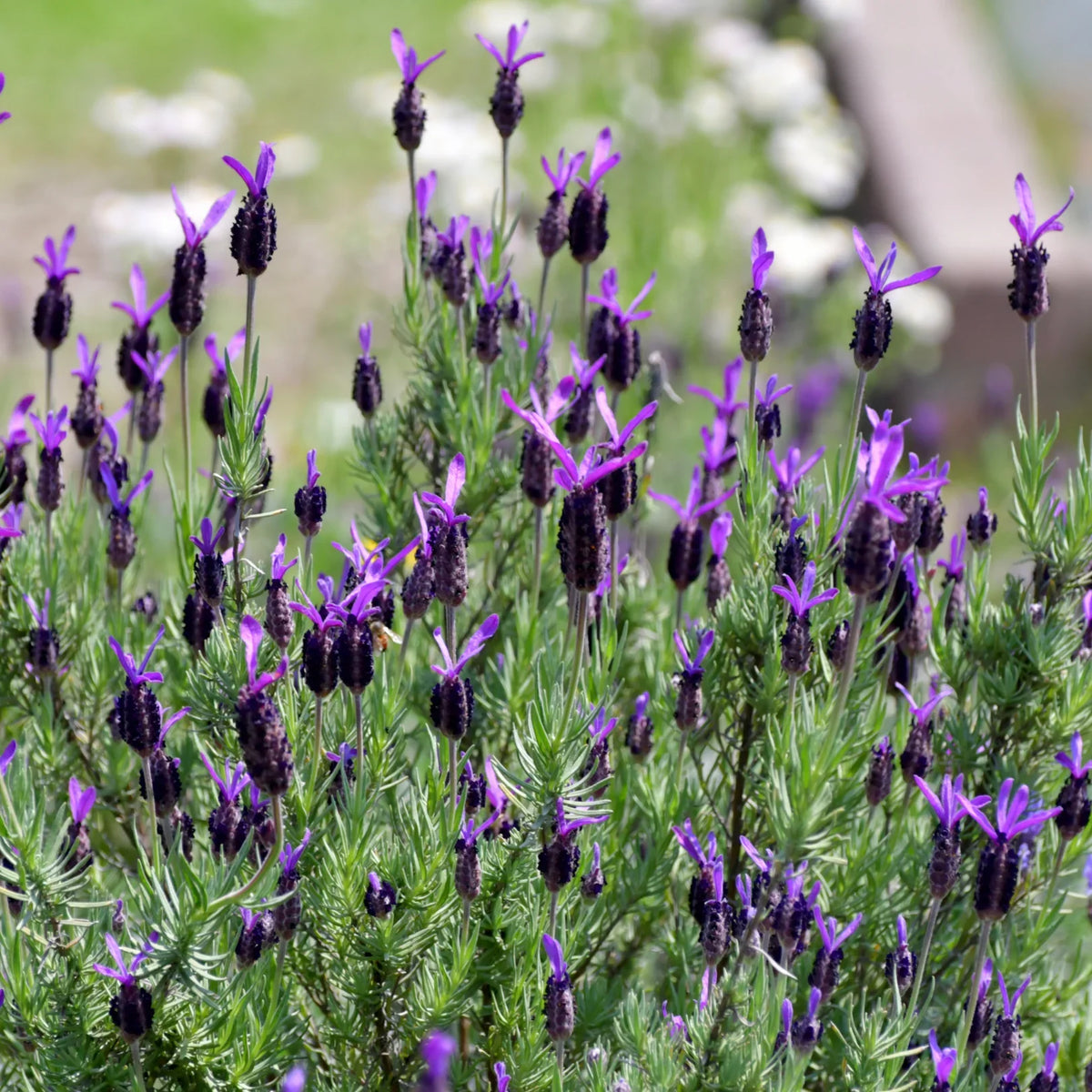
| Spanish Lavender | Distinctive flower spikes topped with butterfly-like bracts | Prefers mild winters and excellent drainage |
| French Lavender | Aromatic foliage and ornamental purple flowers | Generally better suited to warmer climates |
| Lavandin Hybrids | Vigorous growth, fragrant flowers, and silvery foliage | Hardiness varies by cultivar; some tolerate heat and humidity better |
Lavender common names can vary by region. For example, plants called French Lavender may belong to different species depending on the nursery or country. Always check the botanical name and hardiness information for your particular plant.
Lavender Varieties at Simply Trees
Simply Trees offers several lavender varieties suitable for different climates and landscaping needs. They share similar basic care requirements, but their winter hardiness and growing habits differ.
Phenomenal Lavender

Phenomenal Lavender is a lavandin hybrid (Lavandula × intermedia 'Phenomenal') known for its silvery foliage, fragrant purple flowers, and improved tolerance of heat, humidity, and cold compared with many traditional lavender varieties.
It is a strong choice for gardeners who want a fragrant, flowering lavender with better adaptability to challenging climates. Simply Trees lists Phenomenal Lavender for USDA Zones 5–9.
Although Phenomenal Lavender has improved environmental tolerance, it still needs full sun and excellent soil drainage. It should not be planted in persistently wet soil.
Otto Quast Spanish Lavender

Otto Quast Spanish Lavender (Lavandula stoechas 'Otto Quast') is known for its showy purple flower spikes topped with distinctive butterfly-like bracts.
This variety thrives in sunny, relatively dry conditions and is particularly attractive in Mediterranean-style gardens, borders, and containers. Simply Trees lists Otto Quast Spanish Lavender for USDA Zones 7–11.
Spanish Lavender generally prefers milder winters than English Lavender or hardier lavandin hybrids. Gardeners in colder regions should consider growing it in containers that can be protected from freezing temperatures.
French Lavender

French Lavender is a fragrant flowering shrub with purple blooms and silvery foliage. It is well suited to sunny garden borders, containers, and Mediterranean-inspired landscapes.
Simply Trees lists French Lavender for USDA Zones 8–10. Compared with cold-hardy lavender varieties, it generally requires more protection from freezing temperatures.
Because the name French Lavender can refer to different botanical species, gardeners should confirm the specific cultivar before making decisions about pruning and winter protection.
How to Care for a Lavender Plant
The most important part of lavender plant care is recreating the sunny, dry, well-draining conditions in which lavender naturally thrives.
Unlike plants that prefer rich, moisture-retentive soil, lavender generally grows best with moderate fertility and less frequent watering.
Essential lavender care tips:
- Plant in a location receiving at least 6–8 hours of direct sunlight.
- Choose soil that drains quickly after watering or rainfall.
- Water regularly while new plants establish, allowing the soil to dry between waterings.
- Reduce supplemental watering once plants are established.
- Avoid excessive fertilizer and nitrogen-rich soil amendments.
- Prune annually to maintain a compact, rounded shape.
- Keep good airflow around the foliage.
- Choose a lavender variety suited to your winter temperatures.
- Avoid planting too deeply or piling mulch against the crown.
Lavender is often described as low maintenance, but it is not tolerant of every environment. Soil that remains wet for long periods can be more damaging than occasional drought.
How Much Sun Does Lavender Need?
Lavender grows and flowers best in full sun. Most varieties prefer at least six hours of direct sunlight each day, with eight hours often producing stronger flowering and more compact growth.
Insufficient sunlight can cause lavender to become leggy, produce fewer flowers, and develop weak stems.
| Sunlight | Effect on Lavender |
|---|---|
| 6–8+ hours of direct sun | Ideal for strong growth, fragrance, and blooming |
| 4–6 hours of direct sun | May survive, but flower production can decline |
| Mostly shaded conditions | Often leads to weak growth and poor flowering |
In extremely hot regions, some lavender varieties can benefit from limited afternoon protection, but they should still receive abundant sunlight.
Best Soil for Lavender Plants
Lavender requires excellent drainage. In fact, choosing the right soil is often more important than how frequently you fertilize or prune.
Lavender generally prefers sandy, rocky, or well-structured loamy soil. It can tolerate relatively low fertility and often performs better in lean soil than in heavily amended garden beds.
Ideal lavender soil characteristics:
- Excellent drainage
- Sandy, gravelly, or loose soil structure
- Neutral to slightly alkaline soil pH
- Moderate to low fertility
- No prolonged standing water
- Good airflow around the root zone
If your garden has heavy clay soil, consider planting lavender in a raised bed or mound to improve drainage. Simply mixing a little sand into dense clay soil is not usually enough to correct a drainage problem.
Lavender also dislikes heavy, moisture-retentive mulch packed around its stems. Gravel or small stone mulch may be more appropriate in many situations, provided it does not trap moisture at the crown.
When to Plant Lavender
Spring is generally the best time to plant lavender, especially in regions with cold winters. Spring planting gives the roots time to establish before the next winter.
Fall planting can work in warmer climates, provided the plant has time to develop roots before freezing weather arrives.
| Season | Planting Recommendation |
|---|---|
| Spring | Excellent planting season, especially after the risk of hard frost |
| Summer | Possible with careful establishment watering and heat management |
| Fall | Suitable in milder climates with sufficient time before winter |
| Winter | Generally avoid planting in frozen or saturated soil |
How to Plant Lavender
Planting lavender at the correct depth helps prevent crown rot and gives roots access to oxygen.
Step-by-step lavender planting instructions:
- Choose a location with full sun and good airflow.
- Make sure the soil drains well after rainfall.
- Dig a hole approximately twice as wide as the plant's root ball.
- Remove the lavender carefully from its nursery container.
- Gently loosen any tightly circling roots.
- Place the root ball at approximately the same depth as the nursery pot, or slightly above the surrounding soil in heavy conditions.
- Backfill with soil and gently firm around the roots.
- Water thoroughly after planting.
- Allow the soil to begin drying before watering again.
Do not bury the crown below the soil surface. Excess moisture around the woody base can encourage rot.
For more general planting instructions, read the Simply Trees Guide to Planting.
How Often Should You Water Lavender?
Lavender needs regular moisture while establishing but becomes much more drought tolerant once its roots have developed.
There is no universal watering schedule for lavender plants because water requirements depend on soil texture, drainage, rainfall, temperature, and whether the plant is growing in a container or the ground.
The most important rule is to let the soil dry between waterings rather than keeping lavender constantly moist.
Lavender watering by growth stage:
| Growth Stage | Watering Approach |
|---|---|
| Immediately after planting | Water thoroughly to settle the soil around the roots |
| Newly planted lavender | Check regularly and water when the root zone begins to dry |
| Established in-ground lavender | Water deeply during extended dry periods when needed |
| Container-grown lavender | Check more frequently; water after the mix has dried sufficiently |
| Winter | Reduce watering and avoid saturated soil |
Established lavender plants often require little additional water when normal rainfall is sufficient. However, prolonged drought during active growth may still call for occasional deep watering.
How to Water a Lavender Plant Properly
Lavender prefers deep, occasional watering rather than frequent shallow watering. This helps encourage roots to develop deeper into the soil and reduces prolonged surface moisture.
How to water lavender:
- Check moisture several inches below the soil surface.
- If the root zone remains damp, wait before watering.
- When watering is needed, apply water slowly around the base of the plant.
- Allow the water to penetrate the root zone.
- Avoid keeping the foliage wet for long periods.
- Let excess moisture drain before watering again.
Overhead irrigation in humid climates can keep foliage wet and increase disease pressure. Watering at soil level is often preferable.
For more guidance, read the Simply Trees Guide to Watering.
Does Lavender Need Fertilizer?
Lavender usually needs very little fertilizer. Many varieties naturally grow in relatively lean soils, and excessive feeding can produce weak, leafy growth with fewer flowers.
Established lavender plants growing well in garden soil may not need supplemental fertilizer at all.
Lavender fertilizer tips:
- Do not fertilize automatically every year.
- Use soil testing to investigate suspected nutrient deficiencies.
- Apply a modest amount of balanced fertilizer only when needed.
- Avoid excessive nitrogen, which can encourage soft vegetative growth.
- Do not fertilize heavily late in the growing season.
- Avoid feeding plants that are stressed by saturated soil or root disease.
If your lavender is producing healthy foliage but very few flowers, check sunlight and pruning before adding fertilizer.
For general feeding guidance, visit the Simply Trees Guide to Fertilizing.
How to Prune Lavender
Pruning is an important part of lavender plant care because lavender develops woody stems as it matures.
Without regular shaping, many varieties become open, sprawling, or woody at the base. Light annual pruning helps maintain a compact, rounded form and encourages growth from leafy stems.
However, lavender does not reliably produce new growth from old, bare wood. Cutting too far into woody stems can permanently damage the plant.
How to prune lavender:
- Use clean, sharp pruning shears.
- Remove spent flower stalks after blooming.
- Trim the leafy portions of the plant to restore a rounded shape.
- Keep some healthy green growth on every stem you retain.
- Avoid cutting into old, leafless woody stems.
- Remove dead or broken stems when necessary.
The amount of pruning depends on the variety, climate, and plant age. Established plants generally benefit from consistent light shaping rather than occasional severe pruning.
When Should You Prune Lavender?
Lavender is commonly pruned after its main flowering period. In colder climates, gardeners may also perform light cleanup in spring after winter damage becomes visible.
| Season | Pruning Recommendation |
|---|---|
| Spring | Remove winter-damaged growth once new growth begins |
| After main flowering | Trim spent stalks and lightly shape healthy foliage |
| Late fall | Avoid severe pruning before freezing weather |
| Winter | Generally avoid pruning during severe cold or dormancy |
Spanish Lavender, French Lavender, and lavandin hybrids may bloom at different times, so adjust pruning to the plant's actual flowering cycle.
How to Prevent Lavender From Becoming Woody
Lavender naturally develops woody stems as it ages, but annual pruning can help slow the development of long, bare branches.
To maintain a fuller lavender plant:
- Prune lightly every year.
- Maintain a compact, rounded shape.
- Remove spent flower stalks after blooming.
- Provide full sun to encourage dense growth.
- Avoid excess nitrogen fertilizer.
- Do not cut heavily into old, bare wood.
Severely woody lavender may not recover from hard pruning. In some cases, replacing an old, declining plant is more successful than attempting to rejuvenate it through severe cutting.
Lavender Plant Care in Winter
Lavender winter care depends heavily on the variety and local climate. Some types tolerate freezing temperatures well, while others are better suited to mild winters.
Phenomenal Lavender is generally more cold tolerant than Spanish or French Lavender. However, even cold-hardy lavender can struggle when winter soil remains wet for extended periods.
How to care for lavender in winter:
- Choose a variety suited to your USDA hardiness zone.
- Maintain excellent drainage throughout winter.
- Avoid heavy fertilizer late in the growing season.
- Reduce watering as temperatures cool and growth slows.
- Avoid severe pruning shortly before freezing weather.
- Protect tender container-grown varieties from hard freezes.
- Keep heavy, wet mulch away from the crown.
In cold climates, garden lavender may benefit from protection against repeated freeze-thaw cycles, but that protection should not trap excess moisture around the plant.
Can Lavender Survive Winter Outdoors?
Whether lavender survives winter outdoors depends on the variety, temperatures, drainage, and exposure.
| Lavender Type | Winter Consideration |
|---|---|
| Phenomenal Lavender | Relatively cold hardy; suitable for many colder gardens with good drainage |
| Spanish Lavender | Less cold tolerant; benefits from mild winters or protection |
| French Lavender | Generally better suited to warm climates; may need frost protection |
Container-grown lavender is often more vulnerable to freezing because its roots are exposed to colder temperatures than those of an in-ground plant.
How to Care for Lavender in Pots
Lavender grows well in containers when its roots have excellent drainage and the plant receives abundant sunlight.
Container growing is especially useful for gardeners in colder climates who want to grow Spanish or French Lavender and move the plants to a protected location during winter.
Lavender container care tips:
- Choose a pot with generous drainage holes.
- Use a fast-draining potting mix.
- Place the container in full sun.
- Water when the root zone has dried sufficiently.
- Avoid leaving the pot in standing water.
- Do not overfertilize.
- Prune after flowering to maintain a compact shape.
- Protect tender varieties from freezing temperatures.
Terracotta pots can be useful because they allow moisture to escape through the pot walls, although they may require more frequent watering during very hot weather.
Can You Grow Lavender Indoors?
Yes, lavender can be grown indoors, but it is generally more challenging than growing it outdoors.
Lavender requires far more direct sunlight than many common houseplants. A typical low-light room is usually unsuitable for long-term growth.
Indoor lavender care tips:
- Place the plant beside a very sunny south-facing window.
- Provide at least six hours of strong light when possible.
- Supplement with an appropriate grow light if natural sunlight is insufficient.
- Use a fast-draining potting mix and a container with drainage holes.
- Avoid excessively humid or poorly ventilated locations.
- Water only when the soil has dried sufficiently.
- Keep plants away from heating vents and cold drafts.
For many gardeners, lavender performs best outdoors during the growing season and indoors only when protection from winter weather is necessary.
How to Get Lavender to Bloom
Lavender is grown primarily for its fragrant flowers, so poor blooming can be frustrating. Fortunately, the most common causes are often related to sunlight, pruning, or growing conditions.
How to encourage lavender flowers:
- Provide at least 6–8 hours of direct sunlight daily.
- Maintain well-draining soil.
- Avoid overwatering established plants.
- Do not apply excessive nitrogen fertilizer.
- Prune appropriately after flowering.
- Allow newly planted lavender time to establish.
- Choose a variety suited to your local climate.
Some varieties flower primarily in spring, while others bloom later in summer or produce additional flushes of flowers. Flowering schedules also vary with local weather.
Why Is My Lavender Plant Not Blooming?
| Possible Cause | What Happens | Recommended Action |
|---|---|---|
| Insufficient sunlight | Weak growth and fewer flowers | Move to a sunnier location |
| Too much nitrogen | Abundant foliage but limited blooms | Reduce unnecessary fertilizing |
| Excess water | Root stress and weak flowering | Improve drainage and reduce watering |
| Immature plant | More energy devoted to root establishment | Allow time for maturity |
| Incorrect pruning | Potential loss of developing flowering stems | Prune according to the variety and bloom cycle |
| Environmental stress | Reduced growth and flower production | Address temperature, drainage, and root health |
Common Lavender Plant Problems
Lavender is generally resistant to many common garden problems when grown in the right conditions. Most serious issues are associated with excessive moisture, poor drainage, and inadequate sunlight.
| Problem | Likely Cause | What to Do |
|---|---|---|
| Brown or dying foliage | Root problems, drought stress, or seasonal damage | Check soil moisture and root health |
| Yellow leaves | Overwatering or poor drainage | Reduce moisture and improve drainage |
| Leggy growth | Insufficient sunlight or lack of pruning | Increase sunlight and maintain annual shaping |
| No flowers | Too much shade, excess fertilizer, or immaturity | Improve sunlight and growing conditions |
| Woody stems | Natural aging and insufficient pruning | Prune leafy growth annually; avoid old wood |
| Root rot | Saturated soil and poor drainage | Correct drainage and watering practices |
| Winter dieback | Cold exposure, wet soil, or unsuitable variety | Choose hardy varieties and improve winter protection |
Why Is My Lavender Turning Brown?
Brown foliage can develop for several reasons, including overwatering, underwatering, freezing temperatures, disease, or normal aging of older stems.
Because both drought and waterlogged roots can cause browning, the best first step is to check soil moisture and drainage.
Common browning patterns:
- Brown foliage with wet soil: Possible root rot or excessive moisture.
- Dry, crispy foliage with very dry soil: Possible drought stress.
- Brown stems after freezing weather: Potential cold damage.
- Woody brown lower stems with healthy upper foliage: Often a normal part of lavender aging.
If the plant's roots are damaged from prolonged wet conditions, adding more water will not help. Correct the drainage problem before resuming normal care.
Lavender Root Rot
Root rot is one of the most serious problems affecting lavender plants. It develops when roots remain in wet, poorly aerated soil for too long.
Signs of possible lavender root rot:
- Wilting despite moist soil
- Yellowing or browning foliage
- Stems declining from the base
- Soft or discolored roots
- Soil that remains saturated after rainfall
How to reduce the risk:
- Plant in sharply draining soil.
- Avoid frequent unnecessary irrigation.
- Use raised beds in difficult drainage conditions.
- Leave space between plants for good airflow.
- Keep heavy organic mulch away from the crown.
Severely affected lavender may not recover, so prevention is especially important.
How to Propagate Lavender Plants
Lavender can be propagated using stem cuttings. This method is useful for creating new plants from a healthy established specimen.
Cuttings are also a good way to preserve the characteristics of named varieties, since plants grown from seed may not develop identically to their parent.
How to propagate lavender from cuttings:
- Choose a healthy, non-flowering shoot.
- Cut a stem approximately 3–4 inches long.
- Remove leaves from the lower portion.
- Place the cutting in a moist, fast-draining propagation medium.
- Keep it in bright light without harsh direct sun during rooting.
- Maintain lightly moist conditions without saturating the medium.
- Transplant once sufficient roots have developed.
Late spring through summer is often a convenient time to take softwood or semi-ripe lavender cuttings.
When and How to Harvest Lavender
Lavender flowers can be harvested for decorative arrangements, drying, or fragrance-related uses.
For dried flower bundles, harvest stems when the flower buds have developed and some flowers are beginning to open. Cut stems during dry weather, preferably after morning moisture has evaporated.
How to harvest lavender:
- Choose healthy flower spikes.
- Cut stems using clean pruning shears.
- Gather stems into small bundles.
- Hang bundles upside down in a dry, well-ventilated location away from direct sunlight.
- Allow flowers to dry thoroughly before storing.
Not every ornamental lavender is suitable for culinary use. If you plan to use lavender in food, choose a correctly identified, culinary-appropriate variety that has not been treated with unsuitable pesticides.
Best Places to Grow Lavender
Lavender works especially well in sunny landscapes where its fragrant foliage, flowering spikes, and compact growth can be appreciated.
Popular landscape uses include:
- Sunny garden borders
- Pollinator gardens
- Rock gardens
- Mediterranean-style landscapes
- Low-water and xeriscape gardens
- Pathway edging
- Raised garden beds
- Patio containers
- Fragrant cutting gardens
Lavender pairs well with other sun-loving plants that prefer well-draining soil, including rosemary and many drought-tolerant ornamental perennials.
Lavender Plant Care Mistakes to Avoid
Planting in Too Much Shade
Lavender needs abundant direct sunlight for compact growth and strong flowering. Shady locations often produce weak, leggy plants.
Overwatering
Lavender is drought tolerant once established. Constantly moist soil can damage roots and encourage rot.
Using Heavy, Poorly Draining Soil
Excellent drainage is essential. Heavy clay and waterlogged planting areas are especially problematic.
Applying Too Much Fertilizer
Lavender generally performs well in relatively lean soil. Excess fertilizer can encourage weak foliage instead of flowers.
Skipping Annual Pruning
Regular light pruning helps maintain a compact shape and slows the development of long, woody stems.
Pruning Into Old Wood
Lavender does not reliably regrow from bare woody stems. Avoid severe cuts below the leafy portions of the plant.
Choosing the Wrong Variety for Your Climate
Spanish and French Lavender are generally less cold hardy than English Lavender and some lavandin hybrids. Choose a variety suited to your local winter conditions.
FAQ: Lavender Plant Care
How do you take care of a lavender plant?
Take care of a lavender plant by providing full sun, well-draining soil, careful watering during establishment, minimal fertilizer, and light annual pruning. Keep the roots from remaining wet for extended periods.
Is lavender easy to care for?
Lavender is relatively low maintenance once established in a suitable location. The most important requirements are full sun and excellent drainage.
How often should you water lavender?
Newly planted lavender needs regular monitoring and watering as the root zone dries. Established in-ground lavender usually needs supplemental water only during prolonged dry periods, depending on local conditions.
Does lavender need full sun?
Yes. Most lavender plants perform best with at least 6–8 hours of direct sunlight each day.
Can lavender grow in shade?
Lavender may tolerate limited partial shade, but prolonged shade usually reduces blooming and encourages weak growth.
What soil is best for lavender?
Lavender prefers well-draining, sandy, rocky, or loose loamy soil. It generally grows best in neutral to slightly alkaline conditions.
Does lavender need fertilizer?
Usually very little. Established lavender plants growing well in garden soil may not need supplemental fertilizer. Excessive feeding can reduce flowering quality.
When should you prune lavender?
Prune lightly after the main flowering period to maintain shape. In colder climates, damaged growth can also be removed in spring. Avoid cutting deeply into old wood.
Does lavender come back every year?
Many lavender varieties are perennial and return year after year in suitable climates. Winter survival depends on the variety, temperatures, and drainage.
Can lavender survive winter?
Yes, cold-hardy varieties can survive freezing winters when grown in appropriate conditions. Spanish and French Lavender generally need milder winters or additional protection.
Can lavender grow in pots?
Yes. Lavender grows well in containers with drainage holes, fast-draining potting mix, and abundant direct sunlight.
Can lavender grow indoors?
Lavender can grow indoors with very strong sunlight or suitable supplemental lighting, but it generally performs better outdoors during the growing season.
Why is my lavender turning brown?
Brown lavender foliage may indicate overwatering, poor drainage, drought stress, freezing temperatures, or normal woody stem development. Check soil moisture and plant condition before adjusting care.
Why is my lavender not blooming?
Insufficient sunlight, excess nitrogen fertilizer, poor drainage, plant immaturity, and incorrect pruning can all reduce lavender flower production.
How do you prevent lavender from becoming woody?
Prune lightly each year, maintain full sun, and avoid excessive fertilizer. Never cut severely into bare old wood in an attempt to force new growth.
What is the difference between Spanish and French Lavender?
Spanish Lavender commonly refers to Lavandula stoechas, which has distinctive butterfly-like flower bracts. French Lavender is a name used differently across regions and may refer to Lavandula dentata or other species. Their exact cold tolerance and pruning needs depend on botanical identity.
Is Phenomenal Lavender easier to grow?
Phenomenal Lavender is valued for improved heat, humidity, and cold tolerance compared with many traditional varieties. However, it still requires full sun and excellent drainage.
Final Thoughts
Lavender is an excellent choice for gardeners who want fragrant blooms, attractive foliage, pollinator activity, and relatively low-maintenance landscaping.
The key to successful lavender plant care is understanding that lavender prefers sunny, well-draining conditions rather than rich, constantly moist soil. Once established, most lavender varieties need relatively little irrigation or fertilizer.
Whether you choose Phenomenal Lavender, Otto Quast Spanish Lavender, or French Lavender, proper sunlight, drainage, and pruning will help support healthier growth and more beautiful blooms.
With the right growing conditions and a variety suited to your climate, lavender can become a fragrant, long-lasting feature in your garden or sunny patio containers.