Home / Monstera Swiss Cheese Plant
Monstera Swiss Cheese Plant
House Plants

Monstera Swiss Cheese Plant

4.7/5 20 reviews
Size: Large
$150
Get it soonShips in 1–5 days · Free shipping over $249
Buy more, save moreSale ends 11/30 at 11:59PM CST

Save up to $1,000 on your whole cart.

Free shipping$249+
Automatic
10% offAny 2 items
$50 off$350+
$125 off$750+
$300 off$1,500+
$500 off$2,500+
$750 off$3,250+
$1,000 off$4,000+

Your code will auto-apply at checkout.

1-year guaranteeShips in 1–5 daysReal plant experts

From our farm to your front door

  • Shipped in its nursery pot, so the roots stay undisturbed
  • Soil secured so it stays put in transit
  • Packed so the plant stays steady on the way to you

At a glance

Light
Bright Indirect Sunlight
Water
When the top 1" of soil is dry
Care level
Super easy
Pets
Not pet friendly
Growth & size
Fast grower, typically adding about 1 to 2 feet per year, reaching a mature height of 6 to 10 feet indoors (with support) and a width of 3 to 5 feet.
Botanical name
Monstera deliciosa
Not sure it's right for your space?Real people who answer questions before and after planting.
Chat now

What customers are saying

4.7
out of 5 · 20 verified reviews

Why customers love it

Monstera Swiss Cheese Plant

Instant life for any room

Living green that makes a space feel finished.

Monstera Swiss Cheese Plant

Healthy, well-rooted plants

Hand-selected and shipped in its nursery pot.

Monstera Swiss Cheese Plant

Delivered to your door

Skip the nursery trip. Very little car Tetris required.

Monstera Swiss Cheese Plant

Real plant experts

Ask us anything before or after it arrives.

Care made simple

Simple care, matched to this plant.

Light
Bright Indirect Sunlight

Place your Swiss Cheese Plant in a spot with bright, indirect light.

Water
When the top 1" of soil is dry

Water your Swiss Cheese Plant thoroughly when the top inch of the soil feels dry. Ensure proper drainage.

Care level
Super easy

Easy! It's a suitable choice for both beginner and experienced plant enthusiasts.

Pets
Not pet friendly

Your first months together

  1. 1Day 1

    Unbox, set it in its spot, and check the soil before you water.

  2. 2First few weeks

    A few dropped leaves is normal while it adjusts to your home.

  3. 3Spring & summer

    Feed during the growing season. Skip it in winter.

  4. 4Every 1–2 years

    Repot into a slightly bigger pot once roots fill this one.

Light & water

Place your Swiss Cheese Plant in a spot with bright, indirect light.

Water your Swiss Cheese Plant thoroughly when the top inch of the soil feels dry. Ensure proper drainage.

About this plant
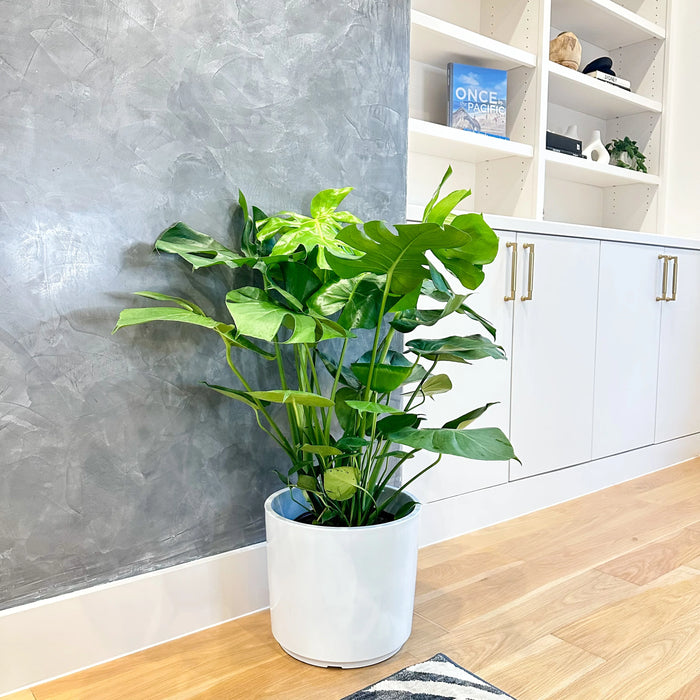
The Swiss Cheese Plant, scientifically known as Monstera Deliciosa, is a striking and sought-after houseplant. Its lush, vine-like stems and large leaves create an exotic and intriguing look, adding a touch of tropical allure to any indoor space. Apart from its striking appearance, the Swiss Cheese Plant offers practical benefits as well, actively purifying the air in your home, promoting a cleaner and healthier environment. It adapts well to different room sizes when grown in a container.

*The pot pictured is not included.
Care guide

SOIL & POTTING
Use a well-draining, chunky soil mix to support airflow and prevent root rot. A blend of indoor potting soil, orchid bark, and perlite works well for healthy root development. Choose a pot with drainage holes and allow the top few inches of soil to dry between waterings.

FERTILIZING
Avoid fertilizing for the first 2–3 months after delivery to allow the plant to adjust and establish. Feed with a balanced liquid houseplant fertilizer every 4–6 weeks during the spring and summer growing season. Use a diluted solution to avoid overfeeding and reduce or stop fertilizing in fall and winter.

HUMIDITY & INDOOR TEMPERATURE
Prefers moderate to higher humidity to support larger, more developed foliage. Average indoor humidity is tolerated but may benefit from a humidifier. Keep in temperatures between 65–85°F and protect from cold drafts or sudden temperature changes.

Shipping & what's inside

Your plant ships in its nursery pot with the soil secured, packed so it stays steady on the way to you.

1-year guarantee

Every plant is covered by our 1-year guarantee. If something goes wrong, contact our team and we'll walk you through it.

Answered by Simply Trees plant experts
How big does a Swiss Cheese Plant grow indoors?
Monstera deliciosa can grow 6–10 feet tall indoors with a spread of 3–5 feet. With support, it can grow even taller as it climbs.
How fast does the Swiss Cheese Plant grow?
Monstera (Swiss Cheese Plant) is a fast grower, typically adding about 1 to 2 feet per year under ideal indoor conditions.
Where is the best place to put a Swiss Cheese Plant indoors?
Place your Monstera in a bright room with indirect sunlight, such as near an east- or south-facing window. Avoid direct harsh sunlight, which can scorch the leaves.
How much light does a Swiss Cheese Plant need?
Monstera thrives in bright, indirect light but can tolerate medium light conditions. Brighter light encourages larger leaves and more pronounced splits.
Why do Monstera leaves develop holes or splits?
The holes and splits (fenestrations) are a natural characteristic of the plant. They typically develop as the plant matures and receives adequate light.
Does the Swiss Cheese Plant need support to grow?
Yes, Monstera is a climbing plant and benefits from a moss pole, trellis, or stake. Support encourages larger leaves and more upright growth.
Is the Swiss Cheese Plant easy to care for?
Yes, Monstera is considered an easy, beginner-friendly houseplant. It adapts well to indoor conditions and is relatively forgiving.
Does the Swiss Cheese Plant need humidity?
Monstera prefers moderate to high humidity but can adapt to average indoor conditions. Higher humidity helps support larger, healthier leaves.
Is the Swiss Cheese Plant pet friendly?
No, Monstera is not pet friendly. It is toxic if ingested by cats or dogs and should be kept out of reach.
Why are the leaves on my Monstera turning yellow or brown?
Yellowing or browning leaves are usually caused by overwatering, poor drainage, low humidity, or inconsistent care. Ensuring proper light and watering habits will help maintain healthy foliage.
Still deciding? Our plant experts reply fast on live chat. Chat with us