


Mission Olive Tree
Zones 8-11; or Zones 4–7 if overwintered indoors.
Buy more, save more
Save up to $1,000 on your whole cart.
Discounts don't stack. At checkout you automatically get whichever saves you more.
See all savings tiers
Your code will auto-apply at checkout.
From our farm to your front door
- Shipped in its nursery pot, so the roots stay undisturbed
- Soil secured so it stays put in transit
- Packed so the plant stays steady on the way to you
At a glance
- Sunlight
- Full Sun
- Water
- When the top 2–3" of soil is dry
- Growth & size
- Moderate growth rate; mature height of 25-30 feet and width of 15-20 feet.
Sizing: Our fruit and citrus trees are primarily utilized as outdoor patio or indoor plants and are potted. Accordingly, we measure our fruit and citrus trees from the bottom of the pot to the top of the tree for accuracy. - Botanical name
- Olea europaea ‘Mission’
- Hardiness
- Zones 8-11; or Zones 4–7 if overwintered indoors.
- Tolerates
- Heat tolerantDrought tolerantDesert tolerantCoastal tolerantWind tolerant
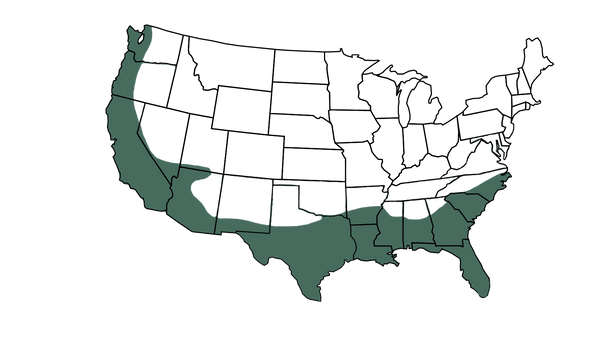
Where it grows in the groundShaded areas are the zones where it can be planted outdoors.


Size guide & what arrives
| *Trade size | **Pot size |
|---|---|
| 1 gallon | 6" |
| 3 gallon | 8 to 10" |
| 5 gallon | 10 to 12" |
| 7 gallon | 14" |
| 10 gallon | 15 to 17" |
| 15 gallon | 17" |
| "Jumbo" | 7 or 10 or 15 gallon |
*Nursery gallon sizes are trade sizes and do not equal standard liquid gallons.
**Pot sizes in inches refer to container width (diameter), not plant or pot height.
Please note: Sizing can differ between plant varieties and growers. Please chat with us if you need clarification.
For more information on sizing, please see our sizing guide.
What arrives
The Mission Olive Tree can be grown indoors in a sunny spot or outdoors in warm climates, making it a versatile addition to your home.
*We cannot guarantee the Mission Olive Tree you receive will already be bearing fruit. This depends on the season and the overall growth pattern.
*Disclaimer*:The olive trees pictured are of mature trees and shown to give you an idea of what your tree can grow into over time. Your tree will arrive younger and smaller—but with the right care, it’ll flourish into the beauty you see here.
What customers are saying
Why customers love it

Healthy, well-rooted plants
Hand-selected and shipped in its nursery pot.

Delivered to your door
Skip the nursery trip. Very little car Tetris required.

Real plant experts
Ask us anything before or after planting.

1-year guarantee
If something goes wrong, we'll help make it right.
Care made simple
Plant it right once and it does the rest.
Pick the spot before you dig.
Water slowly and deeply. Check more often in its first summer.
Enter your ZIP above to check your zone.
Your first year together
- 1Day 1
Plant it, then water slowly until the whole root ball is soaked.
- 2First few weeks
Keep the soil evenly moist while new roots settle in.
- 3First summer
Water deeply during hot, dry spells.
- 4Next spring
New growth starts. Feed as it wakes up.
Planting instructions
Watering & sunlight
Use a slow-running hose, soaker hose, or drip system to water the root ball and surrounding root zone thoroughly. Allow the water to penetrate deeply (not just wet the top few inches of soil), and avoid frequent, shallow watering.
Before watering again, check the soil 3–4 inches deep near the root ball. If it feels dry, repeat this deep-watering process. If it feels moist or soggy, wait and check again in 1–2 days. Check the soil of newly planted trees and shrubs several times per week, especially during hot, dry, or windy weather.
Irrigation run times will vary based on flow rate, soil, and system setup.
Need help? Contact our plant experts for watering guidance tailored to your plant and growing conditions.
Mission Olive Tree requires full sun exposure for optimal growth and fruiting, and should receive at least 6-8 hours of direct sunlight daily.
Care guide
What does "Jumbo" mean?
Shipping & what's inside
Your plant ships in its nursery pot with the soil secured, packed so it stays steady on the way to you.
1-year guarantee
Every plant is covered by our 1-year guarantee. If something goes wrong, contact our team and we'll walk you through it.
 Answered by Simply Trees plant experts
Are Mission Olive trees self-pollinating?
How long does it take for the Mission Olive tree to bear fruit?
How big do Mission Olive trees get?
What climate is best suited for Mission Olive trees?
Mild, Wet Winters: They can tolerate cool temperatures, but not harsh frosts. Avoid extreme winter cold.
Warm, Dry Summers: They prefer warm and dry summers without excessive humidity.
Moderate Rainfall: They do well with moderate rainfall but can tolerate drought conditions once established.
Sunny Days: Plenty of sunlight is essential for fruit production.
Mediterranean-type climates, found in regions like California, parts of Italy, Spain, and Greece, are ideal for growing Mission Olive trees. However, with proper care, they can also be cultivated in other climates with similar conditions.
Do you need two Mission Olive trees?
Can you grow Mission Olive trees indoors?
Container and soil:
Use a large, well-draining pot or container with drainage holes to prevent waterlogging. Olive trees prefer slightly acidic to neutral soil pH.
Use a well-draining potting mix specifically designed for woody plants or trees. You can enhance drainage by adding sand or perlite to the mix.
Sunlight:
Olive trees require plenty of sunlight, ideally at least 6-8 hours of direct sunlight per day. Place your olive tree near a south-facing window or provide it with adequate artificial light if natural sunlight is insufficient. Grow lights can be a useful supplement.
Temperature and humidity:
Maintain temperatures between 60°F to 80°F (15°C to 27°C) indoors. Olive trees can tolerate lower temperatures in winter but may benefit from some protection during cold spells.
Olive trees are well-suited to low humidity conditions, which are typically found indoors.
Watering:
Allow the top inch or two of the soil to dry out before watering. Water thoroughly, ensuring that excess water drains from the pot. Olive trees are susceptible to root rot, so avoid overwatering.
Water less frequently during the winter when the plant is in a dormant phase.
Fertilization:
Olive trees benefit from regular fertilization during the growing season (spring through early autumn). Use a balanced, slow-release fertilizer or a specialized fertilizer formulated for olive trees. Follow the manufacturer's instructions for application rates.
Pruning and shaping:
Prune your indoor olive tree to control its size and shape. Regular pruning helps prevent it from becoming too large for indoor cultivation and encourages bushier growth.
Pruning can be done in early spring before the growing season begins.
Pest control:
Monitor your olive tree for common indoor plant pests like aphids, scale insects, and spider mites. Treat any infestations promptly with appropriate pesticides or insecticidal soap.
Outdoor summer vacation:
Consider moving your olive tree outdoors during the summer months to benefit from natural sunlight and fresh air. Gradually acclimate it to outdoor conditions to avoid shock.
Repotting:
As your olive tree grows, you may need to repot it into a larger container every few years to provide ample root space.
Remember that indoor olive trees are primarily grown for their ornamental value, and fruit production may be limited in an indoor setting. Keep an eye on the tree's size and be prepared to manage its growth or transition it to an outdoor location if it becomes too large for your indoor space.
What soil is recommended for Mission Olive trees?
Sandy Loam: A sandy loam soil that provides good drainage while retaining some moisture is ideal.
pH Level: Slightly acidic to neutral soil with a pH range of 6.0 to 7.5 is suitable.
Organic Matter: The soil should be enriched with organic matter, such as compost, to improve fertility.
Good Drainage: Ensuring proper drainage is crucial to prevent waterlogged roots, as olive trees are sensitive to waterlogged soil.
Before planting, it's a good practice to perform a soil test to assess the soil's pH and nutrient levels. This allows for any necessary soil amendments to create the optimal growing conditions for Mission Olive trees.
How thick is the trunk on the Mission Olive Tree?
Is the Mission Olive tree drought-tolerant?
What size pot should I get for the Mission Olive tree?
• 4–5 ft and 5–6 ft (3-gallon nursery pot, ~11 inches wide and tall):
We recommend a container that is 16–18 inches wide and deep. This provides enough room for the roots to establish without overpotting, which olive trees do not tolerate well.
• 5–6 ft Jumbo and 6–7 ft Jumbo (10-gallon nursery pot, ~15–17 inches wide and tall):
We recommend a container that is 22–24 inches wide and deep to support the larger root system and provide proper stability for the tree’s height.
Important potting note:
Olive trees must be planted in containers with drainage holes. They prefer well-draining soil and do not tolerate sitting in excess moisture. Choosing the correct pot size helps prevent overwatering, promotes strong root development, and supports long-term container success.