


Jade Tree
Save up to $1,000 on your whole cart.
Your code will auto-apply at checkout.
From our farm to your front door
- Shipped in its nursery pot, so the roots stay undisturbed
- Soil secured so it stays put in transit
- Packed so the plant stays steady on the way to you
At a glance
- Sunlight
- Full Sun, Partial Sun
- Water
- When the soil is dry all the way down
- Care level
- Super easy
- Pets
- Pet friendly
- Growth & size
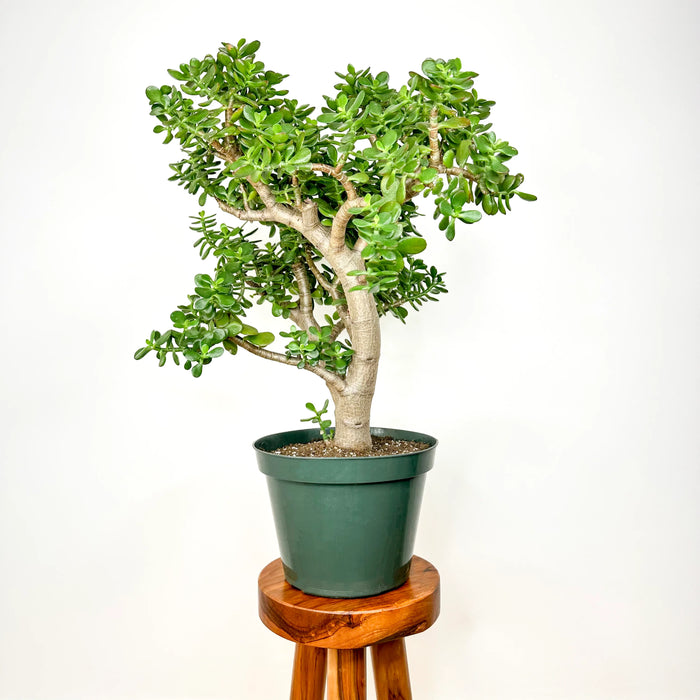
- Moderate growth rate; eventually reaching up to 3 feet in height and 2 feet in width when grown indoors. Its growth pattern allows it to fit comfortably in most spaces without overwhelming the area.
- Botanical name
- Crassula ovata


Size guide & what arrives
| *Trade size | **Pot size |
|---|---|
| 1 gallon | 6" |
| 3 gallon | 8 to 10" |
| 5 gallon | 10 to 12" |
| 7 gallon | 14" |
| 10 gallon | 15 to 17" |
| 15 gallon | 17" |
| "Jumbo" | 7 or 10 or 15 gallon |
*Nursery gallon sizes are trade sizes and do not equal standard liquid gallons.
**Pot sizes in inches refer to container width (diameter), not plant or pot height.
Please note: Sizing can differ between plant varieties and growers. Please chat with us if you need clarification.
For more information on sizing, please see our sizing guide.
What arrives
The Jade Tree is known for its longevity and can live for many years with proper care, becoming a cherished part of your indoor garden.
What customers are saying
Why customers love it
Instant life for any room
Living green that makes a space feel finished.
Healthy, well-rooted plants
Hand-selected and shipped in its nursery pot.
Delivered to your door
Skip the nursery trip. Very little car Tetris required.
Real plant experts
Ask us anything before or after it arrives.
Care made simple
Simple care, matched to this plant.
This tree thrives in bright, indirect sunlight. A spot near a window where it can soak up some gentle morning sun or late afternoon rays is ideal.
Water your Jade Tree sparingly. Allow the soil to dry out completely between waterings. Typically, watering every 2 to 3 weeks is sufficient, depending on the humidity in your h...
Your first months together
- 1Day 1
Unbox, set it in its spot, and check the soil before you water.
- 2First few weeks
A few dropped leaves is normal while it adjusts to your home.
- 3Spring & summer
Feed during the growing season. Skip it in winter.
- 4Every 1–2 years
Repot into a slightly bigger pot once roots fill this one.
Light & water
This tree thrives in bright, indirect sunlight. A spot near a window where it can soak up some gentle morning sun or late afternoon rays is ideal.
Water your Jade Tree sparingly. Allow the soil to dry out completely between waterings. Typically, watering every 2 to 3 weeks is sufficient, depending on the humidity in your home.
About this plant
Care guide
Shipping & what's inside
Your plant ships in its nursery pot with the soil secured, packed so it stays steady on the way to you.
1-year guarantee
Every plant is covered by our 1-year guarantee. If something goes wrong, contact our team and we'll walk you through it.
 Answered by Simply Trees plant experts
How often should I water my Jade plant?
During the winter, when the plant is dormant, you'll need to water even less frequently. Always check the soil before watering. If it's still moist, wait a few more days. Over-watering is a common mistake with Jade plants and can lead to root rot, so it's better to err on the side of under-watering.
Remember, the key is to let the soil dry out completely between waterings.
Where should Jade plants not be placed?
Low Light Areas: Avoid placing Jade plants in dimly lit areas or rooms with very little natural light. They thrive in bright light and can even tolerate direct sunlight.
Cold Drafts or Extreme Temperatures: Keep them away from drafty windows or doors, especially during colder months, as they are sensitive to cold drafts. Also, avoid placing them near air conditioning units or heating vents where temperatures can fluctuate drastically.
High Humidity Environments: While they can tolerate some humidity, overly humid environments like bathrooms may not be ideal, especially if they lack sufficient light.
Busy or Cluttered Areas: Since their leaves and stems can be fragile, it's best to avoid placing them in high-traffic areas where they might be bumped or knocked over.
By avoiding these locations, you'll help ensure that your Jade plant remains healthy and thrives. Remember, the ideal spot for a Jade plant is a sunny window where it receives plenty of light for most of the day.
How big does the Jade Tree get?
Their width can also be substantial, with mature plants spreading out to several feet. The size of a Jade Tree is largely influenced by the size of its container, the amount of light it receives, and its overall growing conditions. Regular pruning can help manage its size and shape, making it a versatile plant for various indoor spaces.
Where is the Jade Tree native to?
How do I keep my Jade plant from falling over?
Proper Potting: Use a sturdy, wide, and heavy pot to provide a solid base. Since Jade Trees can become top-heavy, a pot that is too light or narrow may tip over easily.
Balanced Pruning: Regularly prune your Jade Tree to maintain a balanced shape. This prevents it from becoming too top-heavy or lopsided, which can cause the plant to lean or fall over.
Correct Watering: Over-watering can cause root rot, weakening the plant's stability. Allow the soil to dry out between waterings.
Adequate Light: Ensure the plant receives enough light. If a Jade Tree doesn’t get enough light, it might stretch toward the light source and become unbalanced. Place it in a location where it receives bright, indirect light.
Support Structures: If the plant is particularly large or top-heavy, consider using a plant stake or other support structure to help keep it upright.
Soil and Repotting: Use a well-draining soil mix designed for succulents. If the plant becomes root-bound or the soil is too compacted, it may affect the plant’s stability. Repotting into fresh soil every few years can help.
Regular Inspection: Regularly inspect the plant for signs of disease or pests, as these can weaken the plant and make it more prone to falling over.
By following these care guidelines, you can help ensure that your Jade Tree remains stable and healthy, reducing the risk of it falling over.
What makes Jade plants grow faster?
Adequate Light: Jade plants need plenty of light to grow quickly. Place them in a location where they receive bright, indirect sunlight. Direct morning sunlight is also beneficial.
Proper Watering: While it’s important not to over-water, consistent watering is key. Allow the soil to dry out completely between waterings, then water thoroughly.
Suitable Soil: Use a well-draining soil mix, preferably one formulated for succulents or cacti. This ensures the roots are healthy, which supports faster growth.
Regular Feeding: During the growing season (spring and summer), feed your Jade plant with a balanced, water-soluble fertilizer every few months to provide essential nutrients.
Appropriate Temperature: Jade plants prefer room temperatures between 65-75°F (18-24°C). Avoid exposing them to temperatures below 50°F (10°C).
Pruning: Occasional pruning can stimulate growth. Pruning encourages the plant to produce new, healthy growth.
Repotting: If your Jade plant is root-bound, repotting into a slightly larger pot can encourage faster growth.
While these steps can help promote faster growth, it's important to remember that Jade plants are naturally slow-growing, so patience is key. They thrive with minimal intervention, and over-care can sometimes do more harm than good.
Why is my Jade plant so leggy?
Insufficient Light: Jade plants need bright light to maintain a compact, bushy growth habit. If they're placed in low-light conditions, they tend to stretch towards the nearest light source, resulting in long, weak stems and sparse foliage.
Inadequate Pruning: Regular pruning helps maintain a fuller shape. If a Jade plant isn’t pruned, it can grow tall and spindly.
Overwatering: While less common, overwatering can sometimes lead to weak, leggy growth.
To correct legginess:
Increase Light Exposure: Move your Jade plant to a location where it will receive more bright, indirect sunlight, such as near a south-facing window.
Prune the Plant: Prune back the leggy growth to encourage bushier, more compact growth. This can be done by cutting above a leaf node, which will encourage new branches to form.
Adjust Watering: Ensure you're not overwatering the plant. Allow the soil to dry out completely between waterings.
By addressing these issues, your Jade plant should gradually develop a healthier, more robust growth habit.
Where do you cut the Jade plant for propogation?
Choosing the Cutting: Select a healthy stem or leaf. The stem cutting should be about 2-4 inches long, with at least two pairs of leaves.
Making the Cut: Use a clean, sharp knife or scissors. Make a clean cut on the stem, ideally just above a leaf node (the point where leaves emerge from the stem). If you're using a leaf, gently twist it off the stem, ensuring you get the entire leaf including the base.
Allowing to Callous: Place the cutting in a warm, dry place for a few days to allow the cut end to callous over. This helps prevent rotting when planted.
Planting the Cutting: Once calloused, plant the cutting in well-draining soil formulated for succulents or cacti. Insert the cut end into the soil, and lightly press the soil around it for support.
Watering: Initially, water sparingly to prevent rot. Once the cutting establishes roots and shows new growth, gradually increase watering.
Remember, while Jade plants are generally easy to propagate, patience is key as it can take several weeks for new roots to form.
Why are the leaves of my Jade plant falling off?
Over-Watering: This is the most common cause. Jade plants require the soil to dry out completely between waterings. Over-watered Jade plants can experience root rot, leading to leaves falling off.
Under-Watering: While they are drought-tolerant, prolonged under-watering can also cause leaf drop as the plant sheds leaves to conserve water.
Temperature Stress: Extreme temperatures or sudden temperature changes can stress the plant, causing leaves to drop. Jade plants prefer a stable environment.
Poor Light: Insufficient light can weaken the plant over time, leading to leaf drop. They thrive in bright, indirect light.
Pests: Pests like spider mites, aphids, or mealybugs can stress the plant and lead to leaf drop. Regularly inspect your plant for pests.
Physical Damage: Physical damage or sudden movement of the plant can sometimes cause leaves to drop.
To address leaf drop, first identify and correct the underlying issue, whether it's watering habits, lighting conditions, temperature, or pest problems. With proper care adjustments, your Jade plant should recover.
Are Jade Trees hard to take care of?
Light: Jade Trees prefer bright light and can tolerate direct sunlight. A sunny windowsill is an ideal spot for them.
Watering: They require minimal watering. Allow the soil to dry out completely between waterings. Over-watering can lead to root rot, so it's better to under-water than over-water.
Soil: Use a well-draining soil mix, typically one designed for cacti or succulents.
Temperature: Jade Trees do well in average room temperatures and can tolerate a wide range, but they should be protected from extreme cold.
Feeding: During the growing season (spring and summer), you can feed the plant with a balanced, water-soluble fertilizer every few months.
Pruning: They respond well to pruning, which can help maintain a desired shape and size.
Pest Resistance: Jade Trees are relatively resistant to pests, but you should still check them occasionally for signs of trouble.
Their low maintenance requirements and resilience make Jade Trees an excellent choice for those new to plant care or with busy lifestyles. Just remember that, like all plants, they do need some basic care and attention to thrive.