


Green Cloud Texas Sage
Zones 8-11
Buy more, save more
Save up to $1,000 on your whole cart.
Discounts don't stack. At checkout you automatically get whichever saves you more.
See all savings tiers
Your code will auto-apply at checkout.
From our farm to your front door
- Shipped in its nursery pot, so the roots stay undisturbed
- Soil secured so it stays put in transit
- Packed so the plant stays steady on the way to you
At a glance
- Leaves
- Evergreen: keeps its leaves all year
- Sunlight
- Full Sun
- Water
- When the top 2–3" of soil is dry
- Growth & size
- Moderate to fast growth rate. Reaches a mature height and width of about 5-7 ft
- Botanical name
- Leucophyllum frutescens 'Green Cloud'
- Hardiness
- Zones 8-11
- Tolerates
- Heat tolerantDrought tolerantDesert tolerantWind tolerant
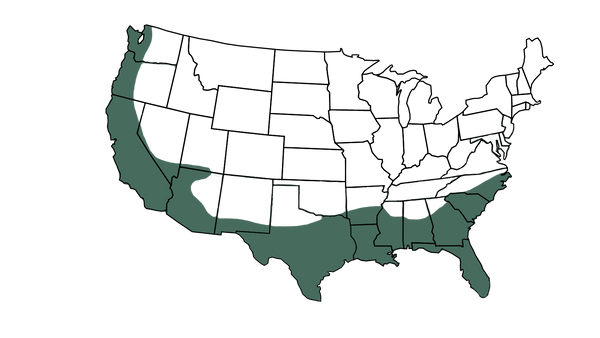
Where it grows in the groundShaded areas are the zones where it can be planted outdoors.


Size guide & what arrives
| *Trade size | **Pot size |
|---|---|
| 1 gallon | 6" |
| 3 gallon | 8 to 10" |
| 5 gallon | 10 to 12" |
| 7 gallon | 14" |
| 10 gallon | 15 to 17" |
| 15 gallon | 17" |
| "Jumbo" | 7 or 10 or 15 gallon |
*Nursery gallon sizes are trade sizes and do not equal standard liquid gallons.
**Pot sizes in inches refer to container width (diameter), not plant or pot height.
Please note: Sizing can differ between plant varieties and growers. Please chat with us if you need clarification.
For more information on sizing, please see our sizing guide.
What arrives
Green Cloud Texas Sage is highly drought-tolerant but appreciates occasional deep watering during extended dry periods. It benefits from occasional pruning to maintain its shape and remove any dead or damaged branches.
What customers are saying
Why customers love it

Healthy, well-rooted plants
Hand-selected and shipped in its nursery pot.

Delivered to your door
Skip the nursery trip. Very little car Tetris required.

Real plant experts
Ask us anything before or after planting.

1-year guarantee
If something goes wrong, we'll help make it right.
Care made simple
Plant it right once and it does the rest.
Pick the spot before you dig.
Water slowly and deeply. Check more often in its first summer.
Enter your ZIP above to check your zone.
Your first year together
- 1Day 1
Plant it, then water slowly until the whole root ball is soaked.
- 2First few weeks
Keep the soil evenly moist while new roots settle in.
- 3First summer
Water deeply during hot, dry spells.
- 4Next spring
New growth starts. Feed as it wakes up.
Planting instructions
Watering & sunlight
Care guide
Shipping & what's inside
Your plant ships in its nursery pot with the soil secured, packed so it stays steady on the way to you.
1-year guarantee
Every plant is covered by our 1-year guarantee. If something goes wrong, contact our team and we'll walk you through it.
 Answered by Simply Trees plant experts
How tall does Green Cloud Texas Sage get?
How often do you water Green Cloud Texas Sage?
Newly Planted Shrubs: For the first few months after planting, water regularly to help establish the root system. This might mean watering once or twice a week, depending on the climate and soil conditions.
Established Shrubs: Once established, Green Cloud Texas Sage requires very little water. Watering once every two to three weeks during dry periods is typically sufficient. In regions with regular rainfall, additional watering may not be necessary.
Check Soil Moisture: Before watering, check the soil moisture. Texas Sage prefers dry conditions, so it's important to let the soil dry out between waterings. Overwatering can lead to root rot and other problems.
Reduce Watering in Winter: Cut back on watering in the winter months when the plant's growth slows down.
Remember, this plant is adapted to arid conditions, so erring on the side of underwatering is preferable to overwatering.
How fast does Green Cloud Texas Sage grow?
Should green cloud Texas Sage be pruned?
Pruning Time: The best time to prune is in late winter or early spring, before the onset of new growth. Avoid heavy pruning in late summer or fall.
Light Pruning: Opt for light pruning rather than cutting the plant back severely. Remove any dead or damaged branches and lightly shape the plant as needed.
Natural Shape: Texas Sage naturally has a rounded, bushy form. Try to maintain its natural shape when pruning, rather than shearing it into formal geometric shapes.
Encourage Flowering: Pruning can stimulate new growth, which in turn can lead to more flowering. Pruning immediately after a bloom cycle can encourage additional blooming periods.
Avoid Over-Pruning: Excessive pruning can stress the plant and diminish its natural beauty. Texas Sage often thrives with minimal interference.
Following these pruning practices will help keep your Green Cloud Texas Sage healthy and attractive while preserving its natural form and maximizing its flowering potential.
Where is the best place to plant Green Cloud Texas Sage?
Sunlight: Choose a location that receives full sun. Texas Sage thrives in areas with plenty of direct sunlight, ideally 6 or more hours per day.
Soil: Plant in well-draining soil. Texas Sage does not tolerate wet or waterlogged conditions well, so good drainage is essential. It is adaptable to a variety of soil types, including poor or rocky soils.
Space: Allow enough space for the plant to reach its mature size, which is about 5 to 8 feet tall and wide. Consider this when planting near structures or other plants.
Air Circulation: Ensure there is good air circulation around the plant. Avoid overly crowded planting, which can lead to humidity issues and affect the health of the shrub.
Low Water Area: Since Texas Sage is drought-tolerant, it's an excellent choice for xeriscaping or in areas where water conservation is a priority.
By planting Green Cloud Texas Sage in a location with full sun, well-draining soil, and adequate space, you'll provide an ideal environment for this hardy and attractive shrub to thrive.
When does Green Cloud Texas Sage bloom?
What is the best climate for Green Cloud Texas Sage?
USDA Hardiness Zones: It thrives in USDA zones 8 to 11. This means it can tolerate hot summers and is relatively hardy to mild winter conditions.
Temperature: It performs best in warm temperatures and can tolerate high heat, making it ideal for hot, desert-like environments.
Sunlight: This plant prefers full sun, so a climate with abundant sunshine is ideal.
Low Humidity: Green Cloud Texas Sage does well in low humidity conditions and might struggle in areas with high humidity.
Drought Tolerance: It is highly drought-tolerant, making it suitable for regions with dry conditions and infrequent rainfall.
Overall, Green Cloud Texas Sage is well adapted to the warm, dry climates typical of the southwestern United States and similar regions. It's a popular choice in landscapes where water conservation is essential.
Why is my Green Cloud Texas Sage turning brown?
Water Stress: Overwatering or underwatering can cause stress to the plant. Overwatering, leading to root rot, is a common cause of browning, especially in a plant that prefers dry conditions like Texas Sage. Underwatering can also cause the plant to dry out and turn brown, particularly in very hot and dry conditions.
Soil Conditions: Poor drainage leading to waterlogged soil can be detrimental. Texas Sage needs well-draining soil to prevent root diseases.
Pests or Diseases: While Texas Sage is generally resistant to pests and diseases, it can occasionally be affected. Check for signs of infestation or disease.
Environmental Stress: Extreme weather conditions, like prolonged drought, excessive heat, or cold, can impact the plant's health, leading to browning.
Fertilizer Burn: Excessive fertilization can lead to fertilizer burn, which can cause the leaves to turn brown.
To address the issue, first ensure that the plant is receiving the right amount of water and is planted in well-draining soil. Adjust watering practices as needed, check for pests or diseases, and protect the plant from extreme weather conditions. Avoid over-fertilizing and use a fertilizer appropriate for arid, drought-tolerant plants if necessary.
Why is my Green Cloud Texas Sage not blooming?
Insufficient Sunlight: Texas Sage requires full sun to bloom profusely. If it's planted in too much shade, it may not produce flowers.
Overwatering: Texas Sage is a drought-tolerant plant, and too much water can inhibit blooming. Overwatering can also lead to root rot and other health issues.
Improper Pruning: Pruning at the wrong time can remove flower buds. It's best to prune right after a bloom cycle to avoid cutting off potential blooms.
Age of the Plant: Very young plants may not bloom. They typically need a few years to mature before they start flowering.
Nutrient Imbalance: Excessive nitrogen can encourage leaf growth at the expense of flowers. Ensure you're using a balanced fertilizer.
Environmental Stress: Extreme weather conditions like prolonged drought, excessive heat, or cold can affect blooming.
To encourage blooming, ensure your Texas Sage is getting enough sunlight, adjust your watering habits (less is more), prune correctly, and use a balanced fertilizer if necessary. In time, with the right conditions, your Texas Sage should start blooming.