


Coast Rosemary
Zones 9-11
Buy more, save more
Save up to $1,000 on your whole cart.
Discounts don't stack. At checkout you automatically get whichever saves you more.
See all savings tiers
Your code will auto-apply at checkout.
From our farm to your front door
- Shipped in its nursery pot, so the roots stay undisturbed
- Soil secured so it stays put in transit
- Packed so the plant stays steady on the way to you
At a glance
- Leaves
- Evergreen: keeps its leaves all year
- Sunlight
- Full Sun, Partial Sun, Partial Shade
- Water
- When the top 2–3" of soil is dry
- Growth & size
- Moderate growth rate; it typically reaches a mature height of 2 to 3 feet and a width of 2 to 3 feet.
- Botanical name
- Westringia fruticosa
- Hardiness
- Zones 9-11
- Tolerates
- Heat tolerantDrought tolerantCoastal tolerantWind tolerant
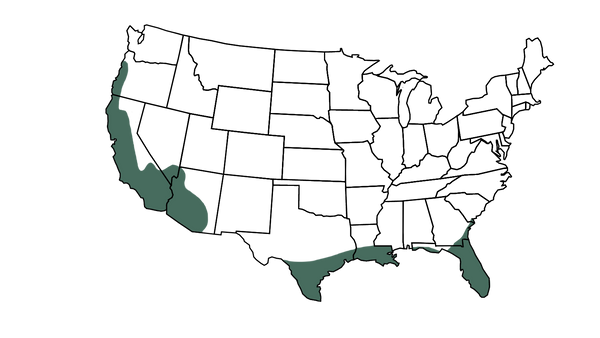
Where it grows in the groundShaded areas are the zones where it can be planted outdoors.


Size guide & what arrives
| *Trade size | **Pot size |
|---|---|
| 1 gallon | 6" |
| 3 gallon | 8 to 10" |
| 5 gallon | 10 to 12" |
| 7 gallon | 14" |
| 10 gallon | 15 to 17" |
| 15 gallon | 17" |
| "Jumbo" | 7 or 10 or 15 gallon |
*Nursery gallon sizes are trade sizes and do not equal standard liquid gallons.
**Pot sizes in inches refer to container width (diameter), not plant or pot height.
Please note: Sizing can differ between plant varieties and growers. Please chat with us if you need clarification.
For more information on sizing, please see our sizing guide.
What arrives
This variety is known for its hardiness and ability to withstand coastal conditions, making it ideal for coastal gardens, but it may require light pruning to maintain shape and promote a more compact form.
What customers are saying
Why customers love it

Healthy, well-rooted plants
Hand-selected and shipped in its nursery pot.

Delivered to your door
Skip the nursery trip. Very little car Tetris required.

Real plant experts
Ask us anything before or after planting.

1-year guarantee
If something goes wrong, we'll help make it right.
Care made simple
Plant it right once and it does the rest.
Pick the spot before you dig.
Water slowly and deeply. Check more often in its first summer.
Enter your ZIP above to check your zone.
Your first year together
- 1Day 1
Plant it, then water slowly until the whole root ball is soaked.
- 2First few weeks
Keep the soil evenly moist while new roots settle in.
- 3First summer
Water deeply during hot, dry spells.
- 4Next spring
New growth starts. Feed as it wakes up.
Planting instructions
Watering & sunlight
Care guide
Shipping & what's inside
Your plant ships in its nursery pot with the soil secured, packed so it stays steady on the way to you.
1-year guarantee
Every plant is covered by our 1-year guarantee. If something goes wrong, contact our team and we'll walk you through it.
 Answered by Simply Trees plant experts
How big does Coast Rosemary get?
How fast does Coast Rosemary grow?
In full sun with well-draining soil and regular deep watering, it can reach its mature size of 2 to 3 feet tall and wide within 3 to 5 years.
Where is the best place to plant Coast Rosemary?
Sunlight: Prefers full sun (at least 6 hours daily) for the healthiest growth and best flowering. It can tolerate light shade but may become leggy.
Soil: Needs well-draining soil, such as sandy or loamy soil. Avoid heavy clay unless amended to improve drainage.
Spacing: For hedges, plant 2-3 feet apart; for standalone shrubs, leave 4-6 feet between plants.
Climate: Thrives in USDA Zones 9-11 and is well-suited for coastal areas due to its salt and wind tolerance.
Protection from Excess Moisture: Avoid low-lying areas where water tends to collect, as overly wet soil can lead to root rot.
Ideal locations include coastal gardens, rock gardens, slopes (for erosion control), along pathways, or as a low-maintenance hedge. It’s also excellent for containers on patios or balconies.
How far apart should I plant Coast Rosemary?
For a hedge or dense screen: Plant 2 to 3 feet apart to create a full, uniform look. Closer spacing encourages a tighter, bushier appearance.
For individual shrubs or accents: Space 4 to 6 feet apart to allow each plant to grow into its natural rounded form.
For mass plantings or erosion control: Space 3 to 5 feet apart, depending on how quickly you want the area to fill in.
If planting near walls, fences, or pathways, keep it at least 3 feet away to allow room for airflow and growth. Proper spacing helps maintain healthy plants with good air circulation, reducing the risk of disease and overgrowth.
How do I care for Coast Rosemary?
Sunlight: Prefers full sun (at least 6 hours daily). It can tolerate light shade but may become leggy.
Soil: Grows best in well-draining soil, such as sandy or loamy soil. Avoid heavy clay unless improved with compost and drainage materials.
Watering: Once established, water deeply but infrequently. In hot, dry weather, water once a week; in cooler months, reduce watering to every 2-3 weeks or only as needed.
Pruning: Lightly trim throughout the year to maintain shape and encourage dense growth. A more significant pruning in late winter or early spring will help rejuvenate older plants.
Fertilizing: Coast Rosemary doesn’t need much feeding, but a light application of a balanced fertilizer in spring can encourage healthy growth.
Cold Tolerance: Hardy in USDA Zones 9-11. It can handle mild frost but may need protection in colder climates.
Pests & Diseases: Generally pest-free, but avoid overwatering to prevent root rot.
With minimal care, Coast Rosemary makes an excellent hedge, border plant, or container shrub, adding soft texture and coastal charm to any landscape.
How often should I water Coast Rosemary?
During establishment (first 6-12 months): Water 2-3 times per week, ensuring the soil stays moist but not soggy to help roots develop. Or every other day during extreme heat. Always check the soil first.
In hot, dry weather (summer): Water once a week or every 4-5 days in extreme heat. If planted in a container, check the soil more often, as pots dry out faster.
In mild or cool weather (spring and fall): Water every 10-14 days, allowing the top few inches of soil to dry out between waterings.
In winter: Water once every 2-3 weeks or only if there has been no rainfall. Too much moisture in cold conditions can lead to root rot.
Always check the soil before watering—if the top 2-3 inches feel dry, it’s time to water. Overwatering can be harmful, so it’s better to underwater than to keep the soil constantly wet.
When should I prune Coast Rosemary?
For a formal hedge or rounded shape, trim it every few months to prevent it from becoming too woody. If the plant has become overgrown, a hard prune in early spring can help rejuvenate it, but avoid cutting too far into old wood, as it may struggle to regrow. Regular light pruning will keep Coast Rosemary looking its best year-round.
Can I plant Coast Rosemary in a planter?
Choose a large container with good drainage to accommodate its root system. A pot at least 12-18 inches wide and deep works well.
Use well-draining soil, such as a high-quality potting mix with added sand or perlite to prevent soggy roots.
Place it in full sun, with at least 6 hours of direct sunlight daily for best growth and flowering.
Water regularly, but allow the top few inches of soil to dry out between waterings. Avoid overwatering, as this plant is drought-tolerant once established.
Prune occasionally to maintain its compact shape and prevent it from becoming too woody.
With proper care, Coast Rosemary thrives in planters and can add a soft, coastal charm to any outdoor space.