Introduction
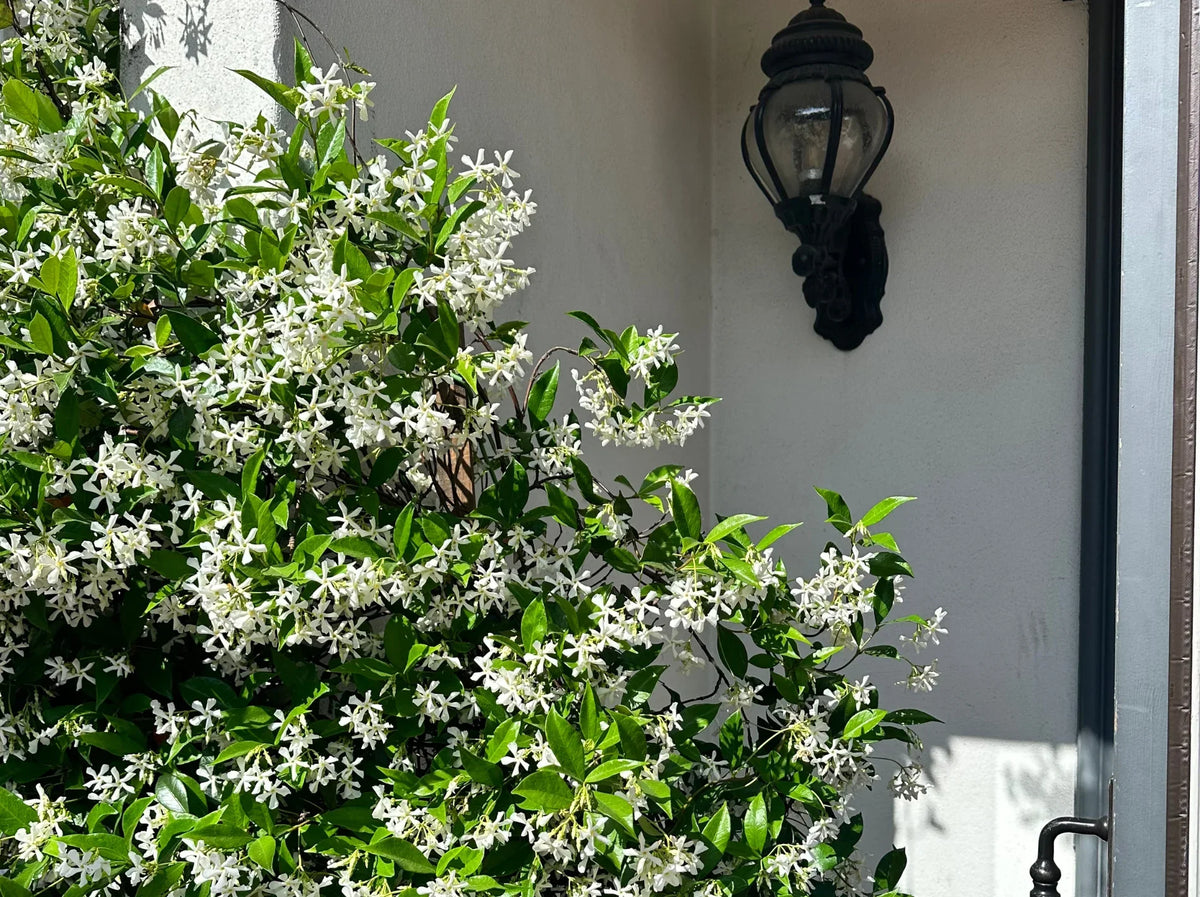
Few plants can transform a garden quite like star jasmine. With its glossy evergreen foliage, delicate white flowers, and wonderfully sweet fragrance, this versatile climbing vine brings beauty and scent to fences, trellises, patios, and outdoor living spaces.
Fortunately, star jasmine care is relatively straightforward once you understand the plant's needs. The key is providing sufficient sunlight, well-draining soil, consistent watering during establishment, and appropriate fertilization to support healthy growth and flowering.
Whether you're creating a fragrant privacy screen or adding greenery to a garden trellis, Star Jasmine Vine from Simply Trees is a beautiful option for bringing evergreen foliage and fragrant blooms into your landscape.
In this complete guide, we'll cover how to grow and care for star jasmine, when to fertilize, which fertilizer to use, how to encourage more flowers, and how to identify and fix common star jasmine problems.
Star Jasmine Care at a Glance
Before diving into the details, here's a quick overview of the ideal growing conditions for star jasmine.
| Care Requirement | Ideal Conditions |
|---|---|
| Botanical Name | Trachelospermum jasminoides |
| Common Names | Star Jasmine, Confederate Jasmine |
| Plant Type | Evergreen flowering vine |
| Sunlight | Full sun to partial shade |
| Soil | Fertile, well-draining soil |
| Watering | Regular watering during establishment; less frequent once established |
| Fertilizer | Balanced, slow-release fertilizer when needed |
| Blooming Season | Late spring through early summer, with occasional later flowers |
| Flower Color | White to creamy white |
| Pruning | After the main flowering period |
| USDA Hardiness Zones | Generally Zones 8–10 |
| Growth Habit | Climbing, twining, or spreading |
1. How to Care for Star Jasmine
Star jasmine (Trachelospermum jasminoides) is a woody evergreen vine known for its fragrant, pinwheel-shaped flowers and dense, glossy leaves.
Despite its name, star jasmine is not a true jasmine. It belongs to the dogbane family, Apocynaceae, rather than the jasmine genus Jasminum. However, its intensely fragrant flowers give it many of the same ornamental qualities that gardeners love about true jasmine plants.
Star jasmine can be trained along trellises, fences, arbors, or other supporting structures. It can also be maintained as a spreading ground cover or grown in large containers.
Successful star jasmine care begins with choosing an appropriate planting location and allowing the plant to develop a strong root system.
Where Should You Plant Star Jasmine?
Choose a location with plenty of sunlight, good drainage, and enough space for the vine to spread.
Star jasmine is particularly attractive when grown:
- Along fences to create evergreen screening
- On trellises and arbors for vertical interest
- Near patios and walkways where its fragrance can be enjoyed
- In large containers with climbing supports
- As a flowering ground cover in suitable landscapes
Because star jasmine is a twining vine, it needs a structure around which its stems can wrap. Unlike some climbing plants, it does not attach itself directly to bare walls without additional support.
How Much Sun Does Star Jasmine Need?
Star jasmine generally grows best in full sun to partial shade.
For the most abundant flowering, choose a location that receives approximately six or more hours of direct sunlight daily, provided the plant is not exposed to excessive heat stress.
In very hot climates, particularly areas with intense afternoon sunlight, some afternoon shade can help reduce moisture stress and leaf scorch.
Although star jasmine tolerates partial shade, plants grown in lower light conditions may produce fewer flowers and develop less vigorous growth.
What Is the Best Soil for Star Jasmine?
Star jasmine prefers fertile, well-draining soil that provides adequate moisture without becoming waterlogged.
It adapts to different soil types, including loamy and sandy soils, but drainage is especially important for preventing root problems.
For healthy growth, aim for soil that is:
- Well-draining and properly aerated
- Enriched with organic matter when needed
- Able to retain some moisture without remaining saturated
- Free from severe compaction
If your garden has heavy clay soil, consider improving the planting area's drainage before installing star jasmine.
For container-grown plants, choose a quality outdoor potting mix and a container with sufficient drainage holes.
2. How Often Should You Water Star Jasmine?
Watering is one of the most important parts of star jasmine care, particularly during the first growing season.
Young plants need regular moisture to establish a healthy root system. Once established, star jasmine becomes more tolerant of occasional dry conditions, although prolonged drought can still affect growth and flowering.
Watering Newly Planted Star Jasmine
During establishment, keep the root zone consistently moist without allowing it to become waterlogged.
Water thoroughly after planting and monitor soil moisture regularly, especially during hot or dry weather.
A practical watering approach is:
- Check the soil moisture a few inches below the surface.
- If the root zone is beginning to dry, water deeply.
- Allow excess water to drain away.
- Check again before the next watering rather than following a rigid schedule.
Newly planted star jasmine may need frequent watering during hot weather, but the exact frequency depends on rainfall, soil type, temperature, and plant size.
Watering Established Star Jasmine
Once star jasmine has developed a healthy root system, it becomes moderately drought-tolerant.
However, drought tolerance does not mean the plant should remain completely dry for extended periods.
Deep, occasional watering during prolonged dry spells helps maintain healthy foliage and supports flower production.
Container-grown star jasmine generally needs more frequent watering than plants growing directly in the ground because containers dry out faster.
Signs Your Star Jasmine Needs Water
Common signs of insufficient moisture include:
- Wilting or drooping leaves
- Dry or curling foliage
- Brown, crispy leaf edges
- Slower growth during warm weather
- Premature flower or bud drop
Always check soil moisture before increasing watering, since some of these symptoms can also occur when roots are damaged by excessive moisture.
3. Best Fertilizer for Star Jasmine: What to Use and When
Choosing the right fertilizer for star jasmine can help encourage healthy foliage, strong vine growth, and abundant flowering.
However, star jasmine is not an especially heavy feeder. Established plants growing in fertile soil may require little additional fertilizer.
Rather than feeding on a fixed schedule regardless of plant health, consider existing soil fertility, plant growth, and the time of year.
What Is the Best Fertilizer for Star Jasmine?
A balanced, slow-release fertilizer designed for ornamental shrubs and flowering plants is generally a good choice.
A star jasmine fertilizer should provide the essential nutrients needed for healthy growth:
- Nitrogen (N): Supports healthy green foliage and new stem growth.
- Phosphorus (P): Contributes to root development and flowering processes.
- Potassium (K): Supports general plant health and stress tolerance.
- Micronutrients: Iron, magnesium, and other essential elements support normal plant functions.
A general-purpose fertilizer with an NPK ratio such as 10-10-10 may be suitable when additional nutrients are needed and soil conditions support its use.
However, no single NPK ratio is universally best. A soil test can help determine whether your star jasmine requires specific nutrients.
When Should You Fertilize Star Jasmine?
The best time to fertilize star jasmine is generally in early spring, as new growth begins.
For plants that need additional nutrition, a second feeding after the main flowering period may be appropriate, depending on the fertilizer's instructions and local growing conditions.
| Season | Fertilizer Recommendation |
|---|---|
| Early Spring | Apply a balanced fertilizer if needed as active growth begins |
| Late Spring–Summer | Consider additional feeding after flowering if plant growth or soil fertility warrants it |
| Fall | Avoid encouraging tender growth before freezing temperatures |
| Winter | Generally avoid fertilizing dormant or slow-growing plants |
Care tip: Newly delivered or transplanted star jasmine should be allowed to establish before receiving additional fertilizer. Follow the nursery's care instructions and avoid fertilizing drought-stressed plants.
Can Too Much Fertilizer Harm Star Jasmine?
Yes. Overfertilization can damage roots, contribute to fertilizer salt buildup, and cause leaf discoloration or browning.
Excessive nitrogen can also encourage vigorous leafy growth without necessarily improving flowering.
Signs of possible fertilizer problems include:
- Brown or scorched leaf margins
- Sudden decline following fertilizer application
- Excessive leafy growth with relatively few flowers
- Visible fertilizer salt deposits in container soil
If you suspect fertilizer damage, stop feeding temporarily and check the soil moisture and drainage.
Should You Use Organic Fertilizer for Star Jasmine?
Organic fertilizers can be suitable for star jasmine, provided they supply appropriate nutrients.
Compost and certain organic fertilizers can improve soil quality and provide nutrients gradually. However, nutrient availability varies by product and environmental conditions.
The most important consideration is using the correct fertilizer at the appropriate rate, rather than assuming that organic or synthetic fertilizers are automatically better.
4. Common Star Jasmine Problems and How to Fix Them
Although star jasmine is generally considered a relatively low-maintenance plant, environmental stress, pests, and poor growing conditions can occasionally affect its appearance.
Understanding common star jasmine problems can help you identify the cause before making changes to watering, fertilizer, or pruning.
Problem #1: Star Jasmine Leaves Turning Yellow
Yellowing leaves are among the most frequently reported star jasmine problems.
Possible causes include overwatering, poor drainage, nutrient deficiencies, and natural leaf aging.
If numerous leaves are turning yellow and the soil remains wet, examine the drainage conditions first.
If yellowing occurs mainly on new leaves while the veins remain green, a nutrient availability problem may be involved.
What to do:
- Check moisture below the soil surface.
- Make sure water drains away from the root zone.
- Inspect the plant for pests.
- Consider a soil test if yellowing persists.
- Avoid applying extra fertilizer before identifying the cause.
Keep in mind that a few older leaves naturally yellow and drop as evergreen plants replace their foliage.
Problem #2: Star Jasmine Leaves Turning Brown or Red
Star jasmine leaves may develop reddish, bronze, or brown coloration when exposed to cold temperatures or environmental stress.
Some seasonal bronzing can be normal, particularly during colder weather. However, widespread browning or crispy leaves may indicate a more serious issue.
Potential causes include:
- Cold or frost damage
- Prolonged drought
- Excessive direct heat or sunlight
- Root damage from poor drainage
- Fertilizer salt buildup
What to do: Assess the plant's recent weather conditions and check soil moisture. Avoid immediately removing all discolored foliage if cold damage is suspected, since some stems may recover when warmer weather returns.
Problem #3: Star Jasmine Not Flowering
If your star jasmine is growing plenty of leaves but producing very few flowers, insufficient sunlight may be the problem.
Star jasmine generally produces its best flowering display in sunny locations.
Other possible causes include improper pruning, excessive nitrogen fertilization, and plant immaturity.
What to do:
- Ensure the plant receives sufficient sunlight.
- Avoid excessive nitrogen fertilization.
- Prune after the main flowering period.
- Maintain adequate moisture during bud development.
- Allow newly planted vines time to establish.
Healthy foliage does not always guarantee abundant flowers. Light exposure and pruning timing are particularly important.
Problem #4: Star Jasmine Leaves Dropping
Star jasmine is evergreen, but it still sheds older leaves naturally.
However, excessive leaf drop can occur when plants experience abrupt environmental changes, severe drought, root damage, or cold stress.
What to do: Look at the overall condition of the plant. If new growth remains healthy and only a small number of older leaves are dropping, the change may be normal.
If leaf drop is widespread, inspect soil moisture, drainage, and recent temperature changes.
Problem #5: Star Jasmine Pests
Star jasmine is relatively resistant to many serious pests, but occasional infestations can occur.
Common pests include:
- Scale insects: Small, attached insects that feed on plant sap and may cause yellowing or sticky residue.
- Spider mites: Tiny pests that can create pale speckling and fine webbing on foliage.
- Aphids: Sap-feeding insects that may gather on tender new growth.
- Mealybugs: Soft-bodied insects that appear as white, cottony clusters.
What to do: Inspect leaves and stems carefully, including leaf undersides. Remove small infestations where practical and use an appropriately labeled horticultural treatment when necessary.
Always follow product instructions to avoid damaging foliage or affecting beneficial insects.
Problem #6: Star Jasmine Root Rot
Root rot can develop when roots remain in poorly drained or waterlogged soil.
Symptoms may include yellowing leaves, wilting despite wet soil, slow growth, and overall decline.
What to do: Improve drainage and avoid unnecessary watering. Container-grown plants may require fresh potting mix and removal of severely damaged roots.
For established landscape plants, correcting the underlying drainage problem is especially important.
Star Jasmine Troubleshooting Guide
| Symptom | Possible Cause | What to Check |
|---|---|---|
| Yellow leaves and wet soil | Overwatering or root problems | Drainage and root health |
| Yellow new leaves with green veins | Possible nutrient availability issue | Soil pH and nutrients |
| Red or bronze leaves in winter | Cold-related coloration or stress | Temperature and overall plant health |
| Brown, crispy leaves | Drought, sun scorch, or root stress | Soil moisture and exposure |
| Healthy leaves but few flowers | Insufficient sunlight or pruning issues | Light exposure and pruning history |
| Sticky leaves or visible insects | Possible pest infestation | Stems and leaf undersides |
| Wilting despite wet soil | Possible root damage | Drainage and root condition |
| Slow growth after planting | Establishment stress or poor conditions | Root moisture, sunlight, and soil |
5. How to Prune Star Jasmine for Healthy Growth
Pruning helps maintain a tidy appearance, encourages denser growth, and prevents star jasmine from spreading beyond its intended space.
Because star jasmine can develop long, vigorous vines, regular shaping is particularly useful when growing it on fences, trellises, and arbors.
When Is the Best Time to Prune Star Jasmine?
The best time to perform major shaping is generally after the main flowering period, typically in late spring or summer depending on your climate.
Pruning immediately after flowering allows you to control the plant's size while reducing the risk of removing developing flower buds for the next blooming season.
Dead, damaged, or diseased stems can be removed as needed.
How to Prune Star Jasmine
- Begin by removing dead or damaged stems.
- Trim long, unruly shoots to maintain the desired shape.
- Cut back selected stems to encourage branching and denser coverage.
- Redirect healthy vines along the intended support structure.
- Avoid removing excessive healthy growth at once.
Important: Star jasmine releases a sticky, milky sap when cut. Wear gloves if you have sensitive skin and clean pruning tools after use.
How to Train Star Jasmine on a Trellis
Star jasmine is a twining vine, meaning it climbs by wrapping its stems around suitable supports.
To train it vertically, gently guide young stems around a trellis, wire, or other climbing structure. Use soft plant ties where necessary without restricting stem growth.
As the vine develops, continue directing new growth to create even coverage.
This makes star jasmine particularly useful for creating attractive green screens and adding height to smaller gardens.
6. How to Encourage More Star Jasmine Flowers
One of the main reasons gardeners grow star jasmine is its intensely fragrant flowering display.
Clusters of small, white, pinwheel-shaped flowers usually appear in late spring and early summer, although blooming time varies with climate.
To encourage healthy flowering, focus on creating the right conditions rather than relying on extra fertilizer alone.
Provide Sufficient Sunlight
Sunlight is one of the most important factors affecting flower production.
For abundant blooms, provide a sunny location with some afternoon shade if your climate experiences extreme summer heat.
Avoid Excess Nitrogen Fertilizer
Too much nitrogen can encourage leafy growth without necessarily improving flowering.
Use a balanced fertilizer when nutrients are needed rather than repeatedly applying high-nitrogen products.
Maintain Consistent Soil Moisture
Severe drought during bud development may reduce flowering or cause buds to drop.
Keep the soil adequately moist during active growth while avoiding waterlogged conditions.
Prune After Flowering
Pruning at the wrong time may remove growth that would otherwise produce flowers.
For most star jasmine plants, major shaping after the main bloom period is preferable to heavy pruning immediately before flowering.
7. Star Jasmine Care Through the Seasons
Adjusting your care routine throughout the year helps support healthy growth and prepares star jasmine for changing weather conditions.
Spring Star Jasmine Care
- Inspect the plant for winter damage.
- Remove dead or damaged stems as needed.
- Apply fertilizer if soil fertility or plant condition warrants it.
- Monitor soil moisture as new growth begins.
- Guide developing vines along supports.
Summer Star Jasmine Care
- Water during extended periods of hot, dry weather.
- Prune after the main flowering period.
- Inspect foliage for pests.
- Maintain adequate soil moisture in containers.
- Train long stems to prevent unwanted spreading.
Fall Star Jasmine Care
- Reduce fertilization as the growing season slows in colder regions.
- Continue watering when necessary.
- Apply mulch to help moderate root-zone temperatures.
- Prepare container-grown plants for approaching cold weather.
Winter Star Jasmine Care
- Protect plants during unusually severe freezes.
- Avoid overwatering during cool, slow-growing conditions.
- Monitor leaves for cold-related discoloration.
- Move container plants to a protected location where necessary.
- Avoid heavy pruning immediately before freezing weather.
Winter care varies significantly by USDA hardiness zone. In colder climates, star jasmine may need to be grown in containers and protected indoors during winter.
8. Common Star Jasmine Care Mistakes to Avoid
Although star jasmine is adaptable and relatively easy to grow, several mistakes can affect its appearance and flowering performance.
- Planting in poorly drained soil: Waterlogged roots may develop rot and cause yellowing foliage.
- Providing too little sunlight: Excessive shade can reduce flowering.
- Overfertilizing: Too much fertilizer may damage roots or encourage excessive foliage.
- Pruning before flowering: Heavy pruning at the wrong time can remove developing flower buds.
- Underwatering newly planted vines: Young plants require consistent moisture to establish strong roots.
- Ignoring climbing support: Star jasmine requires suitable structures to develop vertical coverage.
- Overlooking cold protection: Plants grown near the colder edge of their hardiness range may suffer freeze damage.
Most star jasmine problems can be prevented by selecting an appropriate planting location, maintaining good drainage, and adjusting care according to the season.
Frequently Asked Questions About Star Jasmine Care
Is star jasmine easy to care for?
Yes. Star jasmine is generally a relatively low-maintenance evergreen vine once established. It grows best in full sun to partial shade, well-draining soil, and a location with sufficient space or climbing support.
What is the best fertilizer for star jasmine?
A balanced, slow-release fertilizer for ornamental plants is usually suitable when additional nutrients are needed. A soil test can help determine whether specific nutrients are lacking.
When should I fertilize star jasmine?
Early spring is generally the best time to fertilize star jasmine as new growth begins. A second application after flowering may be appropriate if plant needs and fertilizer instructions support it.
Why are my star jasmine leaves turning yellow?
Yellow leaves can result from overwatering, poor drainage, nutrient deficiencies, or natural leaf aging. Check soil moisture and drainage before applying additional fertilizer.
Why is my star jasmine turning brown?
Brown leaves may be caused by drought, excessive heat, freezing temperatures, root problems, or fertilizer damage. Some red or bronze coloration during colder weather can be a normal response to seasonal stress.
How often should I water star jasmine?
Water newly planted star jasmine regularly to support root establishment. Established plants are moderately drought-tolerant but benefit from deep watering during prolonged dry periods. Always adjust watering according to soil moisture and weather.
Does star jasmine need full sun?
Star jasmine grows in full sun to partial shade. Sunny conditions generally support more abundant flowering, while some afternoon shade can be beneficial in exceptionally hot climates.
Why is my star jasmine not flowering?
Insufficient sunlight, pruning at the wrong time, excessive nitrogen fertilization, or environmental stress can reduce flowering. Ensure the plant receives adequate light and avoid unnecessary heavy pruning before its blooming season.
Can star jasmine grow in pots?
Yes. Star jasmine can grow successfully in containers with well-draining potting mix, adequate drainage holes, and climbing support. Container plants may require more frequent watering and fertilization than established landscape plants.
How fast does star jasmine grow?
Star jasmine can develop vigorous growth once established, with climbing vines potentially reaching 20 feet or more when supported. Growth rate depends on sunlight, temperature, soil conditions, and plant maturity.
When should I prune star jasmine?
Major pruning is generally best performed after the main flowering period. This helps maintain shape while reducing the chance of removing flower-producing growth.
Is star jasmine evergreen?
Yes. Star jasmine is a broadleaf evergreen vine in suitable climates. Its glossy green leaves provide year-round visual interest, although some foliage may turn bronze or reddish during cold weather.
Is star jasmine the same as Confederate jasmine?
Yes. Star jasmine and Confederate jasmine are common names for Trachelospermum jasminoides. Despite the name, it is not a true jasmine from the genus Jasminum.
Final Thoughts: Growing Healthy, Fragrant Star Jasmine
Star jasmine is a beautiful choice for gardeners who want fragrant flowers, evergreen foliage, and versatile climbing growth.
Whether you're training it along a trellis, creating a privacy screen, or growing it in a patio container, successful star jasmine care begins with a few essential practices: sufficient sunlight, well-draining soil, consistent watering during establishment, and appropriate fertilization.
If your star jasmine develops yellow leaves, brown foliage, or reduced flowering, begin by checking its growing conditions before reaching for additional fertilizer. Identifying the underlying cause is often the quickest way to restore healthy growth.
With proper care and occasional pruning, star jasmine can reward you with lush greenery and beautifully fragrant flowers for years to come.
Beautiful gardens start with healthy plants and the knowledge to help them thrive.