Introduction
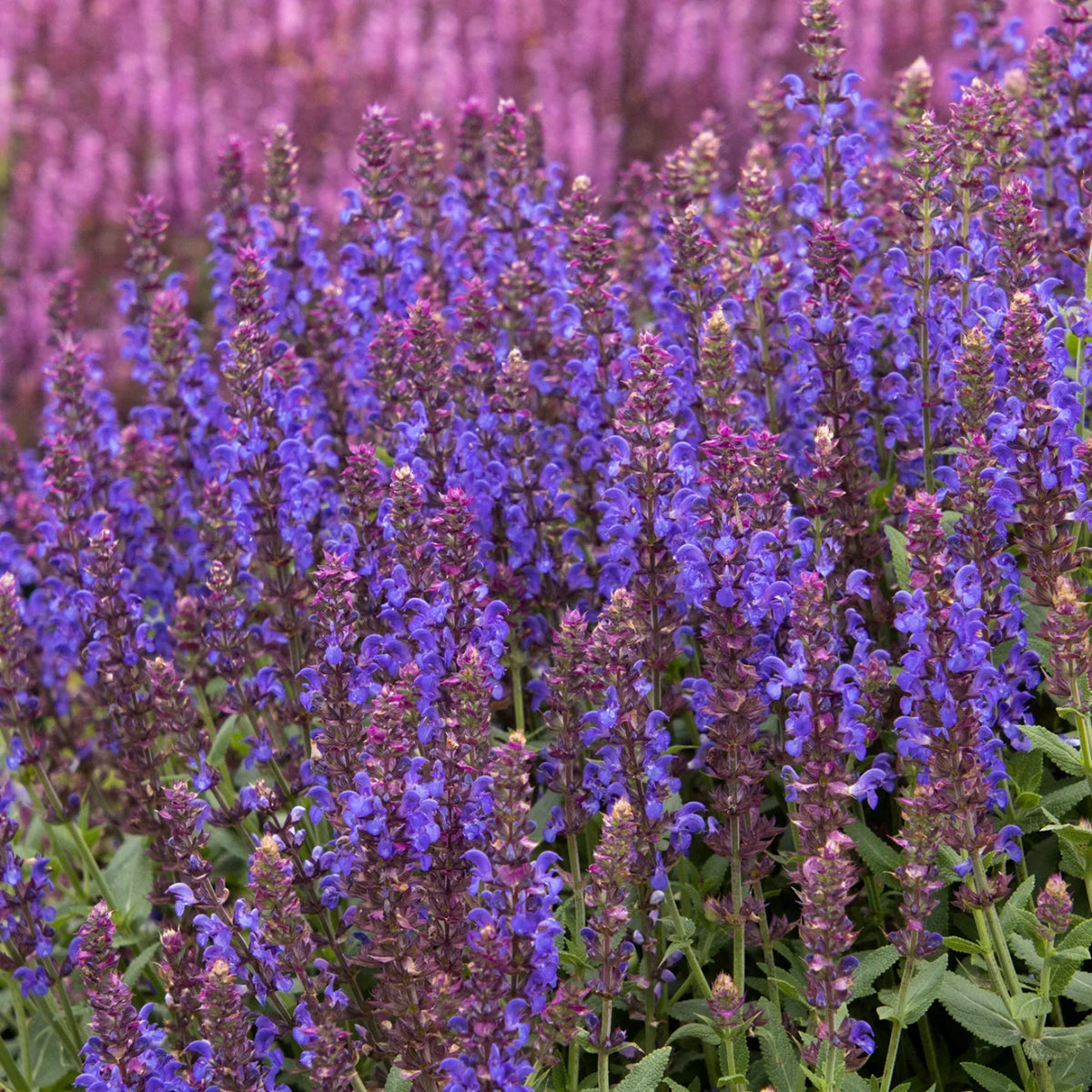
Meadow Sage is a beautiful, low-maintenance flowering perennial known for its upright flower spikes, colorful blooms, and ability to attract bees, butterflies, and other pollinators. With varieties producing flowers in shades of blue, purple, and white, Meadow Sage is a popular choice for garden borders, cottage gardens, walkways, and pollinator-friendly landscapes.
One of the biggest advantages of Meadow Sage is its ability to produce additional flowers after its first bloom. With proper sunlight, watering, and pruning, many varieties can rebloom throughout the growing season.
Meadow sage care is relatively straightforward once the plant is established. The key is providing full sun, well-draining soil, consistent moisture during establishment, and timely removal of spent flower spikes.
This guide covers how to care for Meadow Sage, including planting, watering, sunlight, fertilizer, pruning, winter care, and common problems. We'll also explore different Meadow Sage varieties and explain how to encourage repeat flowering.
Meadow Sage Care at a Glance
| Care Requirement | Meadow Sage Preference |
|---|---|
| Botanical Name | Salvia nemorosa and related ornamental Salvia hybrids |
| Plant Type | Herbaceous flowering perennial |
| Sunlight | Full sun; tolerates some partial shade |
| Soil | Well-draining garden soil |
| Watering | Regularly during establishment; moderately drought tolerant once established |
| Fertilizer | Light feeding if needed |
| Blooming Season | Late spring through summer, with possible repeat blooming |
| Pruning | Deadhead after flowering to encourage reblooming |
| Winter Habit | Typically dies back above ground and returns in spring |
| Best Uses | Pollinator gardens, perennial borders, cottage gardens, mass plantings, containers |
| Common Problems | Poor blooming, floppy growth, yellow leaves, crown rot, fungal disease |
What Is Meadow Sage?
Meadow Sage commonly refers to flowering perennial Salvias, particularly Salvia nemorosa and closely related hybrids. These plants belong to the mint family, Lamiaceae, and are valued for their upright flower spikes, aromatic foliage, and relatively easy maintenance.
Unlike culinary sage, which is grown mainly for its edible leaves, Meadow Sage is primarily an ornamental plant grown for its colorful flowers.
Meadow Sage typically develops a compact clump of green foliage, with tall flowering stems rising above the leaves. Depending on the variety, the flowers may appear in shades of violet-blue, purple, lavender, pink, or white.
Many cultivars are hardy, drought tolerant once established, and relatively resistant to deer and rabbit browsing, although no plant is completely deer-proof.
Meadow Sage is especially useful in pollinator gardens because its flowers provide nectar for bees, butterflies, and sometimes hummingbirds.
Meadow Sage Varieties at Simply Trees
While most Meadow Sage varieties share the same basic care requirements, they differ in flower color, mature size, bloom timing, and growth habit.
Apex™ Blue Meadow Sage

Apex™ Blue Meadow Sage is a compact flowering Salvia known for its blue-violet flowers and pollinator appeal. Its manageable growth habit makes it suitable for sunny garden borders, smaller landscapes, and mass plantings.
This variety is valued for its heat tolerance and ability to produce additional flowers during summer under suitable conditions.
Noble Knight Meadow Sage

Noble Knight Meadow Sage is a compact perennial with purple-blue flower spikes. It brings vibrant early-season color to sunny landscapes and attracts beneficial pollinators.
This variety is particularly attractive for perennial borders, cottage gardens, and planting in groups for a stronger display of color.
Salute® White Meadow Sage

Salute® White Meadow Sage offers the same upright flowering habit associated with ornamental Salvias, but with clean white blooms rather than the more familiar blue or purple flowers.
It is a good choice for gardeners looking to brighten perennial borders, create contrast with darker foliage, or add white flowers to pollinator-friendly landscapes.
How to Care for Meadow Sage
Successful meadow sage care begins with choosing the right planting location. Meadow Sage performs best when it receives abundant sunlight and grows in soil that drains well.
Once established, it is generally a low-maintenance perennial that requires relatively little attention beyond seasonal watering and pruning.
Essential Meadow Sage care tips:
- Plant in full sun for the strongest flowering.
- Choose well-draining garden soil.
- Water regularly while the plant establishes.
- Reduce supplemental watering once established, but avoid prolonged severe drought.
- Remove spent flower spikes to encourage reblooming.
- Avoid excessive fertilizer.
- Allow good airflow between plants.
- Remove winter-damaged stems in early spring.
Meadow Sage is generally forgiving, but too much shade, saturated soil, and neglected flower stalks can reduce its overall performance.
How Much Sun Does Meadow Sage Need?
Meadow Sage grows and flowers best in full sun, ideally receiving at least six hours of direct sunlight each day.
Some varieties tolerate partial shade, particularly in regions with extremely hot summers. However, plants growing in too much shade may produce fewer flowers and develop weak, stretched stems.
| Sunlight Exposure | Effect on Meadow Sage |
|---|---|
| 6–8 hours of direct sun | Ideal for compact growth and abundant flowers |
| 4–6 hours of sun | Generally tolerated, but may reduce blooming |
| Mostly shaded conditions | May cause leggy growth and fewer flowers |
Signs Meadow Sage needs more sunlight:
- Few flowers despite otherwise healthy foliage
- Long, weak stems
- Growth leaning toward available sunlight
- Open or floppy growth instead of a compact clump
For the most attractive flowering display, plant Meadow Sage in an open, sunny part of the garden.
Best Soil for Meadow Sage
Meadow Sage prefers well-draining soil with moderate fertility. It adapts to a range of garden soils, including sandy and loamy conditions, provided water does not remain around the roots for extended periods.
Unlike plants that require consistently wet soil, established Meadow Sage can tolerate occasional dry conditions.
Good Meadow Sage soil should:
- Drain well after rainfall or irrigation.
- Allow air to circulate around the roots.
- Provide moderate nutrients without excessive fertility.
- Retain some moisture during the establishment period.
- Avoid standing water around the crown.
Heavy clay soil is not automatically unsuitable, but drainage is important. If water regularly collects in the planting area, consider a raised bed or an alternative location.
When to Plant Meadow Sage
Spring and early fall are generally excellent times to plant Meadow Sage.
Spring planting gives the perennial an entire growing season to develop roots before winter. Early fall planting can also work well because cooler temperatures reduce transplant stress while the soil remains warm enough for root growth.
| Season | Planting Recommendation |
|---|---|
| Spring | Excellent time to establish new plants |
| Summer | Possible with careful watering during hot weather |
| Early fall | Good in many regions if roots can establish before hard freezes |
| Winter | Generally avoid planting in frozen or saturated ground |
In colder climates, spring planting is often the safest choice for newly purchased perennials.
How to Plant Meadow Sage
Planting Meadow Sage correctly helps the roots establish and reduces the risk of moisture-related problems.
Step-by-step planting instructions:
- Choose a sunny location with well-draining soil.
- Dig a hole approximately twice as wide as the root ball.
- Remove the plant gently from its nursery container.
- Loosen any tightly circling roots without excessively disturbing the root system.
- Place the plant at approximately the same soil depth as it was growing in its nursery pot.
- Backfill with soil and gently firm it around the roots.
- Water thoroughly to settle the soil.
- Apply a light layer of mulch around the plant, keeping mulch away from the crown.
Allow enough space between plants for their mature width. Compact cultivars may need approximately 12–18 inches of spacing, while larger selections may require 18–24 inches or more. Check the mature size of your chosen variety.
For additional planting guidance, read the Simply Trees Guide to Planting.
How Often Should You Water Meadow Sage?
Newly planted Meadow Sage needs consistent moisture while establishing its roots. Once established, it becomes more tolerant of dry conditions and typically needs less supplemental watering.
The ideal watering frequency depends on temperature, soil drainage, rainfall, plant size, and whether the plant is growing in a container or the ground.
For established Meadow Sage, water deeply when the root zone has dried and the plant needs moisture, rather than keeping the soil constantly wet.
| Plant Stage | Watering Approach |
|---|---|
| Immediately after planting | Water thoroughly to settle the soil |
| First growing season | Water regularly as the root zone begins to dry |
| Established plants | Water during extended dry periods as needed |
| During flowering | Avoid prolonged drought stress to support healthy blooms |
| Winter dormancy | Usually little supplemental water is needed |
Meadow Sage is moderately drought tolerant once established, but this does not mean it should be completely neglected during extended heat waves or prolonged dry weather.
Inadequate moisture during flowering can reduce bloom quality and the likelihood of a strong second flush.
For more help with watering, visit the Simply Trees Guide to Watering.
Does Meadow Sage Need Fertilizer?
Meadow Sage generally does not require heavy fertilization. Many perennial Salvias perform well in ordinary garden soil with moderate fertility.
Excessive fertilizer, particularly nitrogen-rich products, can encourage lush foliage at the expense of flowering and may contribute to weak, floppy stems.
Meadow Sage fertilizer tips:
- Do not fertilize automatically if the plant is growing and blooming well.
- Consider a light application of balanced, slow-release fertilizer in spring if the soil is nutrient deficient.
- Avoid excessive nitrogen.
- Do not fertilize a plant suffering from waterlogged soil or root problems.
- Avoid heavy late-season feeding before winter.
- Follow fertilizer label instructions carefully.
If your Meadow Sage is producing healthy leaves but few flowers, insufficient sunlight is often a more important factor to investigate than fertilizer.
For general feeding guidance, read the Simply Trees Guide to Fertilizing.
How to Prune Meadow Sage
Pruning is an important part of meadow sage care because many varieties respond well to deadheading after their first flowering period.
Unlike woody shrubs, Meadow Sage is a herbaceous perennial. Its flowering stems can be cut back after blooming without removing the entire plant.
How to prune Meadow Sage:
- Wait until the main flower spikes have finished blooming.
- Use clean, sharp pruning shears.
- Cut spent flowering stems back to healthy lower foliage or basal leaves.
- Remove damaged or excessively floppy stems.
- Leave healthy foliage intact to support continued growth.
- Water appropriately during dry weather as the plant produces new growth.
Removing spent flower stalks can encourage the plant to produce fresh shoots and additional blooms later in the growing season.
How to Get Meadow Sage to Rebloom
One of the most attractive characteristics of Meadow Sage is its potential for repeat flowering. Many cultivars produce a strong initial bloom in late spring or early summer, followed by additional flower spikes after deadheading.
Reblooming depends on variety, weather, sunlight, and the plant's overall health. It is not guaranteed to produce continuous flowers all season.
Tips to encourage Meadow Sage reblooming:
- Deadhead after the first bloom: Remove fading flower spikes before the plant directs too much energy toward seed production.
- Maintain full sun: Abundant sunlight supports flower development.
- Water during prolonged drought: Severe moisture stress can limit new flower production.
- Avoid excess fertilizer: Too much nitrogen can promote leaves instead of flowers.
- Keep the plant healthy: Good drainage and airflow help prevent disease-related stress.
Some varieties may produce multiple flowering flushes, while others bloom more modestly after their initial display.
When Should You Deadhead Meadow Sage?
Deadhead Meadow Sage when the majority of flowers on a spike have faded and the flowering stem begins to lose its ornamental appeal.
You can remove individual spent spikes throughout the flowering season or cut the flowering stems back together after the main bloom.
If you cut the stems back to healthy basal foliage, fresh flowering stems may emerge as the plant regrows.
Deadheading is most beneficial during the active growing season, when there is enough warmth and daylight for the plant to produce another flush of flowers.
Meadow Sage Winter Care
Meadow Sage is a herbaceous perennial, meaning its aboveground growth typically dies back during winter in colder climates. Although the foliage may turn brown and disappear, the root system can remain alive beneath the soil.
As temperatures warm in spring, new growth usually emerges from the base of the plant.
Winter hardiness varies by cultivar. For example, Simply Trees lists Noble Knight Meadow Sage for Zones 3–9 and Apex™ Blue and Salute® White for Zones 4–9 in their product descriptions.
How to care for Meadow Sage in winter:
- Reduce watering as growth slows and the plant becomes dormant.
- Maintain well-draining soil to prevent winter crown rot.
- Avoid heavy fertilization late in the season.
- Leave healthy or standing stems through winter if desired.
- Remove winter-damaged growth in early spring.
- Protect newly planted or container-grown specimens during unusually severe cold.
In colder regions, a light layer of mulch over the surrounding root zone may help moderate soil temperature fluctuations. Avoid burying the crown beneath wet, compacted mulch.
Should You Cut Back Meadow Sage in Fall or Spring?
Meadow Sage can be cleaned up after frost, but leaving its remaining stems through winter is often beneficial in colder climates.
Standing stems provide some winter garden structure and may help protect the crown. Waiting until early spring also makes it easier to identify where healthy new growth is emerging.
Recommended seasonal pruning:
| Season | Pruning Recommendation |
|---|---|
| Spring | Remove dead winter growth before or as fresh growth begins |
| Summer | Deadhead spent flower spikes to encourage reblooming |
| Fall | Light cleanup if needed; avoid stimulating excessive tender growth before frost |
| Winter | Generally leave dormant growth until spring in colder climates |
Can Meadow Sage Grow in Containers?
Yes. Compact Meadow Sage cultivars can grow successfully in containers, making them useful for sunny patios, balconies, and smaller garden spaces.
Container-grown plants require the same basic conditions as in-ground Meadow Sage but may need more frequent watering during hot weather.
Container care tips:
- Choose a container with drainage holes.
- Use a well-draining potting mix.
- Place the container where it receives full sun.
- Check soil moisture more frequently during summer.
- Remove spent blooms to encourage repeat flowering.
- Protect the roots from severe winter freezing in cold climates.
Container roots are more exposed to temperature extremes than roots growing in the ground. In cold regions, moving the container to a sheltered location or insulating the pot can improve winter survival.
How Fast Does Meadow Sage Grow?
Meadow Sage typically grows at a moderate to relatively fast rate during its active growing season, depending on the variety and conditions.
Newly planted specimens focus first on developing roots. As they become established, they usually develop fuller clumps of foliage and more flowering stems.
Compact varieties are especially suitable for garden borders because they generally maintain a manageable growth habit.
Factors that influence growth rate:
- Amount of direct sunlight
- Soil drainage and fertility
- Water availability
- Temperature and growing season length
- Plant maturity
- Differences between cultivars
Healthy Meadow Sage plants may gradually form larger clumps over time, but they generally do not spread aggressively through underground runners like some other members of the mint family.
How to Divide Meadow Sage
Established Meadow Sage clumps can sometimes be divided to produce additional plants or restore vigor to older, crowded specimens.
Early spring is generally a good time to divide perennial Salvia, just as new growth begins.
How to divide Meadow Sage:
- Wait until spring when new shoots begin emerging.
- Water the plant beforehand if the soil is dry.
- Carefully dig up the clump.
- Separate it into sections with healthy roots and growing points.
- Replant the divisions at approximately their original depth.
- Water thoroughly after planting.
- Maintain appropriate moisture while the divisions establish.
Division is not necessary every year. Healthy plants with plenty of space can often be left undisturbed for several growing seasons.
Common Meadow Sage Problems
Meadow Sage is generally resistant to many serious garden problems, but improper watering, limited sunlight, and poor airflow can still affect its appearance and flowering performance.
| Problem | Possible Cause | Recommended Action |
|---|---|---|
| Few or no flowers | Insufficient sunlight, immaturity, or excess fertilizer | Increase sun exposure and avoid overfeeding |
| Floppy stems | Too much shade, excessive fertilizer, or heavy rain | Improve light and trim spent growth |
| Yellow leaves | Overwatering, drainage problems, or natural aging | Check soil moisture and root health |
| Brown flower spikes | Normal fading after flowering | Deadhead to encourage new blooms |
| Wilting | Drought stress or damaged roots | Check the soil before watering |
| White coating on leaves | Possible powdery mildew | Improve airflow and inspect affected foliage |
| Soft or rotting crown | Prolonged wet soil or crown disease | Improve drainage and reduce excess irrigation |
| No visible growth in winter | Normal dormancy | Wait for spring growth before assessing the plant |
Why Is My Meadow Sage Not Blooming?
If Meadow Sage produces plenty of leaves but few flowers, the most common causes are insufficient sunlight, excess fertilizer, or environmental stress.
Full sun is particularly important for good blooming. Plants grown in shade may survive but often produce fewer flower spikes.
How to improve flowering:
- Provide at least six hours of direct sunlight.
- Avoid excessive nitrogen fertilizer.
- Maintain good drainage.
- Water during prolonged dry weather.
- Deadhead after the first bloom.
- Allow newly planted specimens time to establish.
Remember that Meadow Sage is not necessarily a continuous bloomer. Even healthy plants may have a pause between flowering flushes.
Why Is My Meadow Sage Turning Brown?
Brown flower spikes are often a normal sign that Meadow Sage has finished a flowering cycle. Removing them can improve the plant's appearance and encourage additional blooms.
Brown foliage, however, may indicate drought stress, root problems, disease, or seasonal dormancy.
What different browning patterns may mean:
- Brown flower spikes with green leaves: Usually normal after flowering.
- Dry, crispy leaves during hot weather: May indicate drought stress.
- Brown or yellow foliage with wet soil: Possible root or crown problems.
- Brown foliage after frost: Often normal winter dieback.
Before adding water or fertilizer, inspect the soil and consider the recent weather. The right treatment depends on the underlying cause.
Meadow Sage Root Rot and Crown Rot
Although Meadow Sage tolerates a range of garden conditions, prolonged saturated soil can damage its roots and crown.
Excess moisture limits oxygen availability around the roots and creates favorable conditions for certain fungal and water-mold diseases.
Possible signs of root or crown rot:
- Leaves yellowing or collapsing despite wet soil
- Weak growth
- Soft or discolored stems near the crown
- Roots that appear dark and mushy
- Persistent wilting even when the soil is moist
To reduce the risk, plant in well-draining soil, avoid excessive watering, and keep mulch from accumulating directly against the crown.
Does Meadow Sage Attract Pollinators?
Yes. Meadow Sage is a valuable addition to pollinator-friendly gardens because its tubular flowers provide nectar for bees, butterflies, and other visiting insects.
Flowering Salvia varieties can also attract hummingbirds, although individual preferences vary by species, flower color, and local conditions.
Planting several Meadow Sage plants together can create a more visible display of flowers and help make the planting attractive to pollinators.
Is Meadow Sage Deer Resistant?
Meadow Sage is generally considered relatively resistant to deer and rabbit browsing. Its aromatic foliage may make it less appealing than many other flowering perennials.
However, deer resistance is not deer immunity. Hungry animals may still browse Meadow Sage, particularly when other food sources are scarce.
Meadow Sage vs. Russian Sage: Are They the Same?
No. Meadow Sage and Russian Sage are different ornamental plants, even though both produce purple-blue flowers and are commonly used in sunny landscapes.
Meadow Sage usually refers to Salvia nemorosa and related hybrids, while Russian Sage is commonly known botanically as Salvia yangii, formerly Perovskia atriplicifolia.
Meadow Sage generally develops a more compact clump of foliage with relatively dense flower spikes. Russian Sage typically has an airier appearance with silvery foliage and branching flower stems.
The two plants share some preferences, including full sun and well-draining soil, but they differ in mature size, growth habit, and pruning requirements.
Best Places to Plant Meadow Sage
Meadow Sage is versatile and can fit into many garden designs. Its upright flowers create a strong vertical accent, while its compact foliage makes it useful at the front or middle of planting beds.
Popular landscape uses:
- Pollinator gardens
- Cottage gardens
- Perennial borders
- Walkway and pathway edging
- Mass plantings
- Sunny patio containers
- Mixed flower beds
- Low-maintenance landscapes
Blue and purple Meadow Sage varieties contrast beautifully with yellow, orange, pink, and white flowers. White-flowering varieties can brighten a garden bed and help create a softer color palette.
Meadow Sage Care Mistakes to Avoid
Planting in Too Much Shade
Meadow Sage performs best in full sun. Shaded conditions can reduce flowering and contribute to weak, floppy stems.
Overwatering
Meadow Sage needs regular moisture during establishment but dislikes constantly saturated soil. Reduce watering frequency once plants are established.
Skipping Deadheading
Leaving all spent flower spikes on the plant may reduce the opportunity for additional blooms. Deadheading after the first flowering period can help encourage reblooming.
Using Too Much Fertilizer
Heavy feeding can encourage excessive foliage growth at the expense of flowers. Meadow Sage usually grows well with moderate soil fertility.
Ignoring Drainage
Good drainage is important throughout the year, especially during cool, wet weather when crown and root diseases can develop.
Assuming Winter Dormancy Means the Plant Is Dead
Meadow Sage commonly dies back above ground in cold climates. Healthy plants typically return from the crown when temperatures warm in spring.
FAQ: Meadow Sage Care
How do you care for Meadow Sage?
Care for Meadow Sage by planting it in full sun with well-draining soil, watering regularly during establishment, using fertilizer lightly if needed, and deadheading spent flower spikes to encourage reblooming.
Is Meadow Sage easy to grow?
Yes. Meadow Sage is generally an easy-care perennial when planted in suitable conditions. It prefers full sun, good drainage, and moderate watering.
Does Meadow Sage need full sun?
Meadow Sage grows and flowers best in full sun, ideally with at least six hours of direct sunlight daily. It can tolerate some partial shade, but flowering may be reduced.
How often should you water Meadow Sage?
Newly planted Meadow Sage needs regular watering while roots establish. Established plants typically need supplemental irrigation during extended dry periods, depending on soil and weather conditions.
Does Meadow Sage need fertilizer?
Usually very little. Established Meadow Sage often grows well without additional fertilizer in reasonably fertile garden soil. A light spring feeding may help if soil nutrients are deficient.
How do you prune Meadow Sage?
Remove spent flower spikes after blooming by cutting them back to healthy lower foliage. This encourages new growth and may promote another round of flowers.
Does Meadow Sage rebloom?
Many Meadow Sage varieties rebloom after deadheading. The strength of additional flowering depends on the cultivar, sunlight, moisture, and growing conditions.
When should you deadhead Meadow Sage?
Deadhead Meadow Sage when its main flower spikes have faded. Removing spent blooms during the active growing season can encourage additional flowering.
Does Meadow Sage come back every year?
Yes. Meadow Sage is a perennial that can return year after year in suitable growing zones. Its aboveground foliage typically dies back during cold winters and regrows in spring.
Should Meadow Sage be cut back for winter?
Meadow Sage can be cleaned up after frost, but leaving dormant stems until early spring is often beneficial in colder climates. Remove dead growth as new shoots emerge.
Can Meadow Sage grow in pots?
Yes. Compact Meadow Sage varieties can grow well in containers with drainage holes, well-draining potting mix, and full sun.
Why is my Meadow Sage not flowering?
Insufficient sunlight, excess nitrogen fertilizer, plant immaturity, drought stress, and poor drainage can all contribute to reduced flowering.
Why is my Meadow Sage turning brown?
Brown flower spikes are often a normal result of completed flowering. Brown foliage may result from drought, root problems, disease, or winter dormancy.
Does Meadow Sage attract butterflies and bees?
Yes. Meadow Sage produces nectar-rich flowers that attract bees, butterflies, and other pollinators.
Is Meadow Sage deer resistant?
Meadow Sage is generally relatively deer resistant because of its aromatic foliage, but hungry deer may still browse it.
Is Meadow Sage the same as culinary sage?
No. Meadow Sage is primarily grown as an ornamental flowering perennial, while culinary sage (Salvia officinalis) is cultivated for its edible leaves.
Final Thoughts
Meadow Sage is an excellent perennial for gardeners looking for colorful flowers, pollinator appeal, and relatively low-maintenance care. Its upright flower spikes provide vibrant seasonal color, while its compact growth habit makes it a versatile choice for borders, containers, and cottage gardens.
Successful meadow sage care comes down to full sun, good drainage, appropriate watering, and timely deadheading. Once established, these plants are generally drought tolerant and need little additional fertilizer.
Whether you prefer the blue-violet blooms of Apex™ Blue, the rich purple-blue flowers of Noble Knight, or the clean white flowers of Salute® White, Meadow Sage can bring repeat flowering and lasting interest to a sunny landscape.