


Windmill Palm Tree
Zones 7-11
Buy more, save more
Save up to $1,000 on your whole cart.
Discounts don't stack. At checkout you automatically get whichever saves you more.
See all savings tiers
Your code will auto-apply at checkout.
From our farm to your front door
- Shipped in its nursery pot, so the roots stay undisturbed
- Soil secured so it stays put in transit
- Packed so the plant stays steady on the way to you
At a glance
- Leaves
- Evergreen: keeps its leaves all year
- Sunlight
- Full Sun, Partial Sun, Partial Shade
- Water
- When the top 2–3" of soil is dry
- Growth & size
- Moderate growth rate; reaches 20–30 ft tall and 6–10 ft wide at maturity
- Botanical name
- Trachycarpus fortunei
- Hardiness
- Zones 7-11
- Tolerates
- Cold hardyHeat tolerantWind tolerantHumidity tolerant
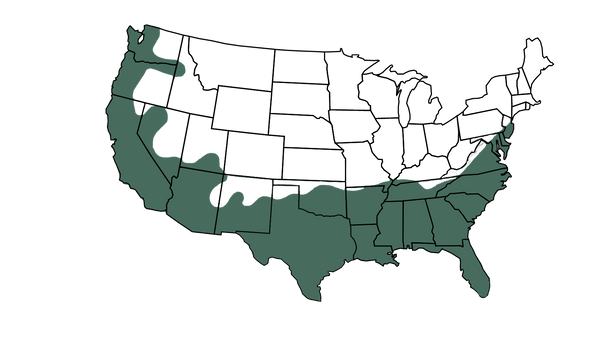
Where it grows in the groundShaded areas are the zones where it can be planted outdoors.


Size guide & what arrives
| *Trade size | **Pot size |
|---|---|
| 1 gallon | 6" |
| 3 gallon | 8 to 10" |
| 5 gallon | 10 to 12" |
| 7 gallon | 14" |
| 10 gallon | 15 to 17" |
| 15 gallon | 17" |
| "Jumbo" | 7 or 10 or 15 gallon |
*Nursery gallon sizes are trade sizes and do not equal standard liquid gallons.
**Pot sizes in inches refer to container width (diameter), not plant or pot height.
Please note: Sizing can differ between plant varieties and growers. Please chat with us if you need clarification.
For more information on sizing, please see our sizing guide.
What arrives
While mature Windmill Palms can tolerate temperatures down to 5°F, younger trees in Zone 7 may need protection during hard freezes. Plant in a spot sheltered from winter winds and avoid waterlogged soil to keep roots healthy.
What customers are saying
Why customers love it

Healthy, well-rooted plants
Hand-selected and shipped in its nursery pot.

Delivered to your door
Skip the nursery trip. Very little car Tetris required.

Real plant experts
Ask us anything before or after planting.

1-year guarantee
If something goes wrong, we'll help make it right.
Care made simple
Plant it right once and it does the rest.
Pick the spot before you dig.
Water slowly and deeply. Check more often in its first summer.
Enter your ZIP above to check your zone.
Your first year together
- 1Day 1
Plant it, then water slowly until the whole root ball is soaked.
- 2First few weeks
Keep the soil evenly moist while new roots settle in.
- 3First summer
Water deeply during hot, dry spells.
- 4Next spring
New growth starts. Feed as it wakes up.
Planting instructions
Watering & sunlight
Use a slow-running hose, soaker hose, or drip system to water the root ball and surrounding root zone thoroughly. Allow the water to penetrate deeply (not just wet the top few inches of soil), and avoid frequent, shallow watering.
Before watering again, check the soil 3–4 inches deep near the root ball. If it feels dry, repeat this deep-watering process. If it feels moist or soggy, wait and check again in 1–2 days. Check the soil of newly planted trees and shrubs several times per week, especially during hot, dry, or windy weather.
Irrigation run times will vary based on flow rate, soil, and system setup.
Need help? Contact our plant experts for watering guidance tailored to your plant and growing conditions.
Windmill Palms grow best in full sun but tolerate partial shade. At least 4–6 hours of light daily encourages optimal growth and a fuller crown.
Care guide
Shipping & what's inside
Your plant ships in its nursery pot with the soil secured, packed so it stays steady on the way to you.
1-year guarantee
Every plant is covered by our 1-year guarantee. If something goes wrong, contact our team and we'll walk you through it.
 Answered by Simply Trees plant experts
How big does the Windmill Palm Tree get?
How fast does the Windmill Palm Tree grow?
Where is the best place to plant a Windmill Palm Tree?
How far apart should I plant Windmill Palm Trees?
How far should a Windmill Palm Tree be planted from my house?
How do I plant a Windmill Palm Tree?
1. Choose a well-drained site with sun to partial shade.
2. Dig a hole twice as wide as the root ball and just as deep.
3. Gently remove the palm from its container and loosen the roots if compacted.
4. Place the tree in the hole so the top of the root ball is level with the ground.
5. Backfill with native soil, tamp gently, and water thoroughly.
6. Add a 2–3 inch layer of mulch around the base (keeping mulch away from the trunk).
Water consistently for the first few months to help roots establish.
How do I care for the Windmill Palm Tree?
• Sunlight: Full sun to part shade (4–6+ hours of sun daily)
• Water: Water deeply once or twice a week until established; after that, water occasionally during dry spells
• Soil: Prefers well-draining soil—amend heavy clay for better drainage
• Fertilizer: Use a palm-specific fertilizer 2–3 times a year during the growing season
• Mulching: Mulch to retain moisture and protect roots, but don’t pile mulch against the trunk
Its thick trunk and tough fronds make it one of the most durable palms for cooler climates.
How do I winterize a Windmill Palm Tree?
• Mulch heavily around the base (2–4 inches) to insulate roots
• Wrap the trunk with burlap or frost cloth if temperatures drop below 15°F
• In very cold zones, cover the crown with a breathable material on the coldest nights
• Avoid late-season pruning or fertilizing, which can encourage tender new growth prone to frost damage
Established trees are remarkably resilient, even through snowy winters.
How do I prune the Windmill Palm Tree?
• Remove dead or damaged fronds at the base using clean, sharp shears
• Only trim fronds that are fully brown or yellowing—green fronds are still helping the tree photosynthesize
• Cut flower or fruit stalks if desired to maintain a clean appearance
Avoid over-pruning, as removing too many fronds can weaken the tree.
Can I plant the Windmill Palm Tree in a container?
• Choose a pot that’s at least 18–24 inches wide with drainage holes
• Use well-draining potting mix, such as cactus or palm soil blend
• Place the container in full sun to partial shade
• Water when the top inch of soil feels dry, and fertilize monthly during the growing season
Container-grown palms are ideal for patios, pool areas, and colder zones where you can move them indoors during winter.