


Texas Mountain Laurel
Zones 7-10
Save up to $1,000 on your whole cart.
Your code will auto-apply at checkout.
From our farm to your front door
- Shipped in its nursery pot, so the roots stay undisturbed
- Soil secured so it stays put in transit
- Packed so the plant stays steady on the way to you
At a glance
- Sunlight
- Full Sun, Partial Sun, Partial Shade
- Water
- When the top 2–3" of soil is dry
- Growth & size
- Slow growth rate; typically reaches 10-15 feet in height and 8-10 feet in width.
- Botanical name
- Dermatophyllum secundiflorum
- Hardiness
- Zones 7-10
- Tolerates
- Heat tolerantDrought tolerantDesert tolerantWind tolerant
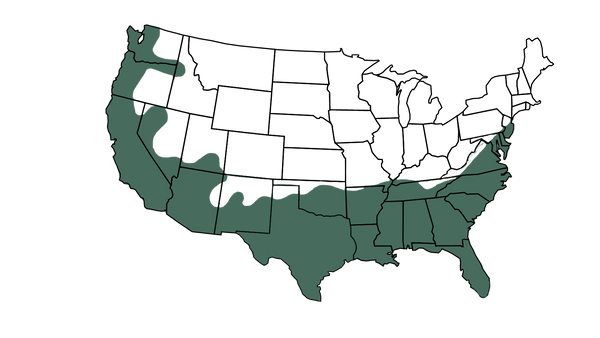
Where it grows in the groundShaded areas are the zones where it can be planted outdoors.


Size guide & what arrives
| *Trade size | **Pot size |
|---|---|
| 1 gallon | 6" |
| 3 gallon | 8 to 10" |
| 5 gallon | 10 to 12" |
| 7 gallon | 14" |
| 10 gallon | 15 to 17" |
| 15 gallon | 17" |
| "Jumbo" | 7 or 10 or 15 gallon |
*Nursery gallon sizes are trade sizes and do not equal standard liquid gallons.
**Pot sizes in inches refer to container width (diameter), not plant or pot height.
Please note: Sizing can differ between plant varieties and growers. Please chat with us if you need clarification.
For more information on sizing, please see our sizing guide.
What arrives
Texas Mountain Laurel can be sensitive to overwatering, so ensure proper drainage.
What customers are saying
Why customers love it
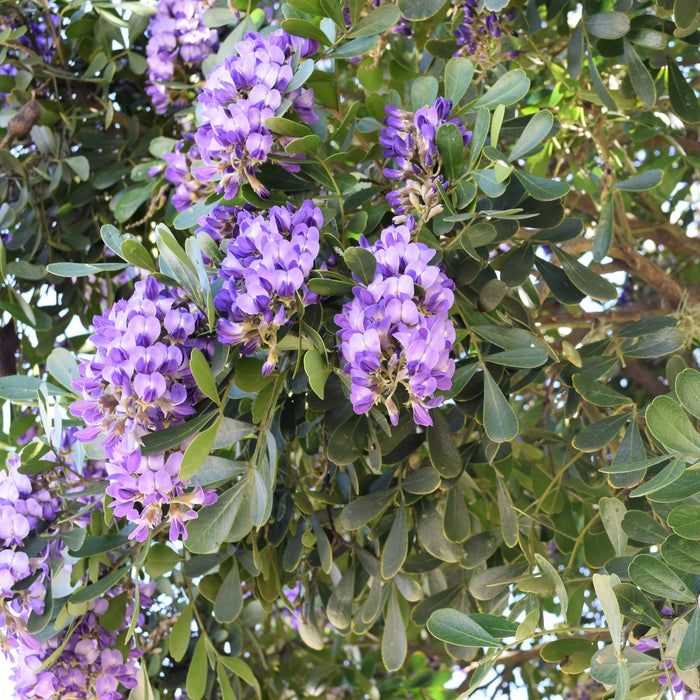
Healthy, well-rooted plants
Hand-selected and shipped in its nursery pot.
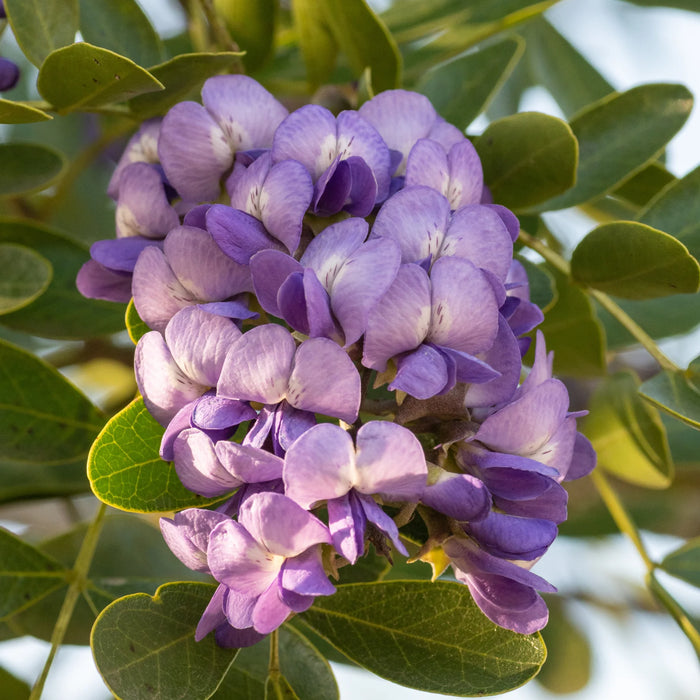
Delivered to your door
Skip the nursery trip. Very little car Tetris required.
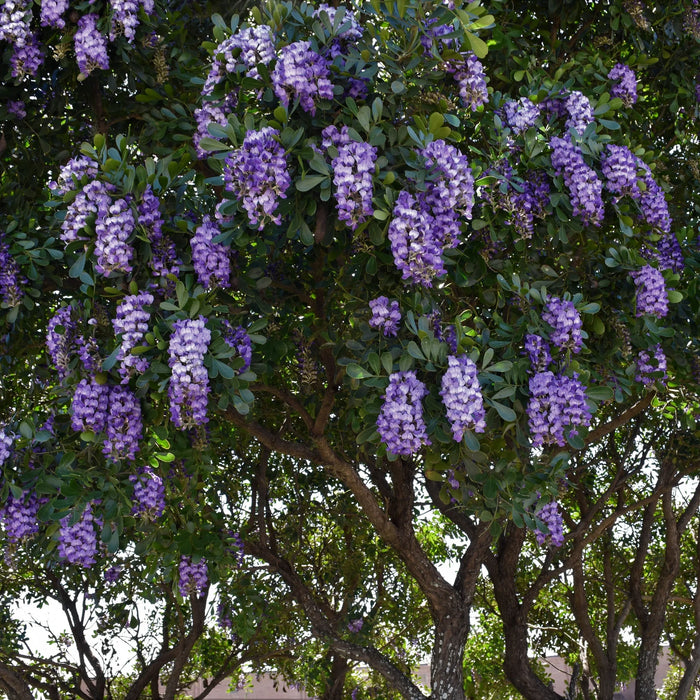
Real plant experts
Ask us anything before or after planting.
1-year guarantee
If something goes wrong, we'll help make it right.
Care made simple
Plant it right once and it does the rest.
Pick the spot before you dig.
Water slowly and deeply. Check more often in its first summer.
Enter your ZIP above to check your zone.
Your first year together
- 1Day 1
Plant it, then water slowly until the whole root ball is soaked.
- 2First few weeks
Keep the soil evenly moist while new roots settle in.
- 3First summer
Water deeply during hot, dry spells.
- 4Next spring
New growth starts. Feed as it wakes up.
Planting instructions
Watering & sunlight
Use a slow-running hose, soaker hose, or drip system to water the root ball and surrounding root zone thoroughly. Allow the water to penetrate deeply (not just wet the top few inches of soil), and avoid frequent, shallow watering.
Before watering again, check the soil 3–4 inches deep near the root ball. If it feels dry, repeat this deep-watering process. If it feels moist or soggy, wait and check again in 1–2 days. Check the soil of newly planted trees and shrubs several times per week, especially during hot, dry, or windy weather.
Irrigation run times will vary based on flow rate, soil, and system setup.
Need help? Contact our plant experts for watering guidance tailored to your plant and growing conditions.
Texas Mountain Laurel performs best in full sun, which encourages the most prolific blooming and dense foliage growth. It can also tolerate partial shade, especially in the hotter parts of its range.
Care guide
Shipping & what's inside
Your plant ships in its nursery pot with the soil secured, packed so it stays steady on the way to you.
1-year guarantee
Every plant is covered by our 1-year guarantee. If something goes wrong, contact our team and we'll walk you through it.
 Answered by Simply Trees plant experts
How big does Texas Mountain Laurel get?
In its natural habitat, Texas Mountain Laurel typically grows to a height of 10 to 20 feet tall with a similar spread. However, under optimal conditions and with proper care, it can sometimes reach heights of up to 30 feet or more.
When used in landscaping, Texas Mountain Laurel can be pruned and trained to maintain a more compact size or a particular shape, such as a single-trunked tree or a multi-trunked shrub. However, it's essential to allow enough space for its mature size when planting to prevent overcrowding and ensure proper growth and development.
Overall, Texas Mountain Laurel's size makes it suitable for a variety of landscape settings, including gardens, borders, and as a specimen tree or shrub. Its attractive evergreen foliage, fragrant flowers, and drought tolerance make it a popular choice for landscapes in Texas and other regions with similar growing conditions.
How fast does Texas Mountain Laurel grow?
Where is the best place to plant Texas Mountain Laurel?
Sunlight: Texas Mountain Laurel thrives in full sun to partial shade, meaning it requires at least 6 hours of direct sunlight daily for optimal growth and flowering. Choose a location that receives adequate sunlight throughout the day, especially during the morning hours when the sun is less intense.
Soil: Ensure the soil is well-drained to prevent waterlogging, which can lead to root rot. Texas Mountain Laurel prefers slightly acidic to neutral soil with good drainage. Sandy or loamy soils are ideal, but it can also tolerate clay soil if it's well-drained.
Space: Provide enough space for the plant to grow to its full size. Consider its mature height and spread when selecting a planting site, and allow ample room for the roots and canopy to develop without crowding or competition from nearby plants or structures.
Protection from harsh conditions: While Texas Mountain Laurel is drought-tolerant and can withstand hot and dry conditions once established, it may benefit from protection against strong winds, especially in its early years. Planting it near a windbreak or providing some shelter can help protect it from wind damage.
Landscape design: Consider the aesthetic appeal and functional aspects of planting Texas Mountain Laurel in your landscape. It makes an excellent focal point in gardens, borders, or as a specimen tree. Plant it where you can enjoy its fragrant flowers, attractive foliage, and architectural form.
By selecting a suitable planting site and providing proper care, you can help ensure the healthy growth and longevity of your Texas Mountain Laurel.
Is Texas Mountain Laurel a tree or a shrub?
Its growth habit and form can vary depending on factors such as soil conditions, climate, and available space for root and canopy development. In landscaping, it's often used as a focal point in gardens or as a specimen tree due to its attractive evergreen foliage, fragrant flowers, and drought tolerance. Overall, whether it's considered a tree or a shrub may depend on individual interpretation and how it's managed in a particular landscape setting.
How often should you water Texas Mountain Laurel?
Once established, Texas Mountain Laurel is relatively drought-tolerant and prefers well-drained soil. In most cases, it's recommended to water deeply every 2-4 weeks during dry periods, especially during the hot summer months. However, it's essential to monitor the soil moisture and adjust the watering frequency based on the plant's needs and environmental conditions.
Avoid overwatering, as Texas Mountain Laurel is susceptible to root rot if left in soggy soil for extended periods. Before watering, always check the moisture level of the soil around the plant to ensure it's not already adequately moist.
How often does Texas Mountain Laurel bloom?
How do you shape a Texas Mountain Laurel?
Selective Pruning: Use sharp and clean pruning shears to remove specific branches or stems that are growing out of bounds or interfering with the desired shape of the plant.
Regular Maintenance: Perform light pruning throughout the year to remove dead, damaged, or crossing branches. This helps maintain the plant's overall health and appearance.
Encouraging Fullness: To encourage a fuller appearance, prune lightly around the edges of the plant, focusing on removing excessive growth while preserving its natural shape.
Training: When the plant is young, you can train it to grow in a certain direction or shape by selectively pruning branches to encourage desired growth.
Minimal Pruning: Texas Mountain Laurel generally has a naturally attractive form, so minimal pruning is often required. Avoid over-pruning, as this can lead to stress and affect the plant's ability to bloom.
Remember to prune Texas Mountain Laurel after it has finished flowering, usually in late spring or early summer, to avoid cutting off next year's flower buds. Additionally, always use clean and sharp pruning tools to prevent the spread of diseases.
Is Texas Mountain Laurel freeze tolerant?
Why is my Texas Mountain Laurel turning yellow?
Overwatering: Too much water can lead to root rot, which can cause the foliage to turn yellow and eventually brown.
Poor Drainage: If the soil doesn't drain well, the roots may become waterlogged, leading to similar symptoms as overwatering.
Nutrient Deficiency: Yellowing leaves can also be a sign of nutrient deficiencies, such as iron or nitrogen.
Pests or Diseases: Certain pests or diseases, like spider mites or fungal infections, can cause yellowing of the leaves.
To address the issue, ensure that you're watering your Texas Mountain Laurel properly, allowing the soil to dry out slightly between waterings. Also, make sure the plant is in well-draining soil. Consider fertilizing with a balanced fertilizer to provide necessary nutrients. If pests or diseases are suspected, treat the plant with appropriate methods, such as insecticidal soap for pests or fungicide for fungal issues.