


Southern Wax Myrtle
Zones 7-11
Buy more, save more
Save up to $1,000 on your whole cart.
Discounts don't stack. At checkout you automatically get whichever saves you more.
See all savings tiers
Your code will auto-apply at checkout.
From our farm to your front door
- Shipped in its nursery pot, so the roots stay undisturbed
- Soil secured so it stays put in transit
- Packed so the plant stays steady on the way to you
At a glance
- Leaves
- Evergreen: keeps its leaves all year
- Sunlight
- Full Sun, Partial Sun, Partial Shade
- Water
- When the top 2" of soil is dry
- Growth & size
- Fast growth rate; mature height of 10-15 feet and width of 10-15 feet.
- Botanical name
- Myrica cerifera
- Hardiness
- Zones 7-11
- Tolerates
- Heat tolerantHumidity tolerantDrought tolerantCoastal tolerantWind tolerant
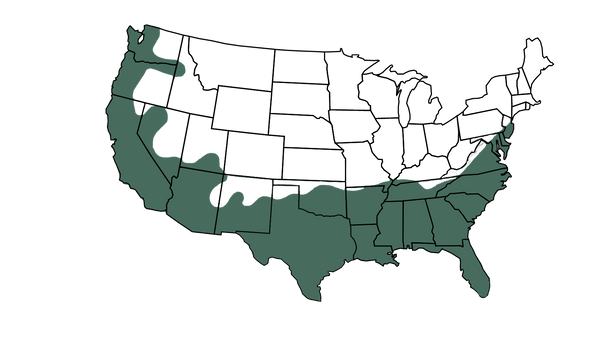
Where it grows in the groundShaded areas are the zones where it can be planted outdoors.


Size guide & what arrives
| *Trade size | **Pot size |
|---|---|
| 1 gallon | 6" |
| 3 gallon | 8 to 10" |
| 5 gallon | 10 to 12" |
| 7 gallon | 14" |
| 10 gallon | 15 to 17" |
| 15 gallon | 17" |
| "Jumbo" | 7 or 10 or 15 gallon |
*Nursery gallon sizes are trade sizes and do not equal standard liquid gallons.
**Pot sizes in inches refer to container width (diameter), not plant or pot height.
Please note: Sizing can differ between plant varieties and growers. Please chat with us if you need clarification.
For more information on sizing, please see our sizing guide.
What arrives
The Southern Wax Myrtle can spread quite vigorously, so periodic pruning may be needed to maintain its desired shape and prevent it from overtaking other plants.
What customers are saying
Why customers love it

Healthy, well-rooted plants
Hand-selected and shipped in its nursery pot.

Delivered to your door
Skip the nursery trip. Very little car Tetris required.

Goodbye, noisy neighbors
A living screen that blocks the view, softens the sound and looks better than a fence.

1-year guarantee
If something goes wrong, we'll help make it right.
Care made simple
Plant it right once and it does the rest.
Pick the spot before you dig.
Water slowly and deeply. Check more often in its first summer.
Enter your ZIP above to check your zone.
Your first year together
- 1Day 1
Plant it, then water slowly until the whole root ball is soaked.
- 2First few weeks
Keep the soil evenly moist while new roots settle in.
- 3First summer
Water deeply during hot, dry spells.
- 4Next spring
New growth starts. Feed as it wakes up.
Planting instructions
Watering & sunlight
Care guide
Shipping & what's inside
Your plant ships in its nursery pot with the soil secured, packed so it stays steady on the way to you.
1-year guarantee
Every plant is covered by our 1-year guarantee. If something goes wrong, contact our team and we'll walk you through it.
 Answered by Simply Trees plant experts
How big does the Southern Wax Myrtle get?
Height: Southern Wax Myrtle typically reaches a height of 10 to 15 feet. In optimal conditions, it can sometimes grow taller, up to 20 feet.
Width: The shrub usually spreads to a width of 10 to 15 feet, creating a dense and bushy form.
Growth Habit: It has a multi-stemmed, bushy growth habit that can be pruned and shaped as needed. It can also be trained as a small tree by selectively pruning the lower branches.
The size and growth habit of the Southern Wax Myrtle make it an excellent choice for use as a hedge, privacy screen, or ornamental shrub in a variety of landscape settings.
How fast does the Southern Wax Myrtle grow?
Where is the best place to plant Southern Wax Myrtle?
Sunlight: Southern Wax Myrtle thrives in full sun to partial shade. It performs best with at least 6 hours of direct sunlight per day, but it can also tolerate some afternoon shade, especially in hotter climates.
Soil: Plant in well-drained soil. While Southern Wax Myrtle is adaptable to various soil types, including sandy, loamy, and clay soils, it prefers well-drained soil to prevent root rot. It can also tolerate poor, acidic soils.
Water: Ensure consistent moisture, especially during the establishment period. Once established, Southern Wax Myrtle is relatively drought-tolerant but benefits from regular watering during prolonged dry periods.
Space: Consider the mature size of the plant. Southern Wax Myrtle can grow 10 to 15 feet tall and wide, so provide enough space for it to develop fully. When planting as a hedge, space plants 4 to 6 feet apart; for individual specimens, space them 8 to 10 feet apart.
Air Circulation: Good air circulation helps reduce the risk of disease and promotes healthy growth. Avoid planting in areas with poor air flow.
Landscape Use: Southern Wax Myrtle is versatile and can be used as a hedge, privacy screen, foundation plant, or in mixed borders. Its evergreen nature and attractive foliage make it a valuable addition to any landscape.
Protection from Harsh Conditions: While it is hardy, providing some protection from strong winds and extreme cold can help the plant thrive. In colder regions, consider planting it in a sheltered location.
By selecting a site that meets these conditions, you can ensure that your Southern Wax Myrtle thrives and adds beauty and functionality to your garden or landscape.
How far apart should you plant Southern Wax Myrtle?
Hedges and Screens: If you are planting Southern Wax Myrtle as a hedge or privacy screen, space the plants 4 to 6 feet apart. This closer spacing allows the plants to grow together and form a dense barrier.
Individual Specimens: For individual specimen plants or in mixed borders, space the plants 8 to 10 feet apart. This provides enough room for each plant to reach its mature size without overcrowding.
Consider Mature Size: Southern Wax Myrtle can grow 10 to 15 feet tall and wide, so providing adequate space helps ensure each plant has enough room to develop fully.
Air Circulation: Proper spacing also helps improve air circulation around the plants, reducing the risk of disease and promoting healthier growth.
By following these spacing guidelines, you can ensure your Southern Wax Myrtle plants thrive and achieve their desired effect in the landscape.
Is the Southern Wax Myrtle evergreen?
Year-Round Foliage: The Southern Wax Myrtle maintains its dense, glossy green leaves year-round, offering consistent greenery and making it an excellent choice for hedges, privacy screens, and foundation plantings.
Leaf Characteristics: The leaves are aromatic, narrow, and lance-shaped, with a pleasant, spicy fragrance when crushed.
Low Maintenance: As an evergreen, the Southern Wax Myrtle requires minimal maintenance compared to deciduous plants that shed their leaves seasonally.
The evergreen nature of the Southern Wax Myrtle makes it a valuable addition to landscapes, providing year-round beauty and functionality.
Does the Southern Wax Myrtle bloom?
Bloom Time: The Southern Wax Myrtle typically blooms in late winter to early spring, usually around February to April, depending on the climate and growing conditions.
Flower Appearance: The flowers are small and not particularly showy. They are greenish-yellow and appear in clusters called catkins. Male and female flowers are found on separate plants (dioecious).
Pollination: The flowers are wind-pollinated. For berry production on female plants, a male plant needs to be nearby to ensure successful pollination.
Fragrance: While the flowers themselves are not highly fragrant, the leaves of the Southern Wax Myrtle emit a pleasant, spicy fragrance when crushed.
These modest flowers contribute to the overall life cycle of the plant, leading to the production of the distinctive waxy berries on female plants later in the year.
Does the Southern Wax Myrtle have berries?
Appearance: The berries are small, typically about 1/8 inch in diameter. They are pale blue to grayish-white and have a waxy coating, which gives them a distinctive look.
Season: The berries typically appear in late summer to fall and can persist into winter, providing visual interest and food for wildlife during the colder months.
Attraction to Wildlife: The berries are a valuable food source for birds, particularly during the winter when other food sources may be scarce. Many species of birds, such as waxwings, thrushes, and warblers, are attracted to the berries.
Uses: Historically, the wax from the berries has been used to make bayberry candles and soaps. While not commonly used for this purpose today, the berries still hold cultural significance.
To ensure berry production, it is important to have both male and female plants, as Southern Wax Myrtle is dioecious, meaning individual plants are either male or female. Only female plants produce berries, and they need a nearby male plant for pollination.
What is the best climate for the Southern Wax Myrtle?
USDA Hardiness Zones: The Southern Wax Myrtle is best suited for USDA hardiness zones 7-10. It can tolerate some cold but is generally not hardy in regions with prolonged freezing temperatures.
Temperature: This plant prefers mild to warm temperatures. It can tolerate occasional frost and brief cold spells but performs best in areas where winter temperatures do not consistently drop below 0°F (-18°C).
Sunlight: Southern Wax Myrtle thrives in full sun to partial shade. It grows best with at least 6 hours of direct sunlight daily but can tolerate some afternoon shade, especially in hotter climates.
Humidity: It prefers moderate to high humidity levels, which are common in its native coastal regions. It can tolerate lower humidity but may require additional watering to compensate for dry conditions.
Soil: The plant prefers well-drained, sandy, or loamy soils but is quite adaptable and can grow in a variety of soil types, including clay, as long as there is good drainage. It also tolerates poor, acidic soils.
Rainfall: Southern Wax Myrtle is relatively drought-tolerant once established but performs best with regular rainfall or supplemental watering during dry periods.
By providing these ideal climate conditions, you can ensure that your Southern Wax Myrtle thrives and adds its attractive evergreen foliage and pleasant fragrance to your garden or landscape.
Is the Southern Wax Myrtle a tree or a shrub?
Shrub Form: When grown as a shrub, Southern Wax Myrtle typically has a multi-stemmed, bushy growth habit. It can reach heights of 10 to 15 feet with a similar spread, making it ideal for use as a hedge, privacy screen, or in mass plantings.
Tree Form: When pruned and trained as a tree, it can develop a more upright, single-stemmed form. In this case, it can grow taller, reaching heights of up to 20 to 25 feet or more. The tree form is often used as a small ornamental tree in landscapes.
The Southern Wax Myrtle's versatility in form makes it a popular choice for various landscape applications. By pruning and training, you can shape it to fit the specific needs of your garden or landscape design.
How do you winterize a Southern Wax Myrtle?
Watering: Ensure the plant is well-watered before the first frost. Moist soil retains heat better than dry soil, which can help protect the roots. Continue to water during dry spells in winter, but avoid overwatering as the plant's water needs decrease in colder weather.
Mulching: Apply a thick layer of mulch (2-4 inches) around the base of the plant, extending out to the drip line. Mulch helps insulate the soil, maintaining a more consistent temperature and protecting the roots from freezing. Use materials such as pine straw, bark chips, or compost.
Pruning: Avoid heavy pruning in the fall, as it can stimulate new growth that may not harden off before winter. Instead, do any necessary pruning in late winter or early spring before new growth begins.
Frost Protection: In areas prone to severe frost, consider covering the plant with burlap or frost cloths during particularly cold nights. This can help shield the foliage and branches from frost damage. Remove the coverings during the day to allow sunlight and air circulation.
Wind Protection: If your Southern Wax Myrtle is in an exposed location, consider using a windbreak or temporary fencing to protect it from harsh winter winds, which can cause desiccation and damage.
Check Soil Drainage: Ensure that the soil around the plant has good drainage. Waterlogged soil can freeze and damage the roots. If necessary, amend the soil or improve drainage around the plant.
By following these steps, you can help ensure your Southern Wax Myrtle remains healthy and resilient through the winter months.