


Russian Sage
Zones 4-9
Buy more, save more
Save up to $1,000 on your whole cart.
Discounts don't stack. At checkout you automatically get whichever saves you more.
See all savings tiers
Your code will auto-apply at checkout.
From our farm to your front door
- Shipped in its nursery pot, so the roots stay undisturbed
- Soil secured so it stays put in transit
- Packed so the plant stays steady on the way to you
At a glance
- Sunlight
- Full Sun, Partial Sun, Partial Shade
- Water
- When the top 2–3" of soil is dry
- Growth & size
- Fast growth rate; mature height of 3-5 feet and width of 2-4 feet.
- Botanical name
- Perovskia atriplicifolia
- Hardiness
- Zones 4-9
- Tolerates
- Cold hardyHeat tolerantDrought tolerantWind tolerant
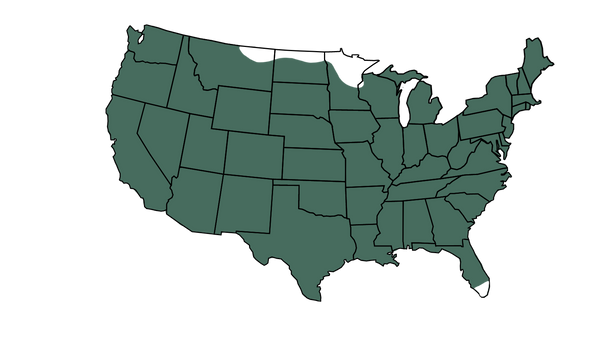
Where it grows in the groundShaded areas are the zones where it can be planted outdoors.


Size guide & what arrives
| *Trade size | **Pot size |
|---|---|
| 1 gallon | 6" |
| 3 gallon | 8 to 10" |
| 5 gallon | 10 to 12" |
| 7 gallon | 14" |
| 10 gallon | 15 to 17" |
| 15 gallon | 17" |
| "Jumbo" | 7 or 10 or 15 gallon |
*Nursery gallon sizes are trade sizes and do not equal standard liquid gallons.
**Pot sizes in inches refer to container width (diameter), not plant or pot height.
Please note: Sizing can differ between plant varieties and growers. Please chat with us if you need clarification.
For more information on sizing, please see our sizing guide.
What arrives
Russian Sage can spread vigorously, so it may benefit from occasional pruning to maintain shape and prevent it from overtaking other plants.
What customers are saying
Why customers love it

Healthy, well-rooted plants
Hand-selected and shipped in its nursery pot.

Delivered to your door
Skip the nursery trip. Very little car Tetris required.

Real plant experts
Ask us anything before or after planting.

1-year guarantee
If something goes wrong, we'll help make it right.
Care made simple
Plant it right once and it does the rest.
Pick the spot before you dig.
Water slowly and deeply. Check more often in its first summer.
Enter your ZIP above to check your zone.
Your first year together
- 1Day 1
Plant it, then water slowly until the whole root ball is soaked.
- 2First few weeks
Keep the soil evenly moist while new roots settle in.
- 3First summer
Water deeply during hot, dry spells.
- 4Next spring
New growth starts. Feed as it wakes up.
Planting instructions
Watering & sunlight
Care guide
Shipping & what's inside
Your plant ships in its nursery pot with the soil secured, packed so it stays steady on the way to you.
1-year guarantee
Every plant is covered by our 1-year guarantee. If something goes wrong, contact our team and we'll walk you through it.
 Answered by Simply Trees plant experts
Does Russian Sage like full sun or shade?
Is Russian Sage an invasive plant?
Do you cut back Russian Sage in the fall?
Fall Pruning: If you prefer to tidy up your garden in the fall, you can cut back Russian Sage to about 6 to 8 inches above the ground after the plant has finished blooming and the leaves have faded.
Late Winter/Spring Pruning: Alternatively, many gardeners wait until late winter or early spring to prune. This approach offers a few benefits:
The plant's stems can provide visual interest in the winter landscape.
The stems and foliage can help provide some insulation and protection for the plant's crown during cold weather.
Pruning Technique: When pruning, use clean, sharp shears and make your cuts just above a set of leaves or buds.
Regardless of when you choose to prune, cutting back Russian Sage annually helps to maintain a tidy appearance, encourages healthy growth, and can enhance blooming in the next season.
Should I plant lavender or Russian Sage?
Growing Conditions:
Both lavender and Russian Sage thrive in full sun and well-draining soil.
Russian Sage is more tolerant of poor soil conditions and can handle a bit more drought.
Size and Growth Habit:
Lavender tends to be smaller and more compact, suitable for borders and small garden spaces.
Russian Sage is larger and has a more open, airy growth habit, making it suitable for background plantings or larger spaces.
Flower Appearance:
Lavender has iconic purple blooms known for their fragrance and is often used in aromatherapy and culinary applications.
Russian Sage has a more subtle fragrance and features tall spikes of small, bluish-lavender flowers.
Maintenance:
Lavender requires regular pruning to maintain shape and encourage new growth.
Russian Sage is lower maintenance, requiring less frequent pruning.
Climate Considerations:
Lavender prefers a Mediterranean climate, while Russian Sage can tolerate colder conditions.
Personal Preference:
Consider the aesthetic you prefer and how the plant's size, color, and fragrance fit into your garden design.
Both lavender and Russian Sage can provide beautiful, fragrant, and drought-tolerant options for a garden, but the best choice will depend on your specific garden environment, aesthetic preferences, and functional needs.
Do hummingbirds like Russian Sage?
Where is the best place to plant Russian Sage?
Sunlight: Plant in an area that receives full sun. Russian Sage needs at least 6 to 8 hours of direct sunlight daily for optimal growth and blooming.
Soil: Choose a site with well-draining soil. Russian Sage is tolerant of poor soil conditions but does not do well in wet, waterlogged soils.
Space: Give the plant enough room to grow. Russian Sage can reach 3 to 5 feet in height and 2 to 4 feet in width. It should be spaced accordingly to allow for air circulation and to prevent overcrowding.
Garden Design: Consider planting Russian Sage in borders, as a backdrop for other perennials, in a pollinator garden, or in a xeriscape design due to its drought tolerance.
Protection from Wind: While it is relatively sturdy, in extremely windy areas, it may benefit from some protection to prevent breakage of its long stems.
By planting Russian Sage in a suitable location with full sun, well-draining soil, and enough space, you'll provide an ideal environment for this attractive and hardy perennial to thrive.
Does Russian Sage come back every year?
Why does my Russian Sage flop over?
Insufficient Sunlight: Russian Sage requires full sun to maintain a strong, upright growth habit. If it's planted in too much shade, the stems can become weak and leggy, causing them to flop over.
Overwatering or Poor Drainage: Overwatering or planting in soil with poor drainage can lead to weak, spindly growth. Russian Sage prefers well-draining soil and doesn't require a lot of water once established.
Lack of Pruning: Without annual pruning, Russian Sage can become too tall and top-heavy, leading to flopping. It's best to prune it back in late winter or early spring to encourage sturdy, new growth.
Fertilization: Over-fertilization, especially with nitrogen-heavy fertilizers, can cause rapid, weak growth that is more prone to flopping.
Mature Plant Size: Older, larger plants may have more tendency to flop, particularly if they haven't been regularly pruned to manage growth.
To prevent flopping, ensure your Russian Sage is planted in full sun, avoid overwatering, improve soil drainage if necessary, prune annually, and be cautious with fertilization. This will help promote stronger, more upright growth.
Why is my Russian Sage not blooming?
Insufficient Sunlight: Russian Sage needs full sun (at least 6 to 8 hours of direct sunlight daily) to bloom well. If it's in too much shade, its blooming can be significantly reduced.
Improper Pruning: If the plant is pruned at the wrong time, it can affect flowering. Pruning should be done in late winter or early spring. Pruning after bud development in spring can remove the flower buds.
Age of the Plant: Young plants or newly planted Russian Sage may not bloom in their first year as they are establishing their root systems.
Soil Fertility: Overly rich or heavily fertilized soil can lead to lush foliage growth at the expense of flowers. Russian Sage generally does not require a lot of fertilization.
Water Stress: While Russian Sage is drought-tolerant, prolonged dry periods, especially in newly planted or young plants, can affect blooming. Similarly, too much water or poor drainage can stress the plant and impact flowering.
Environmental Factors: Unusual weather patterns, such as a late frost, can damage the developing flower buds and affect blooming.
To encourage blooming, ensure your Russian Sage is planted in a full sun location, avoid over-fertilizing, water appropriately, and prune at the correct time of year. With the right conditions, Russian Sage should produce its characteristic vibrant blooms.