

Hawaiian Umbrella Tree
Buy more, save more
Save up to $1,000 on your whole cart.
See all savings tiers
Your code will auto-apply at checkout.
From our farm to your front door
- Shipped in its nursery pot, so the roots stay undisturbed
- Soil secured so it stays put in transit
- Packed so the plant stays steady on the way to you
At a glance
- Light
- Bright Indirect Sunlight
- Water
- When the top 1" of soil is dry
- Care level
- Super easy
- Pets
- Not pet friendly
- Growth & size
- Moderate growth rate, typically reaching a mature height and width of about 4 to 5 feet indoors, which makes it suitable for most indoor settings.
- Botanical name
- Schefflera arboricola variegata braided


Size guide & what arrives
| *Trade size | **Pot size |
|---|---|
| 1 gallon | 6" |
| 3 gallon | 8 to 10" |
| 5 gallon | 10 to 12" |
| 7 gallon | 14" |
| 10 gallon | 15 to 17" |
| 15 gallon | 17" |
| "Jumbo" | 7 or 10 or 15 gallon |
*Nursery gallon sizes are trade sizes and do not equal standard liquid gallons.
**Pot sizes in inches refer to container width (diameter), not plant or pot height.
Please note: Sizing can differ between plant varieties and growers. Please chat with us if you need clarification.
For more information on sizing, please see our sizing guide.
What arrives
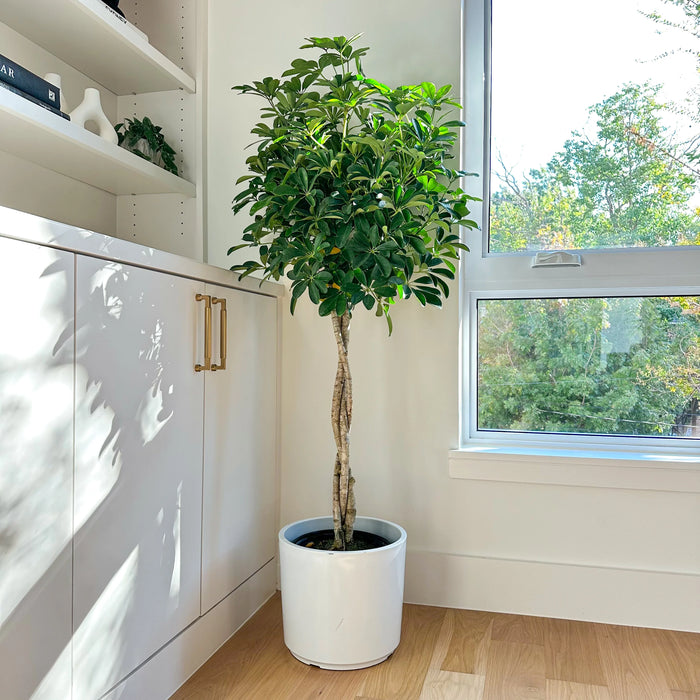
The Hawaiian Umbrella Tree can be pruned to maintain its shape and size, making it a versatile choice for various indoor spaces.
*The pot pictured is not included.
What customers are saying
Why customers love it
Instant life for any room
Living green that makes a space feel finished.
Healthy, well-rooted plants
Hand-selected and shipped in its nursery pot.
Delivered to your door
Skip the nursery trip. Very little car Tetris required.
Real plant experts
Ask us anything before or after it arrives.
Care made simple
Simple care, matched to this plant.
The Hawaiian Umbrella Tree prefers bright, indirect light but can also adapt to lower light conditions, offering flexibility in placement within your home.
Water when the top inch of soil feels dry, usually every 7 to 10 days. Avoid overwatering to keep the plant healthy.
Your first months together
- 1Day 1
Unbox, set it in its spot, and check the soil before you water.
- 2First few weeks
A few dropped leaves is normal while it adjusts to your home.
- 3Spring & summer
Feed during the growing season. Skip it in winter.
- 4Every 1–2 years
Repot into a slightly bigger pot once roots fill this one.
Light & water
The Hawaiian Umbrella Tree prefers bright, indirect light but can also adapt to lower light conditions, offering flexibility in placement within your home.
Water when the top inch of soil feels dry, usually every 7 to 10 days. Avoid overwatering to keep the plant healthy.
About this plant
*The pot pictured is not included.
Care guide
Shipping & what's inside
Your plant ships in its nursery pot with the soil secured, packed so it stays steady on the way to you.
1-year guarantee
Every plant is covered by our 1-year guarantee. If something goes wrong, contact our team and we'll walk you through it.
 Answered by Simply Trees plant experts
How big do Hawaiian Umbrella trees get?
The size of a Hawaiian Umbrella tree indoors is influenced by several factors:
Light: Adequate light is crucial for healthy growth and development. Hawaiian Umbrella trees grown in bright, indirect sunlight tend to grow taller and more vigorously than those in low-light conditions. Insufficient light may result in leggy growth or stunted development.
Space: The available space for root and foliage growth can impact the size of a Hawaiian Umbrella tree. Plants with ample room to spread their roots and branches may grow larger than those confined to smaller containers or limited spaces.
Pruning: Regular pruning can help control the size and shape of the Hawaiian Umbrella tree. Removing leggy or overgrown branches and trimming back excessive growth can maintain a more compact and manageable size.
Genetics: The specific cultivar of Hawaiian Umbrella tree can also influence its ultimate size. Some varieties are naturally more compact and dwarf in stature, while others may exhibit more vigorous growth and reach greater heights.
To manage the size of a Hawaiian Umbrella tree indoors, regular pruning, appropriate pot size, and providing optimal growing conditions are essential. Additionally, repotting into a larger container as the plant grows can accommodate root expansion and support continued growth. By understanding the factors that influence plant size and implementing proper care practices, you can help ensure that your Hawaiian Umbrella tree remains healthy and maintains an ideal size for its indoor environment.
How fast do Hawaiian Umbrella trees grow?
How do you take care of Hawaiian Umbrella trees?
Light: Place the Hawaiian Umbrella tree in a location with bright, indirect sunlight. Direct sunlight can scorch the leaves, so it's best to avoid placing the plant in direct sunlight for extended periods. Near a north or east-facing window where it receives bright, filtered light is ideal.
Temperature: Maintain a consistent room temperature between 60°F to 75°F (15°C to 24°C) for optimal growth. Avoid placing the plant near drafty windows, heating vents, or air-conditioning units, as sudden temperature fluctuations or drafts can stress the plant.
Watering: Water the Hawaiian Umbrella tree when the top inch of soil feels dry to the touch. Water thoroughly until water begins to drain from the bottom of the pot, then allow excess water to drain away completely. Avoid overwatering, as it can lead to root rot. Adjust watering frequency based on seasonal changes and environmental conditions.
Humidity: Hawaiian Umbrella trees appreciate moderate to high humidity levels. Increase humidity around the plant by misting the leaves regularly, placing a humidifier nearby, or setting the pot on a tray filled with pebbles and water.
Soil: Plant the Hawaiian Umbrella tree in a well-draining potting mix suitable for tropical plants. Ensure that the pot has drainage holes at the bottom to allow excess water to escape freely and prevent waterlogging.
Fertilizing: Fertilize the Hawaiian Umbrella tree with a balanced, water-soluble houseplant fertilizer during the growing season (spring and summer) according to the manufacturer's instructions. Avoid fertilizing during the winter months when the plant is dormant.
Pruning: Prune the Hawaiian Umbrella tree as needed to maintain its shape and size. Remove any dead, damaged, or yellowing leaves, as well as leggy growth or crowded branches. Pruning can also help promote bushier growth and improve the plant's overall appearance.
Pest and Disease Control: Inspect the Hawaiian Umbrella tree regularly for signs of pests such as spider mites, aphids, mealybugs, or scale insects, as well as fungal or bacterial diseases. Treat any infestations or diseases promptly with appropriate insecticides or fungicides.
Repotting: Repot the Hawaiian Umbrella tree every 1 to 2 years or when it becomes root-bound. Choose a pot that is slightly larger than the current one and refresh the potting mix to ensure adequate space for root growth.
By providing the right care, including proper lighting, watering, humidity, and pest control, you can help your Hawaiian Umbrella tree thrive indoors and enjoy its lush foliage for years to come. Regular monitoring and attention to its needs will ensure that the plant remains healthy and vibrant in its indoor environment.
How often should I water the Hawaiian Umbrella tree?
Check Soil Moisture: Before watering, always check the moisture level of the soil by inserting your finger about an inch deep into the soil. If the soil feels dry to the touch at this depth, it's time to water. If the soil still feels moist, wait a few more days before checking again.
Water Thoroughly: When watering your Hawaiian Umbrella tree, water thoroughly until water begins to drain from the bottom of the pot. This ensures that water reaches the entire root ball and encourages deep root growth. Allow excess water to drain away completely to prevent waterlogging.
Frequency of Watering: Typically, Hawaiian Umbrella trees prefer slightly moist soil but are susceptible to root rot if overwatered. As a general rule, water your Hawaiian Umbrella tree when the top inch of soil feels dry to the touch. Depending on factors such as indoor temperature, humidity levels, and pot size, this may range from once a week to every 10-14 days during the growing season.
Adjust for Environmental Conditions: Adjust the frequency of watering based on seasonal changes and environmental conditions. During the winter months or in cooler temperatures, Hawaiian Umbrella trees may require less frequent watering, while they may need more water during the warmer months or in dry indoor environments.
Monitor Plant Health: Pay attention to how your Hawaiian Umbrella tree responds to watering. If the leaves start to droop or curl, it may indicate that the plant is underwatered and in need of moisture. However, if the leaves become yellow or mushy, it may indicate overwatering.
Use Well-Draining Soil: Plant your Hawaiian Umbrella tree in a well-draining potting mix to prevent water from pooling around the roots. Ensure that the pot has drainage holes at the bottom to allow excess water to escape freely.
By monitoring soil moisture levels, adjusting watering frequency based on environmental conditions, and observing your Hawaiian Umbrella tree's response to watering, you can develop a watering routine that meets the plant's needs and promotes healthy growth. Remember that it's always better to underwater slightly than to overwater, as overwatering is one of the most common issues affecting indoor plants like the Hawaiian Umbrella tree.
Where is the best spot to put the Hawaiian Umbrella tree?
Bright, Indirect Light: Place the Hawaiian Umbrella tree in a location with bright, indirect sunlight. Direct sunlight can scorch the leaves, so it's best to avoid placing the plant in direct sunlight for extended periods. Near a north or east-facing window where it receives bright, filtered light is ideal.
Avoid Drafts and Temperature Extremes: Avoid placing the Hawaiian Umbrella tree near drafty windows, heating vents, or air-conditioning units, as sudden temperature fluctuations or drafts can stress the plant and lead to leaf drop or other issues. Maintain a consistent room temperature between 60°F to 75°F (15°C to 24°C) for optimal growth.
Humidity: Hawaiian Umbrella trees appreciate moderate to high humidity levels. In dry indoor environments, especially during the winter months when indoor heating can reduce humidity, consider increasing humidity around the plant by misting the leaves regularly, placing a humidifier nearby, or setting the pot on a tray filled with pebbles and water.
Adequate Space: Provide enough space around the Hawaiian Umbrella tree to allow for proper air circulation and growth. Avoid overcrowding the plant with other furnishings or plants, as this can restrict airflow and promote the development of pests or diseases.
Rotate Regularly: To promote even growth and prevent the plant from leaning towards the light source, rotate the Hawaiian Umbrella tree periodically. Rotating the plant every few weeks ensures that all sides receive equal exposure to light, promoting balanced growth.
Monitor Light Levels: Pay attention to how the Hawaiian Umbrella tree responds to its environment. If the leaves start to yellow or droop, it may indicate that the plant is receiving too much or too little light. Adjust the plant's location accordingly to provide optimal lighting conditions.
By selecting an appropriate spot with bright, indirect light and stable environmental conditions, you can help your Hawaiian Umbrella tree thrive indoors and enjoy its lush foliage for years to come. Regular monitoring and adjustment of its growing conditions will ensure that the plant remains healthy and vibrant in its indoor environment.
What is the origin of the Hawaiian Umbrella tree?
The Hawaiian Umbrella tree has been cultivated and hybridized for ornamental purposes, leading to the development of various cultivars with different leaf shapes, sizes, and growth habits. While its name suggests a connection to Hawaii, the plant's association with the islands is primarily due to its popularity as a houseplant in Hawaiian homes and its tropical appearance.
The Hawaiian Umbrella tree is prized for its attractive foliage, which consists of glossy, dark green leaves arranged in an umbrella-like fashion at the ends of the branches. It is commonly grown indoors as a houseplant but can also be cultivated outdoors in tropical and subtropical regions where temperatures do not drop below freezing.
Due to its adaptability, ease of care, and aesthetic appeal, the Hawaiian Umbrella tree has become a popular choice for indoor gardening enthusiasts and landscaping projects worldwide. It thrives in bright, indirect light and well-draining soil, making it suitable for a variety of indoor environments. With proper care, the Hawaiian Umbrella tree can add a touch of tropical beauty to homes, offices, and indoor spaces.
When should I repot my Hawaiian Umbrella tree?
Root Bound: If the roots of the Hawaiian Umbrella tree have filled the current pot and appear tightly packed or circling the bottom, it is likely root-bound. Root-bound plants may exhibit slowed growth, reduced vigor, or require more frequent watering as the roots compete for space and nutrients.
Potting Mix Breakdown: Over time, the potting mix used for the Hawaiian Umbrella tree may break down, become compacted, or lose its ability to retain moisture and nutrients. If the soil feels excessively dry or water drains too quickly from the pot, it may indicate that the potting mix needs refreshing.
Stunted Growth: If the Hawaiian Umbrella tree has stopped growing or is producing smaller leaves than usual, it may be a sign that it has outgrown its current pot and requires more space for root development.
Watering Issues: Difficulty in maintaining proper soil moisture or frequent wilting despite adequate watering can indicate that the pot size is no longer sufficient to support the plant's needs.
Root Rot or Pest Infestations: If you suspect root rot or have observed signs of pest infestations such as yellowing leaves, mold growth, or visible pests in the soil, repotting the plant into fresh, sterile soil can help mitigate these issues.
In general, Hawaiian Umbrella trees benefit from being repotted every 1 to 2 years, particularly during the spring or early summer when they are actively growing. Repotting during this time allows the plant to recover more quickly from any stress associated with transplanting and take advantage of the growing season to establish new roots.
When repotting a Hawaiian Umbrella tree, choose a pot that is 1-2 inches larger in diameter than the current pot, with adequate drainage holes at the bottom. Use a well-draining potting mix suitable for tropical plants and gently loosen the roots before placing the plant in the new pot. Fill in around the roots with fresh potting mix, firming it gently to provide support. After repotting, water the plant thoroughly and place it in a location with bright, indirect light while it adjusts to its new pot.
By repotting your Hawaiian Umbrella tree when needed, you can ensure that it has enough space for healthy root growth and continues to thrive in its indoor environment.
Why are the leaves falling off my Hawaiian Umbrella tree?
Environmental Stress: Changes in environmental conditions such as sudden temperature fluctuations, drafts, or exposure to cold air can stress the Hawaiian Umbrella tree and cause it to drop its leaves as a defense mechanism. Ensure that the plant is kept in a stable environment with consistent temperatures and protection from drafts.
Overwatering or Underwatering: Both overwatering and underwatering can lead to leaf drop in Hawaiian Umbrella trees. Overwatering can cause root rot, suffocating the roots and leading to leaf loss, while underwatering can result in dehydration and wilting, followed by leaf drop. Check the soil moisture regularly and adjust your watering practices accordingly, allowing the soil to dry out slightly between waterings.
Root Rot: Root rot caused by overwatering or poorly draining soil can damage the roots of the Hawaiian Umbrella tree, impairing their ability to absorb water and nutrients. As a result, the plant may shed its leaves as it struggles to cope with the compromised root system. Improve soil drainage, and ensure that the plant is not sitting in waterlogged soil.
Pests and Diseases: Infestations by pests such as spider mites, aphids, mealybugs, or scale insects, as well as fungal or bacterial diseases, can weaken the Hawaiian Umbrella tree and cause leaf drop. Inspect the plant regularly for signs of pests or diseases, such as yellowing leaves, stippling, or mold growth, and treat promptly with appropriate insecticides or fungicides.
Nutrient Deficiency: Deficiencies in essential nutrients such as nitrogen, potassium, or magnesium can cause leaf yellowing and premature leaf drop in Hawaiian Umbrella trees. Ensure that the plant is receiving adequate nutrients by fertilizing it regularly with a balanced houseplant fertilizer according to the manufacturer's instructions.
Transplant Shock: If the Hawaiian Umbrella tree has been recently transplanted or repotted, it may experience transplant shock, resulting in leaf drop as it adjusts to its new environment. Minimize stress on the plant by providing proper care, including watering, fertilizing, and avoiding disturbances to the root system.
Natural Leaf Shedding: Like many plants, Hawaiian Umbrella trees naturally shed their older leaves over time as part of their growth cycle. If the leaf drop is limited to older leaves at the bottom of the plant and new growth appears healthy, it may be a normal process.
By identifying and addressing the underlying cause of leaf drop, you can help restore the health and vitality of your Hawaiian Umbrella tree and minimize further leaf loss.
What does an overwatered Hawaiian Umbrella tree look like?
Wilting: Paradoxically, overwatering can cause the leaves of a Hawaiian Umbrella tree to wilt. This occurs because overwatering can lead to root rot, which compromises the root system's ability to absorb water and nutrients, resulting in wilting leaves.
Yellowing Leaves: The leaves of an overwatered Hawaiian Umbrella tree may turn yellow and become limp or mushy. This is often due to root suffocation and the inability of the roots to access oxygen, leading to nutrient deficiencies and chlorosis (yellowing).
Brown or Blackened Roots: When inspecting the roots of an overwatered Hawaiian Umbrella tree, you may notice that they appear brown or blackened, soft, and mushy. This is a classic sign of root rot, a condition caused by waterlogging and lack of oxygen in the root zone.
Leaf Drop: Overwatering can cause the leaves of a Hawaiian Umbrella tree to drop prematurely. As the roots suffocate and die due to excess moisture, the plant may shed its foliage in an attempt to conserve energy and redirect resources to surviving parts of the plant.
Mold or Fungus Growth: Excessive moisture in the soil can create an ideal environment for mold, fungus, and other pathogens to thrive. You may observe mold or fungus growth on the soil surface or around the base of the plant, indicating overwatering.
Slowed Growth: Over time, an overwatered Hawaiian Umbrella tree may exhibit slowed or stunted growth as a result of root damage and nutrient deficiencies. The plant may appear weak, leggy, or less vigorous than usual.
Foul Odor: In severe cases of root rot, an overwatered Hawaiian Umbrella tree may emit a foul odor, reminiscent of rotting vegetation. This odor is caused by the breakdown of organic matter in the soil due to anaerobic conditions resulting from waterlogging.
If you suspect that your Hawaiian Umbrella tree is overwatered, it's essential to take corrective action promptly to prevent further damage to the plant. Allow the soil to dry out partially between waterings, improve soil drainage, and consider repotting the plant if necessary to facilitate root recovery. Trim away any rotted or damaged roots and adjust your watering practices to prevent future overwatering.
Why are the leaves on my Hawaiian Umbrella tree turning brown?
Overwatering or Underwatering: Both overwatering and underwatering can cause the leaves of Hawaiian Umbrella trees to turn brown. Overwatering can lead to root rot and suffocation of the roots, while underwatering can result in dehydration and leaf desiccation. Ensure that you are watering the plant appropriately, allowing the soil to dry out slightly between waterings but not letting it become bone dry.
Poor Drainage: Insufficient drainage in the pot or container can lead to waterlogging, which can cause root rot and subsequent browning of the leaves. Make sure the pot has drainage holes at the bottom and use a well-draining potting mix to prevent water from accumulating around the roots.
Low Humidity: Hawaiian Umbrella trees prefer moderate to high humidity levels. Dry indoor air, especially during the winter months or in centrally heated or air-conditioned environments, can cause the leaf tips or edges to turn brown. Increase humidity around the plant by misting the leaves regularly, placing a humidifier nearby, or placing the pot on a tray filled with pebbles and water.
Exposure to Direct Sunlight: While Hawaiian Umbrella trees tolerate bright, indirect light, exposure to direct sunlight can scorch the leaves and cause them to turn brown. Move the plant to a location with filtered or indirect sunlight to prevent leaf damage.
Temperature Stress: Extreme temperatures, drafts, or sudden temperature fluctuations can stress Hawaiian Umbrella trees and cause leaf browning. Avoid placing the plant near drafty windows, heating vents, or air-conditioning units, and maintain consistent indoor temperatures.
Nutrient Deficiency or Imbalance: Nutrient deficiencies, particularly in essential macronutrients such as nitrogen, phosphorus, or potassium, can cause leaf discoloration and browning. Ensure that the plant is receiving adequate nutrients by fertilizing it regularly with a balanced houseplant fertilizer according to the manufacturer's instructions.
Pests or Diseases: Infestations by pests such as spider mites, mealybugs, or scale insects, as well as fungal or bacterial diseases, can cause damage to Hawaiian Umbrella tree leaves, including browning. Inspect the plant regularly for signs of pests or diseases and treat promptly with appropriate insecticides or fungicides if necessary.
By addressing the underlying cause of leaf browning and providing appropriate care, you can help restore the health and vitality of your Hawaiian Umbrella tree.