


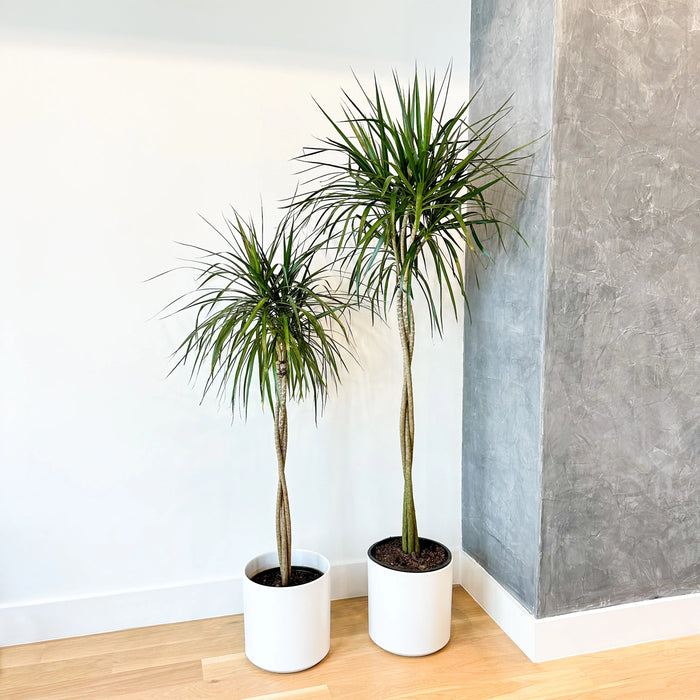
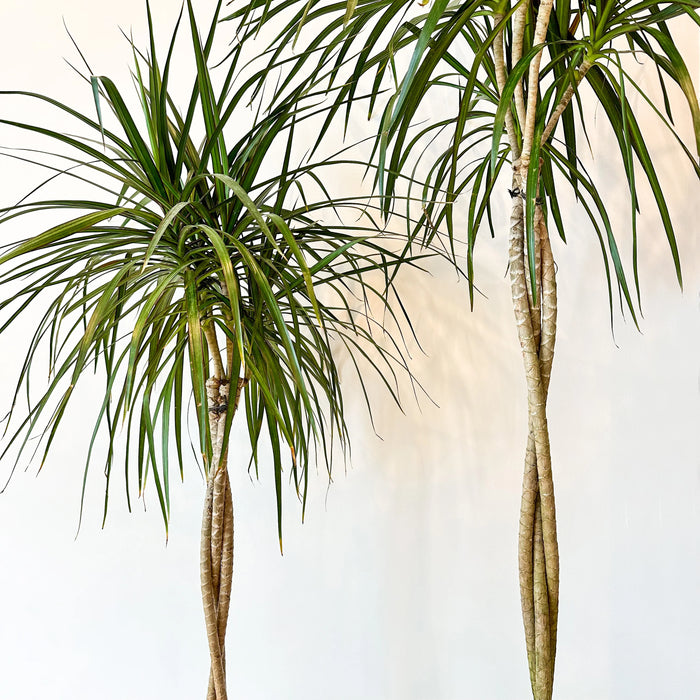
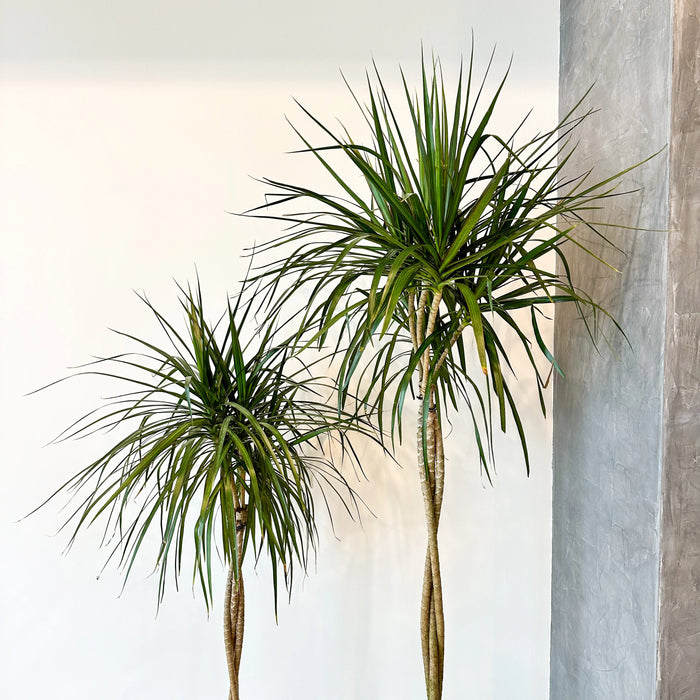
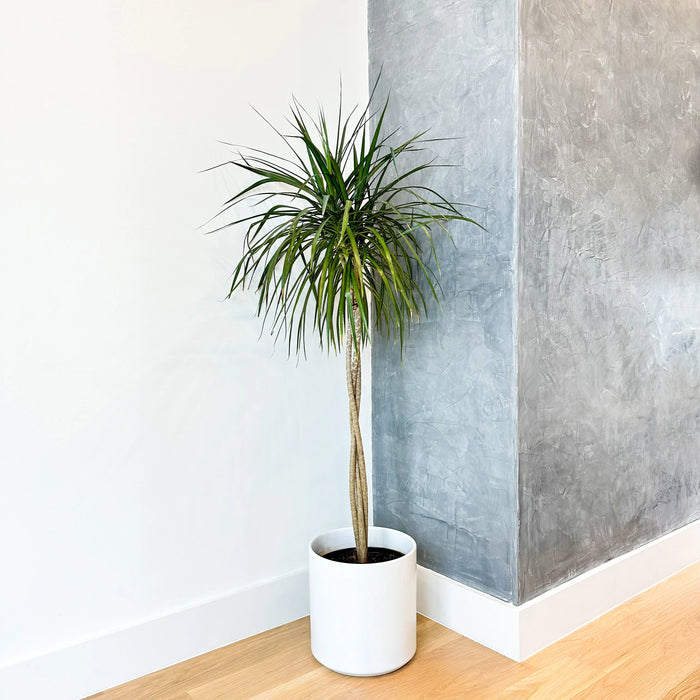
Dragon Tree (Braided Weave)
Buy more, save more
Save up to $1,000 on your whole cart.
See all savings tiers
Your code will auto-apply at checkout.
From our farm to your front door
- Shipped in its nursery pot, so the roots stay undisturbed
- Soil secured so it stays put in transit
- Packed so the plant stays steady on the way to you
At a glance
- Light
- Bright Indirect Sunlight
- Water
- When the top 1–2" of soil is dry
- Care level
- Pretty easy
- Pets
- Not pet friendly
- Growth & size
- Dracaena marginata is known for its slow to moderate growth rate, typically reaching a mature height of 6 to 8 feet indoors, with a width of 2 to 3 feet. Its vertical growth habit makes it an excellent choice for rooms with limited space.
- Botanical name
- Dracaena marginata


Size guide & what arrives
| *Trade size | **Pot size |
|---|---|
| 1 gallon | 6" |
| 3 gallon | 8 to 10" |
| 5 gallon | 10 to 12" |
| 7 gallon | 14" |
| 10 gallon | 15 to 17" |
| 15 gallon | 17" |
| "Jumbo" | 7 or 10 or 15 gallon |
*Nursery gallon sizes are trade sizes and do not equal standard liquid gallons.
**Pot sizes in inches refer to container width (diameter), not plant or pot height.
Please note: Sizing can differ between plant varieties and growers. Please chat with us if you need clarification.
For more information on sizing, please see our sizing guide.
What arrives
The Dragon Tree (Braided Weave) is known for its air-purifying qualities, helping to improve indoor air quality.
*The pot pictured is not included.
What customers are saying
Why customers love it
Instant life for any room
Living green that makes a space feel finished.
Healthy, well-rooted plants
Hand-selected and shipped in its nursery pot.
Delivered to your door
Skip the nursery trip. Very little car Tetris required.
Real plant experts
Ask us anything before or after it arrives.
Care made simple
Simple care, matched to this plant.
Provide your Dragon Tree with bright, indirect sunlight to thrive. It can tolerate some degree of shade but will flourish in well-lit areas. Avoid direct sunlight, as it may sco...
Water the Dragon Tree moderately, allowing the top inch or two of soil to dry out between waterings. Typically, this plant requires watering every 1-2 weeks during the growing s...
Your first months together
- 1Day 1
Unbox, set it in its spot, and check the soil before you water.
- 2First few weeks
A few dropped leaves is normal while it adjusts to your home.
- 3Spring & summer
Feed during the growing season. Skip it in winter.
- 4Every 1–2 years
Repot into a slightly bigger pot once roots fill this one.
Light & water
Provide your Dragon Tree with bright, indirect sunlight to thrive. It can tolerate some degree of shade but will flourish in well-lit areas. Avoid direct sunlight, as it may scorch the leaves.
Water the Dragon Tree moderately, allowing the top inch or two of soil to dry out between waterings. Typically, this plant requires watering every 1-2 weeks during the growing season and less frequently in winter. Ensure good drainage to prevent overwatering.
About this plant
*The pot pictured is not included.
Care guide
Shipping & what's inside
Your plant ships in its nursery pot with the soil secured, packed so it stays steady on the way to you.
1-year guarantee
Every plant is covered by our 1-year guarantee. If something goes wrong, contact our team and we'll walk you through it.
 Answered by Simply Trees plant experts
How big does the Dragon Tree get?
The width or spread of the plant typically remains relatively compact, especially when grown in a container. It may have a spread of 2 to 3 feet at its widest point.
Remember that you can control the size and shape of your Dragon Tree through pruning and trimming. Regularly trimming the top growth can encourage a more compact and bushy appearance, while allowing it to grow taller will result in a more tree-like form.
How fast does the Dragon Tree grow?
How do you care for the Dragon Tree?
Light: Place your Dragon Tree in bright, indirect light. It can tolerate some direct morning sunlight but avoid harsh, intense sunlight that can scorch the leaves. If you don't have sufficient natural light, consider using fluorescent or grow lights to supplement.
Watering: Allow the top inch or two of the soil to dry out between waterings. Water the plant thoroughly, ensuring that excess water drains from the pot. Empty the saucer under the pot after watering to prevent waterlogged roots, which can lead to root rot.
Humidity: Dragon Trees can adapt to average indoor humidity levels, but they appreciate occasional misting, especially during the dry winter months. This helps prevent the leaf tips from drying out.
Temperature: Maintain a moderate room temperature between 65°F to 80°F (18°C to 27°C). Avoid exposing the plant to cold drafts, sudden temperature fluctuations, or hot radiators or heating vents.
Potting Mix: Use a well-draining potting mix designed for indoor plants. Repot your Dragon Tree when it outgrows its current pot, typically every 2-3 years.
Fertilization: Feed your Dragon Tree with a balanced liquid fertilizer diluted to half strength during the growing season (spring and summer) every 4-6 weeks. Reduce or eliminate fertilization during the fall and winter when the plant's growth slows down.
Pruning: Prune the plant as needed to maintain its shape and remove any dead or yellowing leaves. You can also trim the top if it becomes too tall. New growth will emerge from the cut area.
Pest and Disease Control: Keep an eye out for common indoor plant pests like spider mites, mealybugs, and scale insects. If you notice any infestations, treat them promptly with insecticidal soap or neem oil. Ensure good airflow around the plant to prevent fungal issues.
Staking: Occasionally, the braided trunks may become top-heavy. Use stakes or ties to support the plant and prevent it from toppling over.
Repotting: Repot your Dragon Tree when it becomes root-bound or outgrows its container. Choose a slightly larger pot with drainage holes and fresh potting mix.
Cleaning: Wipe the leaves with a damp cloth to remove dust and maintain their glossy appearance.
Propagation: While Dragon Trees can be propagated from stem cuttings, it's often easier to purchase a new plant due to the slow growth of cuttings.
With proper care, a braided Dragon Tree can thrive and add a touch of elegance to your home or office decor. Regular monitoring and consistent care will help ensure its health and longevity.
Where is the best place to put my Dragon Tree?
Light Requirements: Dragon Trees thrive in bright, indirect light. Place your braided Dracaena near a window with filtered or indirect sunlight. Avoid placing it in direct sunlight, as this can scorch its leaves. If you don't have a suitable window, you can also use fluorescent or grow lights to provide the necessary light.
Temperature: Maintain a moderate room temperature for your Dragon Tree. They prefer temperatures between 65°F to 80°F (18°C to 27°C). Avoid exposing the plant to drafts, sudden temperature fluctuations, or cold drafts from windows and doors during the winter.
Humidity: Dragon Trees can adapt to average indoor humidity levels, but they benefit from occasional misting or placing a humidity tray nearby, especially during the drier winter months. This will help prevent the tips of the leaves from drying out.
Spacing: Ensure that your Dragon Tree has enough space to grow without crowding. Overcrowding can limit air circulation and lead to problems with pests and diseases. Maintain some distance between it and other plants or objects.
Pot and Soil: Use a well-draining potting mix and a container with drainage holes to prevent waterlogged soil, which can lead to root rot. Repot your Dragon Tree when it outgrows its current pot, typically every 2-3 years.
Traffic: Try to place your braided Dragon Tree in a location where it won't be bumped or touched frequently. While it can tolerate occasional gentle pruning and maintenance, excessive disturbance can stress the plant.
Aesthetic Considerations: Choose a spot that enhances the aesthetics of your home or office. The braided trunk of the Dracaena marginata can make it a stylish and decorative addition to your interior decor.
Remember that Dragon Trees are relatively low-maintenance, but they benefit from consistent care and a stable environment. Regularly check the moisture level of the soil, avoid overwatering, and keep an eye out for signs of pests or diseases. With proper placement and care, your braided Dragon Tree can thrive and enhance the beauty of your space.
How often should I water my Dragon Tree?
Check the Soil: Before watering, always check the moisture level of the soil. Stick your finger into the soil about an inch deep. If the soil feels dry at this depth, it's time to water. If it still feels slightly moist, wait a few more days and check again.
Pot Size and Type: The size of your plant's pot and the type of pot it's in can affect how quickly the soil dries out. Smaller pots and pots made of clay tend to dry out more quickly than larger pots and those made of plastic or glazed ceramics.
Light and Temperature: Dragon Trees prefer bright, indirect light. In lower light conditions, they will require less water than if they receive more intense light. Similarly, temperature and humidity levels in your home can influence how quickly the soil dries out.
Seasonal Changes: You may need to adjust your watering frequency based on the seasons. During the growing season (spring and summer), Dragon Trees typically require more frequent watering, while in the dormant season (fall and winter), they need less water.
Watering Technique: When you water, do so thoroughly. Water the plant until you see water escaping through the drainage holes in the bottom of the pot. Ensure that the pot has good drainage to prevent water from pooling at the roots.
Avoid Overwatering: Overwatering can lead to root rot and other problems. It's better to let the soil dry out slightly between waterings than to keep it consistently wet.
As a general rule of thumb, you can expect to water your Dragon Tree every 1-2 weeks during the growing season, and less frequently (perhaps every 3-4 weeks) during the dormant season. However, always rely on the soil's moisture level as your primary guide. Adjust your watering schedule accordingly to meet the specific needs of your plant and the conditions in your home.
Do Dragon Trees like to be misted?
Native Environment: Dragon Trees are native to arid regions of Madagascar and other Indian Ocean islands. They are adapted to drier conditions and do not require high humidity levels.
Leaf Damage: Misting can lead to water droplets accumulating on the leaves, especially in low light conditions. If these droplets don't evaporate quickly, they can create a favorable environment for fungal and bacterial diseases. Over time, misted leaves can develop brown spots or rot.
Root Health: Misting doesn't provide moisture to the plant's roots, which is where the plant actually absorbs water. To ensure the plant's health, focus on maintaining the right soil moisture rather than misting the foliage.
Instead of misting, here are some tips for maintaining the health and appearance of your Dragon Tree:
Proper Watering: Water your Dragon Tree thoroughly when the top inch or so of the soil feels dry to the touch. Ensure that the pot has good drainage, and never allow the plant to sit in standing water.
Avoid Overwatering: Overwatering can lead to root rot and other problems. Be sure to allow the soil to dry out slightly between waterings.
Prune Dead Leaves: Remove any yellowing or dead leaves to maintain the plant's overall health and appearance.
Provide Adequate Light: Dragon Trees prefer bright, indirect light. Place them near a window with filtered sunlight to keep them healthy.
Maintain a Consistent Environment: Avoid exposing the plant to sudden temperature changes or drafts, as this can stress the plant.
In summary, Dragon Trees do not need misting, and it's best to focus on proper watering, lighting, and overall care to ensure their well-being.
How can you tell if you're overwatering your Dragon Tree?
Wilting and Drooping: While it may seem counterintuitive, overwatered plants can exhibit wilting and drooping leaves. This is because excessive moisture in the soil can suffocate the roots, making it difficult for the plant to take up water and causing the leaves to become limp.
Yellowing Leaves: Overwatering can cause the lower leaves of the Dragon Tree to turn yellow and eventually brown. This is often a sign of root stress due to excessive moisture.
Soft and Mushy Roots: If you suspect overwatering, carefully remove the plant from its pot and inspect the roots. Healthy roots should be firm and white. Overwatered roots may appear brown or black, mushy, and have a foul odor.
Leaf Drop: Overwatered Dragon Trees may drop their leaves prematurely, especially the lower ones. This is a sign of root damage and stress.
Slow Growth: Excessive moisture can slow down the plant's growth, as the roots are not functioning properly.
To prevent overwatering your Dragon Tree, follow these tips:
Check Soil Moisture: Before watering, check the moisture level in the soil by inserting your finger about an inch or two into the soil. Water only when the top inch or so feels dry.
Use Well-Draining Soil: Plant your Dragon Tree in a well-draining potting mix to ensure excess water can escape easily. Ensure that the pot has drainage holes at the bottom.
Choose the Right Pot: Use a pot with adequate drainage to prevent water from accumulating at the bottom.
Allow for Proper Drainage: After watering, empty the saucer under the pot to prevent the plant from sitting in standing water.
Adjust Watering Frequency: Be cautious with watering during the winter months when the plant's growth slows down. Reduce the frequency of watering during this period.
Use a Watering Schedule: Establish a consistent watering schedule to avoid watering too frequently. This can help you maintain proper soil moisture levels.
Prune Dead Leaves: Remove any yellowing or dead leaves promptly to reduce stress on the plant.
Remember that it's better to underwater your Dragon Tree slightly than to overwater it. These plants are more tolerant of drying out a bit between waterings than sitting in consistently wet soil. Adjust your watering routine based on the specific needs of your plant and the environmental conditions in your home.
Why are the tips on my Dragon Tree turning brown?
Low Humidity: Dragon Trees prefer higher humidity levels. Dry indoor air can lead to browning leaf tips and edges. Increase humidity around the plant by misting it regularly, using a humidity tray, or placing a humidifier nearby.
Underwatering: Insufficient watering can cause the tips of the leaves to dry out and turn brown. Ensure that you're watering your Dragon Tree adequately. Water the plant thoroughly when the top inch or so of soil is dry, and allow excess water to drain away.
Fluoride in Water: If your tap water contains high levels of fluoride, it can accumulate in the plant's leaves, causing browning. Consider using filtered or distilled water for watering, or let tap water sit out for a day to allow some of the fluoride to dissipate before using it.
Salt Buildup: Fertilizer salts can accumulate in the soil over time, leading to brown leaf tips. Flush the soil periodically by watering thoroughly to leach out excess salts. Use a balanced, water-soluble fertilizer and follow the recommended dilution and application instructions.
Drought Stress: Even if you water your plant, if the roots are not absorbing water efficiently due to root system issues or compacted soil, the tips of the leaves can still dry out. Ensure proper soil quality and drainage.
Temperature Fluctuations: Drastic temperature changes, such as exposure to cold drafts or hot, dry air, can stress the plant and lead to browning leaf tips. Maintain a stable temperature and avoid placing the plant near heaters or air conditioning vents.
Chemical Exposure: Contact with chemicals, such as cleaning products or pesticides, can damage the leaf tips. Ensure that your plant is kept away from any potential sources of chemical exposure.
Old Age: It's normal for the older leaves of a Dracaena marginata to naturally turn brown and die off over time. Pruning these older leaves can help maintain the plant's appearance.
To address the issue, carefully assess your Dragon Tree's care routine and environment. Adjusting humidity levels, improving watering practices, and addressing potential sources of stress should help prevent further browning of the leaf tips. Trim any severely damaged or browned tips for aesthetic reasons, using clean, sharp scissors or pruning shears.
Why are the leaves on my Dragon Tree turning brown and falling off?
Overwatering: One of the most common causes of leaf browning and dropping is overwatering. Dragon Trees prefer to dry out between waterings. Ensure that the plant is in well-draining soil and allow the top inch or so of soil to dry out before watering. Make sure the pot has drainage holes to prevent waterlogged roots.
Underwatering: On the flip side, underwatering can also lead to browning and dropping leaves. Check the soil regularly, and when the top inch is dry, water the plant thoroughly. However, don't let it sit in standing water.
Low Humidity: Dragon Trees prefer higher humidity levels. Dry indoor air can lead to browning leaf tips and edges. You can increase humidity around the plant by misting it regularly, using a humidity tray, or placing a humidifier nearby.
Insufficient Light: Inadequate light can cause a Dragon Tree's leaves to yellow and drop. They thrive in bright, indirect light but can tolerate some lower light conditions. If the plant is in a very dark spot, consider moving it to a brighter location.
Drafts and Temperature Fluctuations: Dragon Trees are sensitive to temperature fluctuations and drafts. Avoid placing them near heaters, air conditioning vents, or drafty windows, as this can stress the plant and lead to leaf problems.
Pests or Diseases: Check your Dragon Tree for signs of pests like spider mites, mealybugs, or scale insects. These pests can damage the leaves and cause them to turn brown or fall off. Treat any infestations promptly with insecticidal soap or neem oil.
Root Issues: Check the root system for signs of rot or overcrowding. If the roots are rotting, it may be due to overwatering or poor drainage. Repot the plant in well-draining soil if necessary.
Fertilizer Issues: Over-fertilizing can lead to salt buildup in the soil, causing leaf burn and browning. Follow a regular fertilization schedule and avoid applying too much fertilizer.
To address the issue, carefully assess your Dragon Tree's care routine and environment to identify the specific problem. Adjusting watering, light, and humidity levels as needed should help improve the plant's overall health and prevent further browning and leaf loss. If the issue persists, consult a local nursery or plant expert for personalized advice and possible treatments.
Should I prune the Dragon Tree?
Remove dead or yellowing leaves: Use clean, sharp pruning shears or scissors to carefully trim away any dead or discolored leaves. Make clean cuts to minimize stress on the plant.
Control height and shape: If your Dragon Tree is getting too tall or leggy, you can prune the top to control its height and encourage branching. Cut just above a leaf node or bud to promote new growth from that point.
Remove overcrowded or leggy growth: If the plant has become too dense or has long, leggy stems, you can selectively prune to improve its overall appearance. Again, make cuts just above leaf nodes to encourage branching.
Prune for size: If your Dragon Tree has outgrown its space, you can prune it back to a more manageable size. Be mindful not to remove more than one-third of the plant's total foliage at once, as this can stress it.
Regular maintenance: Regularly inspect your Dragon Tree for any damaged or unsightly growth, and prune as needed to keep it looking its best.
It's important to note that Dragon Trees are relatively slow-growing, so pruning should be done sparingly and with care. Avoid over-pruning, as it can weaken the plant. Additionally, always use clean, sharp tools to make precise cuts, and consider wearing gloves to protect your hands from the plant's sap, which can be mildly irritating to some people.