


Chinese Holly
Zones 7-9
Buy more, save more
Save up to $1,000 on your whole cart.
Discounts don't stack. At checkout you automatically get whichever saves you more.
See all savings tiers
Your code will auto-apply at checkout.
From our farm to your front door
- Shipped in its nursery pot, so the roots stay undisturbed
- Soil secured so it stays put in transit
- Packed so the plant stays steady on the way to you
At a glance
- Leaves
- Evergreen: keeps its leaves all year
- Sunlight
- Full Sun, Partial Sun
- Water
- When the top 2" of soil is dry
- Growth & size
- Moderate growth rate; mature height of 8-15 feet and width of 8-10 feet.
- Botanical name
- Ilex cornuta
- Hardiness
- Zones 7-9
- Tolerates
- Cold hardyHeat tolerantHumidity tolerantDrought tolerantCoastal tolerantWind tolerant
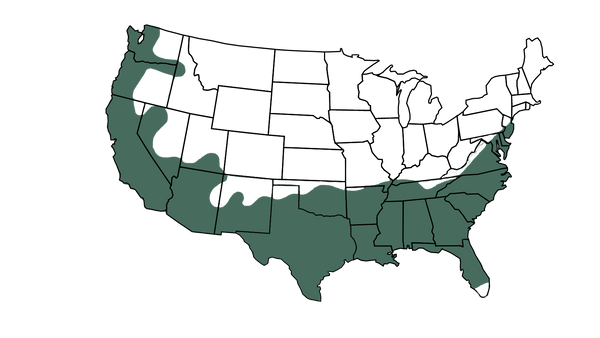
Where it grows in the groundShaded areas are the zones where it can be planted outdoors.


Size guide & what arrives
| *Trade size | **Pot size |
|---|---|
| 1 gallon | 6" |
| 3 gallon | 8 to 10" |
| 5 gallon | 10 to 12" |
| 7 gallon | 14" |
| 10 gallon | 15 to 17" |
| 15 gallon | 17" |
| "Jumbo" | 7 or 10 or 15 gallon |
*Nursery gallon sizes are trade sizes and do not equal standard liquid gallons.
**Pot sizes in inches refer to container width (diameter), not plant or pot height.
Please note: Sizing can differ between plant varieties and growers. Please chat with us if you need clarification.
For more information on sizing, please see our sizing guide.
What arrives
Chinese Holly is relatively low-maintenance but benefits from regular watering and occasional pruning to maintain its shape and health.
What customers are saying
Why customers love it

Healthy, well-rooted plants
Hand-selected and shipped in its nursery pot.

Delivered to your door
Skip the nursery trip. Very little car Tetris required.

Real plant experts
Ask us anything before or after planting.

1-year guarantee
If something goes wrong, we'll help make it right.
Care made simple
Plant it right once and it does the rest.
Pick the spot before you dig.
Water slowly and deeply. Check more often in its first summer.
Enter your ZIP above to check your zone.
Your first year together
- 1Day 1
Plant it, then water slowly until the whole root ball is soaked.
- 2First few weeks
Keep the soil evenly moist while new roots settle in.
- 3First summer
Water deeply during hot, dry spells.
- 4Next spring
New growth starts. Feed as it wakes up.
Planting instructions
Watering & sunlight
Care guide
Shipping & what's inside
Your plant ships in its nursery pot with the soil secured, packed so it stays steady on the way to you.
1-year guarantee
Every plant is covered by our 1-year guarantee. If something goes wrong, contact our team and we'll walk you through it.
 Answered by Simply Trees plant experts
How big do Chinese hollies get?
It's important to consider the mature size of the Chinese Holly cultivar you choose when planning its placement in your landscape. Providing adequate spacing between plants can prevent overcrowding and allow each plant to reach its full size and potential.
Additionally, regular pruning can help manage the size and shape of Chinese Hollies, especially if space is limited or if you prefer a more compact growth habit. Pruning should be done in late winter or early spring before new growth begins to ensure minimal disruption to the plant's natural growth cycle.
Overall, Chinese Hollies are valued for their versatility, attractive foliage, and ability to thrive in a variety of landscaping settings. With proper care and maintenance, they can make an excellent addition to both residential and commercial landscapes.
How fast do Chinese Hollies grow?
What is the difference between Chinese holly and American Holly?
Origin: Chinese Holly is native to eastern Asia, including China, Korea, and Japan, while American Holly is native to eastern and southeastern United States.
Growth Habit: Chinese Holly tends to have a more compact and upright growth habit compared to American Holly, which typically has a pyramidal or conical shape.
Leaf Characteristics: Chinese Holly leaves are typically narrower and more elongated compared to the broader, spiny leaves of American Holly. Chinese Holly leaves also tend to have fewer spines along the margins compared to American Holly.
Berry Color: Both Chinese Holly and American Holly produce berries, but the berry color differs between the two species. Chinese Holly berries are typically red or orange, while American Holly berries are usually bright red.
Cold Tolerance: American Holly is generally more cold-hardy than Chinese Holly and is often grown in colder regions where winter temperatures can be harsh.
Cultural Significance: American Holly has cultural significance in the United States and is often associated with holiday decorations, particularly during the Christmas season. Chinese Holly may also be used for decorative purposes but is less commonly associated with cultural traditions outside of its native range.
Overall, while Chinese Holly and American Holly share some similarities in appearance and use, they have distinct characteristics that make each species unique. The choice between the two may depend on factors such as climate, desired growth habit, and specific landscaping needs.
Where is the best place to plant Chinese Holly?
Sunlight: Chinese Holly performs best in locations with partial to full sun exposure. While it can tolerate some shade, it tends to produce denser growth and more berries in areas with ample sunlight.
Soil: Chinese Holly prefers well-draining, slightly acidic to neutral soil. It can tolerate a range of soil types, including clay, loam, and sandy soil, as long as the soil is not overly compacted or prone to waterlogging.
Moisture: Once established, Chinese Holly is relatively drought-tolerant and can withstand periods of dry soil. However, it benefits from regular watering, especially during hot, dry weather or when newly planted.
Protection from Wind: Chinese Holly may benefit from some protection from strong winds, especially in regions with frequent gusts or storms. Planting near a windbreak, such as a fence or larger shrubs, can help shield the plant from excessive wind exposure.
Space: Chinese Holly can vary in size depending on the cultivar, so it's essential to consider the mature size of the specific variety you're planting. Leave adequate space between plants to accommodate their eventual size and allow for proper air circulation and growth.
Landscaping Use: Chinese Holly is versatile and can be used in various landscaping applications, including hedges, screens, borders, and specimen plants. Consider its intended use in your landscape design when selecting a planting location.
Overall, the best place to plant Chinese Holly is in a location that provides adequate sunlight, well-draining soil, and some protection from harsh weather conditions, with ample space for the plant to grow and thrive.
How do I know if my Chinese Holly is male or female?
Flowers: Male Chinese Holly plants produce small, inconspicuous flowers that contain stamens but lack pistils. These flowers typically have yellowish stamens and may appear in clusters along the stems in spring. Female Chinese Holly plants produce flowers with a prominent pistil but lack stamens. The presence of flowers can help determine the gender of the plant, but flowers may not be present year-round.
Berries: Only female Chinese Holly plants produce berries, which develop from the flowers following pollination. The berries are typically green initially and mature to a bright red or orange color as they ripen. If your Chinese Holly plant produces berries, it is female. Male Chinese Holly plants do not produce berries.
If your Chinese Holly plant is not currently flowering or fruiting, it may be challenging to determine its gender definitively. In such cases, you may need to observe the plant over multiple growing seasons to identify any flowers or berries that develop. Additionally, purchasing a plant labeled as a specific gender from a nursery or garden center can ensure you select the desired gender for your landscape needs.