


Blue Rug Juniper
Zones 3-9
Buy more, save more
Save up to $1,000 on your whole cart.
See all savings tiers
Your code will auto-apply at checkout.
From our farm to your front door
- Shipped in its nursery pot, so the roots stay undisturbed
- Soil secured so it stays put in transit
- Packed so the plant stays steady on the way to you
At a glance
- Leaves
- Evergreen: keeps its leaves all year
- Sunlight
- Full Sun
- Water
- When the top 2–3" of soil is dry
- Growth & size
- Slow to moderate growth rate; mature height of 4-6 inches and width of 5-6 feet.
- Botanical name
- Juniperus horizontalis 'Wiltonii'
- Hardiness
- Zones 3-9
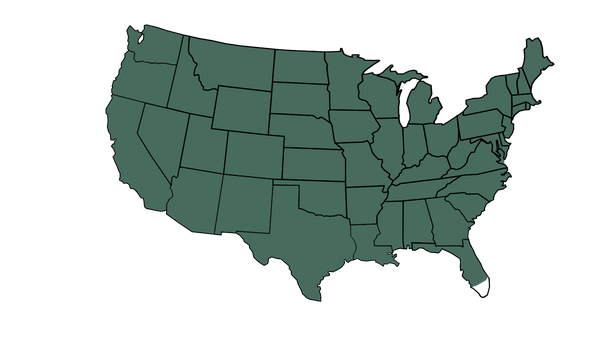
Where it grows in the groundShaded areas are the zones where it can be planted outdoors.


Size guide & what arrives
| *Trade size | **Pot size |
|---|---|
| 1 gallon | 6" |
| 3 gallon | 8 to 10" |
| 5 gallon | 10 to 12" |
| 7 gallon | 14" |
| 10 gallon | 15 to 17" |
| 15 gallon | 17" |
| "Jumbo" | 7 or 10 or 15 gallon |
*Nursery gallon sizes are trade sizes and do not equal standard liquid gallons.
**Pot sizes in inches refer to container width (diameter), not plant or pot height.
Please note: Sizing can differ between plant varieties and growers. Please chat with us if you need clarification.
For more information on sizing, please see our sizing guide.
What arrives
The Blue Rug Juniper may develop a bronzed hue in winter or during extended dry periods. Providing consistent moisture and protection from harsh winds can help maintain its attractive blue color.
What customers are saying
No reviews for Blue Rug Juniper yet. Here's what customers say about other plants and trees they ordered from Simply Trees.
Why customers love it
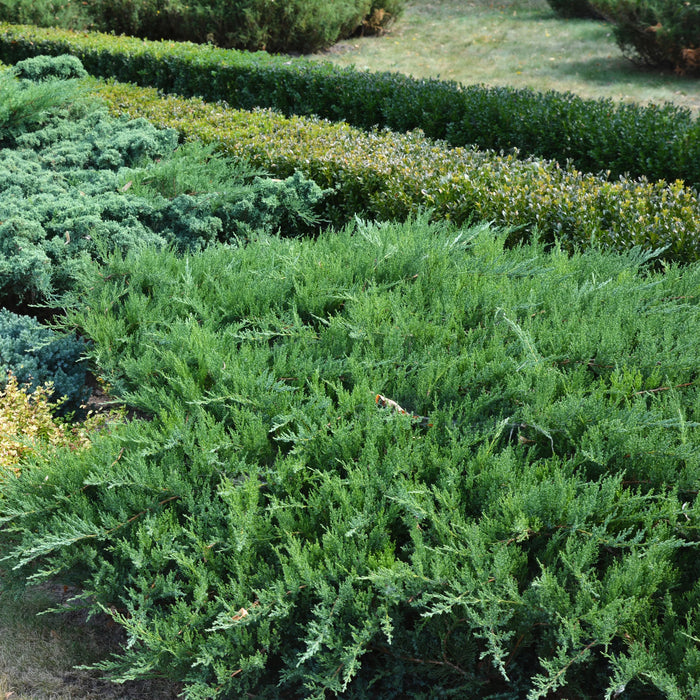
Healthy, well-rooted plants
Hand-selected and shipped in its nursery pot.
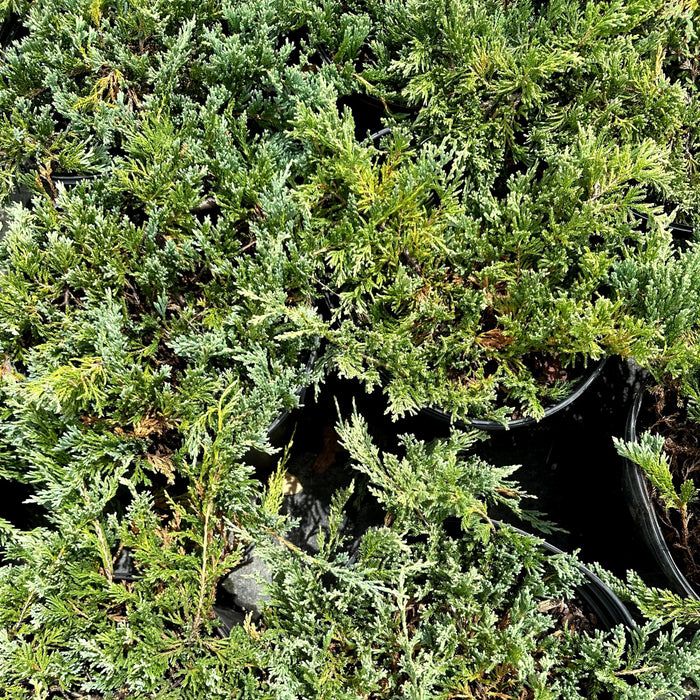
Delivered to your door
Skip the nursery trip. Very little car Tetris required.
Real plant experts
Ask us anything before or after planting.
1-year guarantee
If something goes wrong, we'll help make it right.
Care made simple
Plant it right once and it does the rest.
Pick the spot before you dig.
Water slowly and deeply. Check more often in its first summer.
Enter your ZIP above to check your zone.
Your first year together
- 1Day 1
Plant it, then water slowly until the whole root ball is soaked.
- 2First few weeks
Keep the soil evenly moist while new roots settle in.
- 3First summer
Water deeply during hot, dry spells.
- 4Next spring
New growth starts. Feed as it wakes up.
Planting instructions
Watering & sunlight
Care guide
Shipping & what's inside
Your plant ships in its nursery pot with the soil secured, packed so it stays steady on the way to you.
1-year guarantee
Every plant is covered by our 1-year guarantee. If something goes wrong, contact our team and we'll walk you through it.
 Answered by Simply Trees plant experts
How big does Blue Rug Juniper get?
Height: Blue Rug Juniper typically reaches a mature height of about 4 to 6 inches. It has a prostrate growth form, meaning it hugs the ground closely.
Width: These junipers spread widely, often reaching a width of 6 to 8 feet or more as they mature. They can create a dense and attractive ground cover.
Growth Rate: Blue Rug Juniper is considered a slow-growing plant. It may take several years to reach its full mature size, but its low, spreading habit makes it an excellent choice for ground cover and erosion control.
Keep in mind that the size of Blue Rug Juniper can be influenced by various factors, including environmental conditions, soil quality, and care. While they may be slow to reach their mature size, their compact and spreading growth habit allows them to effectively cover large areas, making them a popular choice for ground cover and landscaping projects.
How fast does Blue Rug Juniper grow?
Blue Rug Juniper typically grows at a rate of about 2 to 4 inches per year under ideal conditions.
It's important to note that Blue Rug Junipers are valued not for their rapid growth but for their dense, spreading habit, making them an excellent choice for ground cover, erosion control, and landscape design where low-maintenance and compact growth are desired. These junipers can eventually form a mat-like carpet that covers the ground effectively.
While Blue Rug Junipers may not grow quickly, their slow and steady growth contributes to their long-term durability and attractiveness as a ground cover plant. Regular care and maintenance, such as proper pruning and watering during the establishment phase, can help ensure their health and optimal growth rate.
When is the best time to plant Blue Rug Juniper?
Early Spring (March to April): Planting Blue Rug Junipers in early spring is an excellent choice because:
- The soil is beginning to warm up after the winter, which encourages root growth.
- Spring rains and milder temperatures provide an ideal environment for plant establishment.
- The junipers have the entire growing season ahead to establish strong roots and adapt to their new location.
Early Fall (September to October): Planting in early fall also offers several advantages:
- The soil is still warm from the summer, promoting root development before winter.
- Cooler temperatures reduce heat stress on the plants during establishment.
- Fall planting allows Blue Rug Junipers to establish themselves before the onset of winter, which can be beneficial for their long-term survival.
- Avoid planting Blue Rug Junipers during the hot summer months or during the winter when the ground may be frozen. Planting during extreme weather conditions can stress the plants and hinder their ability to establish well.
When planting, be sure to follow proper care guidelines, including providing adequate water during the establishment period (usually the first year after planting) and choosing a well-draining location with suitable soil. By planting at the recommended times and providing proper care, you can help ensure the success of your Blue Rug Junipers in your garden or landscape.
How do I plant Blue Rug Juniper?
1. Choose a Suitable Location:
- Select a sunny to partially sunny location in your garden or landscape. Blue Rug Junipers thrive in full sun but can tolerate partial shade.
2. Prepare the Soil:
- Ensure that the soil is well-draining. These junipers prefer sandy or rocky soils but can adapt to various soil types as long as they don't stay waterlogged.
- Improve soil drainage, if needed, by amending the soil with organic matter such as compost or well-rotted manure.
3. Determine Spacing:
- Consider the mature spread of Blue Rug Juniper, which can be up to 6-8 feet. Plan your planting layout accordingly.
- Typically, space Blue Rug Junipers about 3 to 5 feet apart when planting for ground cover or erosion control.
4. Dig Planting Holes:
- Dig holes that are as deep as the root ball and twice as wide. Ensure that the holes are deep enough to accommodate the entire root system comfortably.
5. Remove the Plant from Its Container:
- Gently remove the Blue Rug Juniper from its nursery container, taking care not to damage the roots or disturb the soil around them.
6. Place the Plant in the Hole:
- Position the juniper in the center of the planting hole at the same level as it was in the nursery container.
7. Backfill with Soil:
- Backfill the hole with the soil you removed earlier. Tamp down the soil gently as you fill to remove air pockets. Water the plant as you backfill to help settle the soil.
8. Water Thoroughly:
- After planting, water the Blue Rug Juniper thoroughly to settle the soil and provide moisture to the roots. Ensure the soil is evenly moist but not waterlogged.
9. Mulch Around the Plant:
- Apply a 2-3 inch layer of mulch around the base of the juniper to help conserve moisture, suppress weeds, and regulate soil temperature. Leave a gap between the mulch and the plant's stems.
10. Prune if Necessary:
- Depending on your desired look and the overall landscape design, you can trim or prune Blue Rug Juniper to shape it or remove any dead or unwanted growth.
11. Watering and Maintenance:
- Water your newly planted juniper regularly during its first year to help establish a strong root system.
- After establishment, Blue Rug Junipers are drought-tolerant, but monitor soil moisture and water during dry spells as needed.
By following these steps and providing proper care, you can successfully plant and grow Blue Rug Juniper in your garden or landscape, creating an attractive ground cover with their vibrant blue-green foliage.
Does Blue Rug Juniper have berries?
Juniper berries are a key feature of many juniper species and are often used in various culinary applications, including flavoring for gin and as a spice in cooking. However, it's important to note that not all junipers produce berries, and Blue Rug Juniper is one of the varieties that do.
In addition to their culinary uses, juniper berries can also attract wildlife, such as birds, who may feed on them. These berries are generally considered an attractive feature of Blue Rug Juniper and can add visual interest to the plant, especially when they are ripe and abundant.
Is Blue Rug Juniper creeping?
Its low-growing and spreading nature allows it to effectively cover large areas and provide an attractive and durable ground cover. Blue Rug Juniper is known for its vibrant blue-green foliage, which adds color and texture to garden beds and landscape designs. Its creeping growth habit also makes it an ideal choice for areas where you want to minimize maintenance and create a low-maintenance, evergreen ground cover.
How far apart do you plant Blue Rug Junipers?
Plant Blue Rug Junipers approximately 3 to 5 feet apart when creating a ground cover or erosion control bed. This spacing allows them to spread and cover the ground effectively while maintaining an attractive and dense appearance.
Keep in mind that Blue Rug Junipers have a low, spreading growth habit, and they can eventually cover a considerable area. The specific spacing may vary depending on your aesthetic preferences and the desired rate of coverage. Closer spacing will result in faster coverage, while wider spacing may take longer to achieve full coverage but can create a more open and natural look.
Before planting, consider the size and shape you want to achieve with your Blue Rug Juniper ground cover, as well as the overall layout of your landscaping project. Adequate spacing, combined with proper care and maintenance, will help you create a beautiful and functional ground cover with these hardy and versatile junipers.
What is the difference between Blue Pacific Shore Juniper and Blue Rug Juniper?
Botanical Classification:
Blue Pacific Shore Juniper: It is a variety of Juniperus rigida var. conferta, which is native to coastal regions of Japan. This variety is prized for its salt tolerance, making it suitable for coastal landscapes.
Blue Rug Juniper: It belongs to the species Juniperus horizontalis, native to North America. 'Blue Rug' is a specific cultivar within this species.
Growth Habit:
Blue Pacific Shore Juniper: This juniper has a prostrate or creeping growth habit, spreading horizontally to form a dense ground cover. It typically reaches a height of 6 to 12 inches (15 to 30 centimeters).
Blue Rug Juniper: 'Blue Rug' also has a low, spreading growth habit, but it tends to be slightly more compact and shorter, usually staying under 6 inches (15 centimeters) in height.
Foliage Color and Texture:
Blue Pacific Shore Juniper: It has blue-green to silver-blue foliage that is soft to the touch. The foliage is arranged in scale-like, overlapping patterns.
Blue Rug Juniper: 'Blue Rug' features blue-green to silvery-blue foliage with a slightly finer texture compared to Blue Pacific Shore Juniper. The foliage is also scale-like and forms a dense mat.
Cold Hardiness:
Both junipers are generally cold-hardy and can tolerate a range of temperatures. However, specific cold hardiness may vary based on local climate conditions and microclimates.
Use in Landscaping:
Blue Pacific Shore Juniper is often used in coastal landscapes, rock gardens, and areas with well-drained soil. Its salt tolerance makes it suitable for seaside plantings.
Blue Rug Juniper is commonly used as a ground cover in various landscape settings, including rock gardens, slopes, and mass plantings. It is known for its ability to spread and provide erosion control.
In summary, while both Blue Pacific Shore Juniper and Blue Rug Juniper share many similarities, such as their low-growing, spreading habit and blue-green foliage, they differ in their botanical classification, growth habits, and specific landscape applications. Gardeners can choose between them based on their preferences and the specific needs of their landscaping projects.
How often should I water Blue Rug Juniper?
1. Establishment Period (First Year): During the first year after planting, water Blue Rug Junipers regularly to help them develop a strong root system. Provide deep watering every 1-2 weeks, depending on weather conditions. Ensure the soil around the plants remains consistently moist but not waterlogged.
2. Established Plants (Second Year Onward): Once Blue Rug Junipers have established themselves (usually after the first year), they become more drought-tolerant. Reduce the frequency of watering to every 2-4 weeks during dry spells or when rainfall is insufficient. Water deeply to encourage deep root growth and avoid shallow, frequent watering.
3. Seasonal Considerations: Adjust your watering schedule based on seasonal variations. Blue Rug Junipers typically require less water during the cooler months of fall and winter, but continue to monitor soil moisture. In hot, dry summer months, they may need more frequent watering.
4. Rainfall: Take natural rainfall into account when determining your watering schedule. If your area receives regular rainfall, you may need to water less frequently. However, during extended dry spells, supplement rainfall with manual watering as needed.
5. Soil Drainage: Ensure that the soil drains well to prevent waterlogged roots, which can lead to root rot. Blue Rug Junipers prefer well-draining soils, so avoid overwatering.
6. Mulching: Applying a layer of mulch around the base of the junipers can help retain soil moisture, suppress weeds, and regulate soil temperature. Mulch also reduces evaporation and can extend the time between waterings.
Always check the moisture level in the soil before watering. One effective method is to stick your finger into the soil up to the first knuckle. If the soil feels dry at that depth, it's time to water. Keep in mind that it's better to water deeply and less frequently than to water shallowly and frequently, as deep watering encourages the development of a strong root system.
By following these guidelines and adjusting your watering schedule based on the needs of your Blue Rug Junipers and the local climate, you can help ensure their health and longevity in your landscape.
Where is the best place to plant Blue Rug Junipers?
Sunlight: Blue Rug Junipers thrive in full sun. Plant them in a location where they receive at least 6 to 8 hours of direct sunlight each day. Insufficient sunlight can result in poor growth and less vibrant foliage.
Soil: These junipers prefer well-draining soil. Sandy or rocky soils are ideal. Ensure good drainage to prevent waterlogged roots, which can lead to root rot.
Spacing: Plant Blue Rug Junipers about 3 to 4 feet (0.9 to 1.2 meters) apart to allow them to spread and cover the ground effectively. Consider the mature width of the junipers when spacing them.
Slope and Erosion Control: Blue Rug Junipers are excellent choices for planting on slopes or areas prone to erosion. Their spreading habit helps stabilize the soil and control erosion effectively.
Drought Tolerance: Once established, Blue Rug Junipers are drought-tolerant. However, during their initial establishment period (the first year or two after planting), provide regular watering to help them develop a robust root system.
Winter Hardiness: These junipers are typically hardy and can withstand cold winter temperatures. They also provide year-round interest with their blue-green foliage.
Pruning: Minimal pruning is usually required. You can trim the junipers to maintain their shape or to remove any dead or damaged branches. Avoid heavy pruning, as it may disrupt their natural appearance.
Landscaping Use: Blue Rug Junipers are popular choices for ground cover, erosion control, and as accents in rock gardens. They work well in both residential and commercial landscaping projects.
By selecting a sunny, well-draining location with proper spacing and considering their low-growing, spreading nature, you can create a beautiful and low-maintenance ground cover with Blue Rug Junipers in your landscape. These versatile plants are hardy and adaptable, making them suitable for various gardening and landscaping needs.