


Bird of Paradise
Save up to $1,000 on your whole cart.
Your code will auto-apply at checkout.
From our farm to your front door
- Shipped in its nursery pot, so the roots stay undisturbed
- Soil secured so it stays put in transit
- Packed so the plant stays steady on the way to you
At a glance
- Light
- Bright Indirect Sunlight
- Water
- When the top 1–2" of soil is dry
- Care level
- Super easy
- Pets
- Not pet friendly
- Growth & size
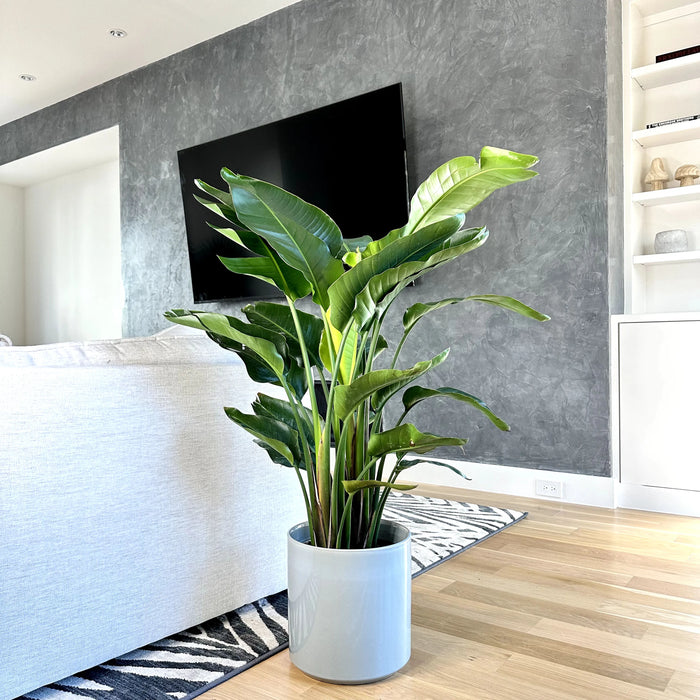
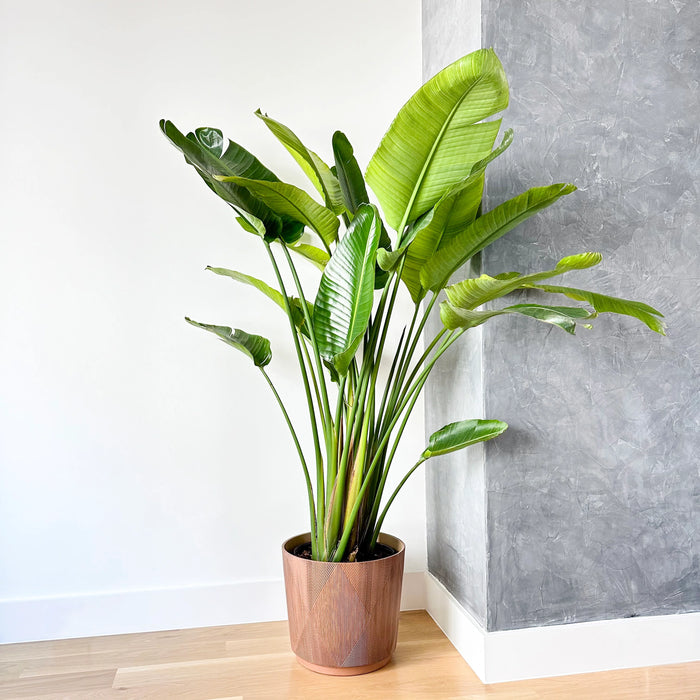
- Moderate to fast growth rate, depending on care and conditions. Can grow several feet in a year. Reaching 6-8 ft in height and width of 3-5 ft indoors. Outside, reaches 20-30 ft in height and 10-12 ft width.
- Botanical name
- Strelitzia Nicolai


Size guide & what arrives
| *Trade size | **Pot size |
|---|---|
| 1 gallon | 6" |
| 3 gallon | 8 to 10" |
| 5 gallon | 10 to 12" |
| 7 gallon | 14" |
| 10 gallon | 15 to 17" |
| 15 gallon | 17" |
| "Jumbo" | 7 or 10 or 15 gallon |
*Nursery gallon sizes are trade sizes and do not equal standard liquid gallons.
**Pot sizes in inches refer to container width (diameter), not plant or pot height.
Please note: Sizing can differ between plant varieties and growers. Please chat with us if you need clarification.
For more information on sizing, please see our sizing guide.
What arrives
The Bird of Paradise can grow quite large, so provide ample space and consider occasional pruning to maintain its desired size and shape. Splits in the leaves and minor blemishes are natural and add to the plant's character.
*The pot pictured is not included.
What customers are saying
Why customers love it
Instant life for any room
Living green that makes a space feel finished.
Healthy, well-rooted plants
Hand-selected and shipped in its nursery pot.
Delivered to your door
Skip the nursery trip. Very little car Tetris required.
Real plant experts
Ask us anything before or after it arrives.
Care made simple
Simple care, matched to this plant.
Prefers bright, indirect light, although it can tolerate some direct sunlight. It's crucial to ensure the plant gets adequate light to support its large foliage and potential fl...
Allow the top inch or two of soil to dry out between waterings. Water every 1-2 weeks, but adjust based on light levels, temperature, and humidity.
Moderate. Suitable for beginners and experts.
Your first months together
- 1Day 1
Unbox, set it in its spot, and check the soil before you water.
- 2First few weeks
A few dropped leaves is normal while it adjusts to your home.
- 3Spring & summer
Feed during the growing season. Skip it in winter.
- 4Every 1–2 years
Repot into a slightly bigger pot once roots fill this one.
Light & water
Prefers bright, indirect light, although it can tolerate some direct sunlight. It's crucial to ensure the plant gets adequate light to support its large foliage and potential flowering.
Allow the top inch or two of soil to dry out between waterings. Water every 1-2 weeks, but adjust based on light levels, temperature, and humidity.
About this plant
*The pot pictured is not included.
Care guide
Shipping & what's inside
Your plant ships in its nursery pot with the soil secured, packed so it stays steady on the way to you.
1-year guarantee
Every plant is covered by our 1-year guarantee. If something goes wrong, contact our team and we'll walk you through it.
 Answered by Simply Trees plant experts
Is White Bird of Paradise a good indoor plant?
Stylish Appearance: White Bird of Paradise adds a tropical and exotic touch to indoor spaces with its striking foliage.
Low Maintenance: It's relatively low-maintenance, requiring moderate care in terms of watering and light.
Air Purification: Like many indoor plants, it can help improve indoor air quality by removing pollutants.
Adaptable: While it prefers bright, indirect light, it can tolerate some lower light conditions, making it versatile for various indoor spaces.
Size: It can grow quite tall, making it a statement plant for larger rooms or spaces.
How do you take care of a White Bird of Paradise indoors?
Light: Place your plant in bright, indirect sunlight. It can tolerate some direct sunlight but avoid intense, prolonged exposure.
Water: Water the plant moderately. Allow the top inch of soil to dry before watering. Ensure good drainage to prevent root rot.
Humidity: Provide some humidity by misting the leaves occasionally, especially in dry indoor environments.
Temperature: Keep the room temperature between 65-70°F (18-24°C). Avoid cold drafts.
Fertilization: Feed the plant with a balanced liquid fertilizer during the growing season (spring and summer) every 4-6 weeks.
Repotting: Repot your White Bird of Paradise when it becomes root-bound. Typically, every 2-3 years is sufficient.
Pruning: Prune dead or damaged leaves to maintain the plant's appearance.
Pests: Keep an eye out for common houseplant pests like spider mites and mealybugs. Treat infestations promptly.
Support: As the plant grows, provide support for the large leaves to prevent them from bending or breaking.
Cleaning: Wipe the leaves gently with a damp cloth to remove dust and keep them healthy.
Where is the best place to put a White Bird of Paradise indoors?
Can I put my White Bird of Paradise outside in the summer?
Can I plant my White Bird of Paradise outsite?
What is the difference between Bird of Paradise and White Bird of Paradise?
Size: Bird of Paradise (Strelitzia reginae) is a smaller plant, typically growing up to 3 to 5 feet in height indoors. In contrast, White Bird of Paradise (Strelitzia nicolai) is larger and can reach heights of 8 feet indoors.
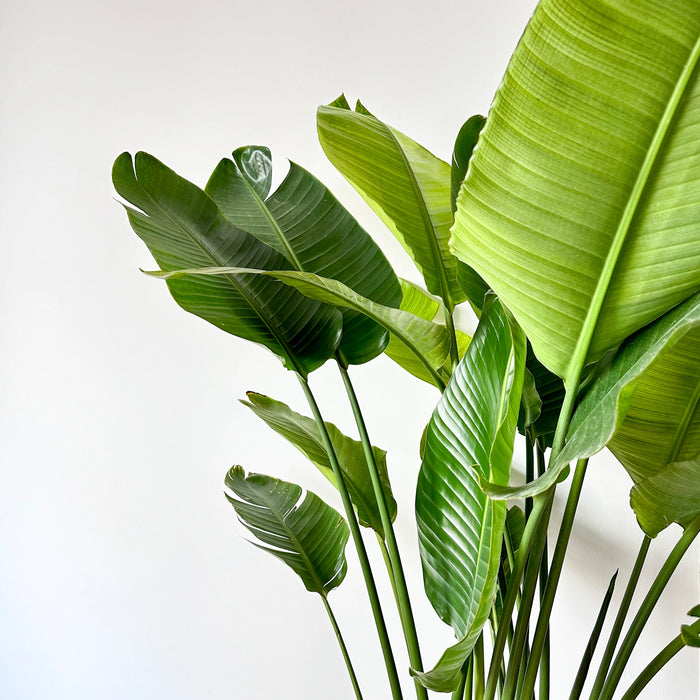
Leaves: Bird of Paradise has banana-like leaves with vibrant orange and blue flowers. White Bird of Paradise has large, paddle-shaped leaves that are green and white, with no colorful flowers.
Growth Habit: Bird of Paradise has a clumping growth habit and forms multiple stems with fan-shaped leaves arising from the base. White Bird of Paradise has a single, trunk-like stem with large leaves emerging directly from it.
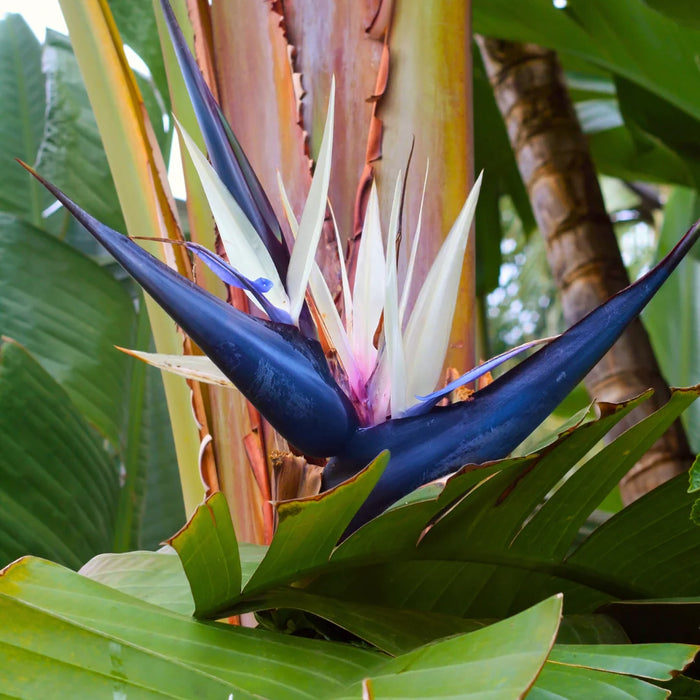
Flowers: Bird of Paradise produces striking orange and blue bird-like flowers, while White Bird of Paradise rarely flowers when grown as an indoor plant, and its flowers are less showy.
Why is my White Bird of Paradise leaves curling?
Watering Issues: Overwatering or underwatering your White Bird of Paradise can lead to leaf curling. Ensure that you are providing the right amount of water for the plant. It's essential to let the top inch or so of the soil dry out between waterings.
Humidity: White Bird of Paradise plants prefer high humidity. Low humidity levels can cause the leaf tips to curl. Consider using a humidifier or misting the leaves to increase humidity.
Light Levels: Insufficient light or sudden changes in light conditions can stress the plant and result in curled leaves. White Bird of Paradise prefers bright, indirect light. Avoid direct sunlight, which can scorch the leaves.
Pests and Diseases: Check your plant for signs of pests like spider mites or mealybugs, which can damage the leaves and cause curling. Also, ensure good airflow around the plant to prevent fungal diseases.
Nutrient Deficiency: Inadequate nutrients, particularly potassium, can lead to leaf curling. Use a balanced, water-soluble fertilizer during the growing season to provide essential nutrients.
Root Bound: If the plant has outgrown its pot and become root-bound, it may show signs of stress, including curled leaves. Consider repotting into a larger container.
Temperature: Sudden temperature fluctuations or exposure to drafts can stress the plant and cause leaf curling. Maintain a consistent temperature range for your White Bird of Paradise.
By addressing these potential issues and providing the right care, you can help prevent leaf curling and keep your White Bird of Paradise healthy.