Introduction
Leopard Plant is a striking, shade-loving perennial known for its large, glossy leaves and bright yellow, daisy-like flowers. Its bold foliage brings a lush, tropical appearance to shaded landscapes, making it an excellent choice for woodland gardens, borders, patios, and areas where sun-loving plants struggle.
Unlike many popular garden perennials, Leopard Plant prefers partial to full shade and consistently moist soil. Too much direct sunlight can scorch its leaves, while prolonged drought can cause the foliage to wilt dramatically.
Fortunately, leopard plant care is relatively straightforward once you understand these growing requirements. With the right balance of shade, moisture, and drainage, Leopard Plant can provide attractive foliage for much of the year and colorful flowers in the fall.
This guide covers how to care for Leopard Plant, including sunlight, watering, soil, fertilizer, planting, pruning, winter protection, container growing, and common problems. We'll also explain the differences between Giant Leopard Plant and Giant Spotted Ligularia, two related plants available from Simply Trees.
Leopard Plant Care at a Glance
| Care Requirement | Leopard Plant Preference |
|---|---|
| Botanical Name | Farfugium japonicum and cultivated varieties |
| Common Names | Leopard Plant, Giant Leopard Plant, Tractor Seat Plant |
| Sunlight | Partial shade to full shade |
| Soil | Rich, moisture-retentive, well-draining soil |
| Watering | Consistently moist soil; avoid prolonged drought |
| Fertilizer | Light feeding in spring if needed |
| Growth Habit | Clump-forming perennial with large ornamental leaves |
| Blooming Season | Typically fall, sometimes extending into early winter |
| Flower Color | Yellow |
| Pruning | Remove damaged leaves and spent flower stalks |
| Hardiness | Generally USDA Zones 7–10, depending on variety and conditions |
| Common Problems | Wilting, sunburn, yellow leaves, slugs, snails, and winter damage |
What Is a Leopard Plant?
Leopard Plant, botanically known as Farfugium japonicum, is a perennial native to parts of East Asia, including Japan. It belongs to the Asteraceae family, which also includes daisies and sunflowers.
It is grown primarily for its large, rounded, leathery leaves, which can create a dramatic focal point in shaded areas. In addition to its foliage, Leopard Plant produces yellow, daisy-like flowers on stalks that rise above the leaves, usually during fall.
Leopard Plant is sometimes sold under the name Ligularia because it was historically classified under that genus. However, Farfugium japonicum is now recognized separately from many other plants still classified as Ligularia.
This distinction matters because not every plant called Ligularia has identical growing requirements. The care recommendations in this article focus specifically on Farfugium japonicum and its related ornamental forms.
Giant Leopard Plant vs. Giant Spotted Ligularia
Simply Trees carries two related plants that fit within this care guide: Giant Leopard Plant and Giant Spotted Ligularia.
Both are grown for their ornamental foliage and share similar preferences for shade, moisture, and rich soil. Their main differences are leaf appearance and growth characteristics rather than fundamentally different care requirements.
| Characteristic | Giant Leopard Plant | Giant Spotted Ligularia |
|---|---|---|
| Botanical Group | Farfugium japonicum var. giganteum | Spotted ornamental form of Farfugium japonicum |
| Foliage | Large, glossy green leaves | Large leaves with distinctive spotting or markings |
| Sunlight | Partial to full shade | Partial to full shade |
| Watering | Consistently moist soil | Consistently moist soil |
| Soil | Rich, moisture-retentive soil | Rich, moisture-retentive soil |
| Flowers | Yellow, daisy-like blooms | Yellow, daisy-like blooms |
| Best Feature | Dramatic oversized foliage | Decorative foliage pattern |
Giant Leopard Plant
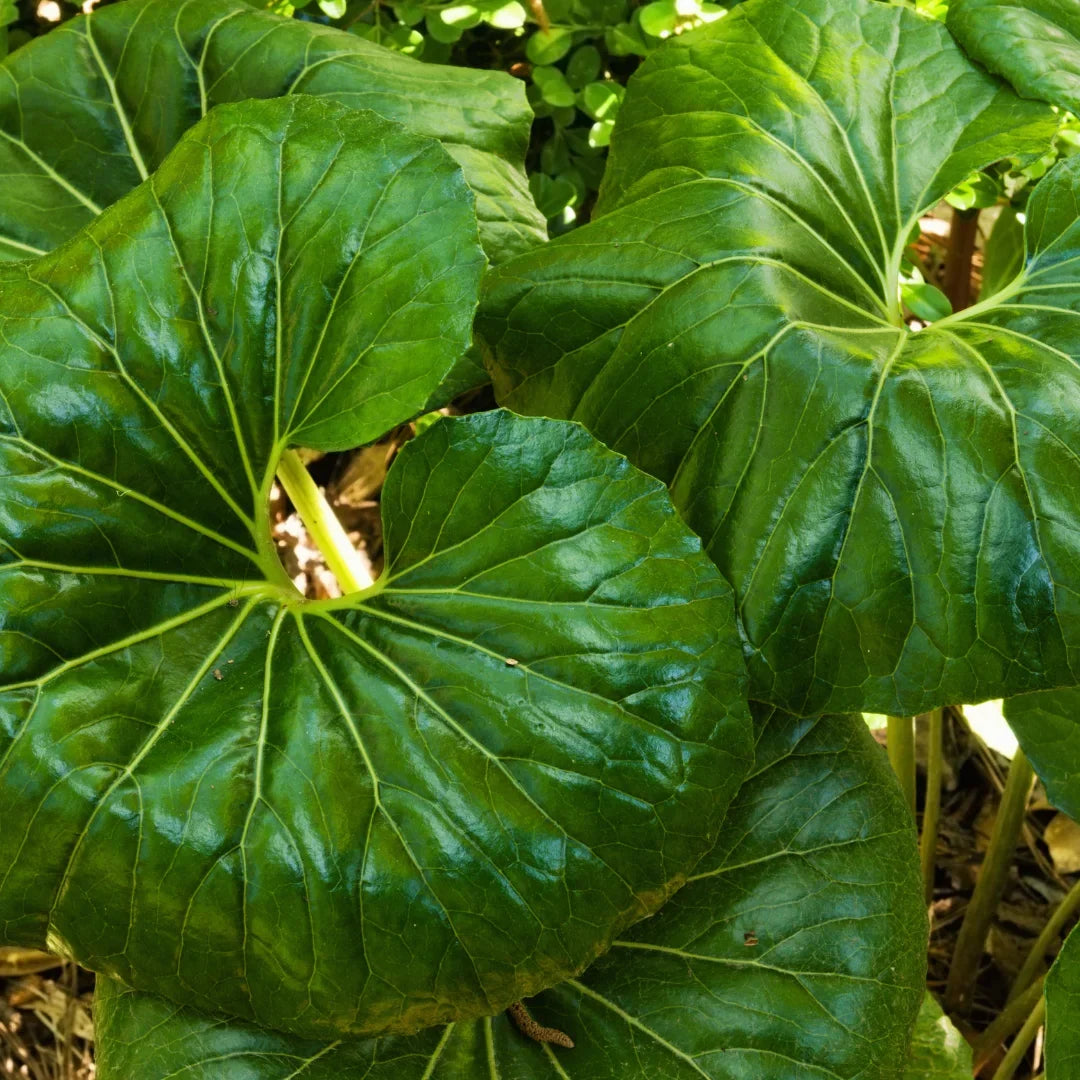
Giant Leopard Plant is prized for its exceptionally large, glossy leaves. Its bold foliage creates a tropical appearance in shaded garden beds and makes an attractive backdrop for smaller perennials.
The giant form can develop leaves reaching approximately 12–15 inches across under favorable conditions. Its distinctive shape has also inspired the common name Tractor Seat Plant.
Giant Leopard Plant is a good choice for gardeners who want large-scale foliage, strong texture, and visual impact in areas receiving limited direct sunlight.
Giant Spotted Ligularia
Giant Spotted Ligularia offers a similar shade-loving growth habit, but its patterned foliage provides additional color and visual interest.
Rather than relying entirely on large green leaves, this ornamental form creates contrast through its distinctive leaf markings. It is particularly attractive in shaded borders, woodland gardens, and mixed foliage plantings.
Despite the difference in appearance, its fundamental care requirements are similar to those of Giant Leopard Plant. Neither should be treated as a full-sun, drought-tolerant perennial.
How to Care for a Leopard Plant
The most important part of leopard plant care is maintaining the right balance between shade and soil moisture.
Leopard Plants naturally prefer sheltered environments with rich soil and protection from intense sunlight. Their large leaves lose moisture quickly in hot, sunny conditions, which is why they can wilt even when the rest of the garden appears healthy.
Essential Leopard Plant care tips:
- Plant in partial to full shade.
- Protect foliage from strong afternoon sunlight.
- Maintain consistently moist soil without keeping roots permanently waterlogged.
- Use soil rich in organic matter.
- Water deeply during hot or dry weather.
- Apply mulch to help retain soil moisture.
- Provide protection from cold, drying winds.
- Remove damaged foliage and spent flower stalks as needed.
- Monitor leaves for slugs and snails.
Unlike many sun-loving landscape plants, Leopard Plant often performs better when protected from excessive heat and direct sun exposure.
How Much Sun Does Leopard Plant Need?
Leopard Plant grows best in partial shade to full shade. This is one of the most important requirements for maintaining its large, healthy leaves.
In hot climates, Leopard Plant generally performs best with filtered sunlight or protection from direct afternoon sun. A location receiving limited morning sunlight may be suitable, but prolonged exposure to strong midday or afternoon sun can cause wilting and leaf scorch.
| Light Condition | Effect on Leopard Plant |
|---|---|
| Full shade | Often suitable, especially in warm climates |
| Partial shade | Excellent for healthy foliage and growth |
| Gentle morning sun | Usually tolerated when soil moisture is adequate |
| Strong afternoon sun | Can cause wilting, scorching, and brown leaves |
| Full sun throughout the day | Generally unsuitable, especially in hot regions |
Does Giant Spotted Ligularia need more sun than Giant Leopard Plant?
No. Both plants have similar sunlight requirements.
Giant Spotted Ligularia is not inherently a sun-loving alternative to Giant Leopard Plant. Both prefer shaded or partially shaded locations and can experience leaf damage when exposed to intense direct sunlight.
If anything, maintaining attractive foliage is especially important with patterned varieties, since scorching can damage their decorative appearance.
Best Soil for Leopard Plant
Leopard Plant prefers fertile, moisture-retentive soil that contains plenty of organic matter.
In its native environment, Farfugium japonicum grows in moist locations, including areas near streams and shaded habitats. Garden soils that retain moderate moisture while still allowing oxygen to reach the roots are ideal.
Ideal Leopard Plant soil should be:
- Rich in organic matter.
- Consistently moist during active growth.
- Well-draining enough to prevent prolonged waterlogging.
- Loose and supportive of healthy root development.
- Protected from excessive drying during hot weather.
Adding compost or other suitable organic material to the planting area may help improve moisture retention and soil structure.
Unlike Lavender or Red Yucca, Leopard Plant is not adapted to extremely dry, rocky soil. Allowing its root zone to dry completely can lead to noticeable leaf stress.
When to Plant Leopard Plant
Spring and early fall are generally favorable times to plant Leopard Plant.
Spring planting allows the plant to establish roots before the hottest part of summer. Early fall planting can also work in mild climates, where cooler temperatures reduce transplant stress.
| Season | Planting Recommendation |
|---|---|
| Spring | Excellent time to establish new plants |
| Summer | Possible with careful watering and shade protection |
| Early fall | Good in regions with mild winters |
| Winter | Generally avoid planting during hard freezes or in frozen soil |
In areas near the colder edge of Leopard Plant's hardiness range, spring planting is usually the safer choice.
How to Plant Leopard Plant
Proper planting helps Leopard Plant establish a healthy root system and reduces the risk of stress during hot weather.
Step-by-step planting instructions:
- Choose a location with partial to full shade.
- Make sure the soil is fertile and able to retain moisture without remaining permanently saturated.
- Dig a planting hole approximately twice as wide as the root ball.
- Remove the plant carefully from its nursery container.
- Gently loosen tightly circling roots, if present.
- Place the root ball at approximately the same depth as it was growing in the container.
- Backfill with soil and gently firm around the roots.
- Water thoroughly after planting.
- Add a light layer of mulch around the root zone, keeping it away from the crown.
Allow enough space for mature leaves to spread. Some Giant Leopard Plant selections can develop particularly broad foliage, so check the mature dimensions of your chosen plant before spacing multiple specimens.
For additional planting instructions, read the Simply Trees Guide to Planting.
How Often Should You Water Leopard Plant?
Leopard Plant prefers consistently moist soil, particularly during the active growing season.
Unlike drought-tolerant plants that benefit from drying substantially between waterings, Leopard Plant may wilt when its soil becomes too dry.
However, the exact watering frequency depends on soil type, rainfall, temperature, and whether the plant is growing in a container or the ground.
The best watering rule is to maintain even soil moisture while avoiding prolonged saturation.
| Growing Condition | Watering Approach |
|---|---|
| Newly planted Leopard Plant | Monitor frequently and keep the root zone evenly moist |
| Established in-ground plant | Water deeply when soil begins drying, especially during hot weather |
| Container-grown plant | Check regularly because containers may dry faster |
| Hot summer weather | Increase moisture monitoring and irrigation as needed |
| Winter dormancy | Reduce watering while preventing excessive drying where appropriate |
In hot weather, a Leopard Plant may droop during the afternoon even when the soil contains adequate moisture. If the foliage recovers by evening, heat stress may be contributing to the temporary wilting.
Before increasing irrigation, always check the soil. Adding excessive water to already saturated ground can create root problems.
How to Water a Leopard Plant Properly
Deep watering is generally more effective than repeatedly applying small amounts of water to the soil surface.
When watering, aim to moisten the root zone thoroughly while allowing excess water to drain away.
How to water Leopard Plant:
- Check the soil moisture a few inches below the surface.
- If the soil is beginning to dry, water around the base of the plant.
- Apply water slowly so it penetrates the root zone.
- Continue until the surrounding soil is evenly moist.
- Avoid leaving the plant in standing water for extended periods.
- Recheck moisture more frequently during hot or windy weather.
A layer of organic mulch can help moderate soil temperatures and reduce moisture loss during summer.
For more watering advice, visit the Simply Trees Guide to Watering.
Does Leopard Plant Need Fertilizer?
Leopard Plant benefits from fertile, organically rich soil, but it generally does not need heavy applications of fertilizer.
Healthy plants growing in good garden soil may receive sufficient nutrients without frequent supplemental feeding.
If the soil is poor or plant growth appears weak, a light application of balanced, slow-release fertilizer in spring can support new foliage development.
Leopard Plant fertilizer tips:
- Apply fertilizer during spring or early active growth if needed.
- Use a balanced fertilizer according to its label.
- Avoid excessive nitrogen or repeated heavy feeding.
- Consider adding compost to improve soil quality.
- Do not fertilize plants suffering from severe drought or root damage.
- Reduce fertilizing as growth slows before winter.
When a Leopard Plant looks unhealthy, fertilizer is not always the solution. Excess sunlight and inadequate water are more common causes of foliage stress.
For additional guidance, read the Simply Trees Guide to Fertilizing.
How to Prune Leopard Plant
Leopard Plant generally requires very little pruning.
Unlike flowering shrubs that need regular shaping, Leopard Plant grows naturally as a clump of leaves emerging from its crown.
Most pruning involves removing damaged foliage, aging leaves, and spent flower stalks.
How to prune Leopard Plant:
- Use clean, sharp pruning shears.
- Identify leaves that are completely brown, severely damaged, or yellowing from age.
- Follow the leaf stalk toward the base of the plant.
- Cut the stalk close to the crown without damaging neighboring growth.
- Remove faded flower stalks after blooming if desired.
- Leave healthy foliage intact.
Do not cut back healthy leaves simply to control the plant's width. Removing excessive foliage can reduce its visual appeal and temporarily weaken growth.
When Does Leopard Plant Bloom?
Leopard Plant typically produces yellow, daisy-like flowers in fall, sometimes extending into early winter in mild climates.
The flowers rise above the leaves on slender stalks, adding an attractive contrast to the plant's large, glossy foliage.
Although its flowers are beautiful, Leopard Plant is primarily grown for its foliage. Even when it is not blooming, the rounded leaves provide strong texture and ornamental interest.
How to encourage healthy Leopard Plant blooms:
- Provide suitable partial shade.
- Maintain consistent soil moisture.
- Use fertile, well-draining soil.
- Avoid excessive summer heat and drought stress.
- Allow established plants time to mature.
- Maintain healthy foliage throughout the growing season.
If your Leopard Plant produces attractive foliage but few flowers, it may still be perfectly healthy. Flowering varies with cultivar, maturity, and seasonal conditions.
Leopard Plant Winter Care
Leopard Plant is generally grown outdoors in USDA Zones 7–10, although cold tolerance can vary by variety, planting conditions, and local climate.
In regions with mild winters, Leopard Plant may retain much of its foliage throughout the year.
However, freezing temperatures can damage the leaves. During severe cold, the foliage may turn brown or collapse even if the plant's crown and roots remain alive.
Some Leopard Plants may lose most of their aboveground foliage during winter and produce fresh leaves when temperatures warm in spring.
How to care for Leopard Plant in winter:
- Protect plants from cold, drying winds.
- Apply mulch around the root zone before severe winter weather.
- Keep mulch away from the central crown.
- Reduce watering during cool, dormant periods.
- Avoid allowing the root zone to become excessively dry for long periods.
- Protect young plants during unusually severe freezes.
- Wait until spring to remove extensive cold-damaged foliage.
In colder regions, container-grown Leopard Plants may be easier to protect by moving them to a sheltered, cool location that remains above severe freezing temperatures.
Is Leopard Plant Evergreen?
Leopard Plant is often evergreen in warmer growing zones, providing attractive foliage throughout the year.
However, its evergreen habit depends on winter temperatures.
In colder areas, hard freezes may damage or kill the foliage while the underground crown survives. The plant can then return with new growth in spring if its roots and crown remain healthy.
For gardeners near the colder edge of its hardiness range, Leopard Plant is best viewed as potentially semi-evergreen or winter-dormant rather than guaranteed evergreen.
Can Leopard Plant Grow in Containers?
Yes. Leopard Plant grows well in containers when provided with adequate shade, consistent moisture, and suitable potting soil.
Its broad leaves create an attractive tropical appearance on covered patios, shaded balconies, and sheltered courtyards.
Container care tips:
- Choose a container with drainage holes.
- Use a moisture-retentive but well-draining potting mix.
- Keep the plant in partial to full shade.
- Check moisture frequently during warm weather.
- Water thoroughly when the upper soil begins to dry.
- Avoid leaving the container in standing water.
- Protect the roots from severe freezing in winter.
Container plants may need more frequent watering than in-ground plants because the smaller volume of soil can dry more quickly.
Can You Grow Leopard Plant Indoors?
Leopard Plant can be grown indoors in certain conditions, but it is primarily valued as an outdoor shade-garden plant.
Indoor growing is most successful when the plant receives bright, filtered light, adequate humidity, and consistently moist soil.
It should not be placed beside a window where strong direct afternoon sunlight can scorch the leaves.
Indoor Leopard Plant care tips:
- Provide bright indirect light.
- Keep the potting mix evenly moist but not waterlogged.
- Maintain moderate humidity.
- Use a container with drainage holes.
- Avoid hot, dry airflow from heating vents.
- Monitor regularly for pests.
In most suitable climates, outdoor cultivation in a shaded, sheltered location is generally easier than maintaining Leopard Plant indoors year-round.
How to Propagate Leopard Plant
Leopard Plant can be propagated through division. As a mature plant grows, it forms a larger clump that can be separated into smaller sections.
Spring is generally a good time to divide Leopard Plant because temperatures are warming and new growth is beginning.
How to divide Leopard Plant:
- Wait until early spring when new growth becomes visible.
- Water the plant beforehand if the soil is dry.
- Carefully lift the clump from the ground or container.
- Identify sections with healthy roots and growing points.
- Separate the sections using clean tools if necessary.
- Replant each division at the appropriate depth.
- Water thoroughly and keep the soil evenly moist while the new plants establish.
Division may temporarily slow growth, so avoid dividing healthy plants unnecessarily.
Common Leopard Plant Problems
Most leopard plant problems are related to excessive sunlight, insufficient moisture, unsuitable temperatures, or occasional pests.
| Problem | Possible Cause | Recommended Action |
|---|---|---|
| Wilting leaves | Dry soil, heat stress, or excessive sunlight | Check moisture and increase shade if necessary |
| Brown leaf edges | Sun scorch, drought, wind, or cold damage | Improve shade, moisture, and protection |
| Yellow leaves | Overwatering, poor drainage, or natural aging | Check root-zone moisture and drainage |
| Holes in leaves | Slugs, snails, or other chewing pests | Inspect foliage and manage identified pests |
| No flowers | Plant immaturity or environmental stress | Maintain healthy growing conditions |
| Leaves collapse after frost | Cold damage | Protect the crown and assess recovery in spring |
| Weak or declining growth | Insufficient moisture, root damage, or unsuitable soil | Inspect roots and growing conditions |
Why Is My Leopard Plant Wilting?
Wilting is one of the most common concerns among Leopard Plant owners.
Its large leaves lose moisture relatively quickly during hot or sunny weather, which can cause them to droop noticeably.
However, wilting does not always mean the plant needs more water.
Common reasons Leopard Plant wilts:
- Dry soil: The roots may not be receiving enough moisture.
- Strong sunlight: Leaves may lose water faster than the roots can replace it.
- Hot afternoons: Temporary wilting can occur during high temperatures.
- Root damage: Compromised roots may struggle to absorb water.
- Waterlogged soil: Poor root oxygen availability can also cause drooping.
Check the soil before watering. If the soil is already moist and the plant is exposed to intense afternoon sunlight, improving shade may be more effective than increasing irrigation.
Why Are My Leopard Plant Leaves Turning Brown?
Brown leaves may develop when Leopard Plant experiences sunburn, drought stress, freezing temperatures, or natural leaf aging.
What different browning patterns may indicate:
- Brown patches on sun-exposed leaves: Possible sun scorch.
- Dry, crispy leaf edges: Possible moisture stress, wind exposure, or sun damage.
- Brown leaves after a freeze: Cold damage.
- Older leaves gradually turning brown: Natural aging.
- Brown, soft tissue near the crown: Possible rot or another moisture-related problem.
Once leaf tissue is damaged, it will not return to green. However, correcting the underlying problem can protect new growth.
Why Are My Leopard Plant Leaves Turning Yellow?
Yellow leaves may be caused by excessive moisture, poor drainage, normal aging, or other growing stresses.
Although Leopard Plant prefers consistently moist soil, this does not mean its roots should remain submerged in stagnant water.
If several leaves yellow while the soil remains saturated, inspect the drainage and root condition.
Occasional yellowing of older leaves may simply be part of the plant's normal growth cycle.
Leopard Plant Pests: Slugs and Snails
Leopard Plant is generally resistant to many serious garden pest problems, but slugs and snails can damage its large leaves.
These pests are particularly common in the moist, shaded environments where Leopard Plant grows best.
Signs of slug or snail damage:
- Irregular holes in the leaves
- Chewed leaf edges
- Visible slime trails
- Damage appearing overnight
To reduce pest problems, inspect plants regularly, remove hiding places where practical, and use an appropriate control method when needed.
Avoid excessive pesticide applications without identifying the pest responsible for the damage.
Is Leopard Plant Deer Resistant?
Leopard Plant is generally considered relatively resistant to deer browsing.
Its large, leathery leaves are not usually among the most attractive food choices for deer, making it a useful option for shaded landscapes where browsing pressure is a concern.
However, no plant is completely deer-proof. Hungry deer may still browse Leopard Plant, particularly when alternative food sources are limited.
Best Places to Plant Leopard Plant
Leopard Plant is particularly useful in garden areas that receive limited direct sunlight.
Its large foliage adds texture and creates a tropical appearance, even where flowering plants may struggle because of insufficient light.
Popular landscape uses include:
- Woodland gardens
- Shaded foundation beds
- Understory plantings beneath trees
- Covered patios and courtyards
- Shaded garden borders
- Moist areas near ponds or water features
- Large containers in sheltered locations
- Mass plantings for a tropical foliage effect
Leopard Plant pairs well with other shade-loving plants such as ferns, Hostas, and certain Heuchera varieties, provided their soil moisture needs are compatible.
Leopard Plant Care Mistakes to Avoid
Planting in Full Sun
Leopard Plant is adapted to shade. Strong direct sunlight can cause wilting and leaf scorch, especially in hot climates.
Letting the Soil Dry Out Completely
Leopard Plant prefers consistent moisture. Repeated drought stress can damage its large ornamental leaves.
Confusing Moist Soil With Waterlogged Soil
Although Leopard Plant tolerates moisture, permanently saturated soil without adequate oxygen can cause root problems.
Ignoring Winter Protection
Freezing weather can damage foliage, especially near the colder edge of the plant's hardiness range.
Overfertilizing
Leopard Plant benefits from fertile soil but usually does not require excessive fertilizer. Healthy soil and appropriate moisture are more important.
Removing Healthy Foliage Unnecessarily
The leaves are the plant's main ornamental feature. Prune only damaged or aging growth rather than cutting back healthy foliage routinely.
FAQ: Leopard Plant Care
How do you care for a Leopard Plant?
Care for Leopard Plant by growing it in partial to full shade, maintaining consistently moist soil, providing organic-rich growing conditions, and protecting its large leaves from harsh sun and severe cold.
Does Leopard Plant need full sun or shade?
Leopard Plant prefers partial to full shade. Limited morning sunlight may be tolerated, but strong afternoon sunlight can damage the foliage.
How often should you water Leopard Plant?
Water whenever the root zone begins drying enough to threaten even soil moisture. Frequency depends on weather, soil, and container size. Established plants generally need regular moisture during hot, dry periods.
Is Leopard Plant drought tolerant?
Not particularly. Leopard Plant prefers consistently moist soil and can wilt when conditions become too dry, especially in hot weather.
What is the best soil for Leopard Plant?
Leopard Plant grows best in rich, organic, moisture-retentive soil that allows adequate drainage and oxygen around the roots.
Does Leopard Plant need fertilizer?
Usually only light feeding is necessary. Healthy plants growing in fertile garden soil may need little supplemental fertilizer. A modest spring feeding can help when soil nutrients are limited.
When does Leopard Plant bloom?
Leopard Plant usually produces yellow, daisy-like flowers in fall, sometimes extending into early winter in mild climates.
Does Leopard Plant come back every year?
Yes. Leopard Plant is a perennial in suitable growing zones. It may remain evergreen in warm climates or lose foliage during colder winters before producing new growth in spring.
Is Leopard Plant evergreen?
Leopard Plant is often evergreen in mild climates. However, freezing temperatures can damage the foliage, and plants may die back above ground in colder regions.
How do you protect Leopard Plant in winter?
Protect Leopard Plant from cold winds and severe freezing temperatures. Mulch around the root zone, avoid excessive winter irrigation, and protect container plants from hard freezes.
Can Leopard Plant grow indoors?
Yes, Leopard Plant can be grown indoors with bright indirect light, consistent moisture, and adequate humidity. However, it is generally easier to grow outdoors in a suitable shaded landscape.
Can Leopard Plant grow in containers?
Yes. Leopard Plant grows well in containers with moisture-retentive potting mix, drainage holes, and protection from direct afternoon sunlight.
Why is my Leopard Plant wilting?
Wilting may be caused by dry soil, excessive heat, intense sunlight, or root problems. Check soil moisture and growing conditions before adding water.
Why are my Leopard Plant leaves turning brown?
Brown leaves may result from sun scorch, drought stress, freezing weather, or natural aging. Identify the cause by checking sunlight exposure, soil moisture, and recent temperatures.
Is Giant Leopard Plant the same as Giant Spotted Ligularia?
They are closely related ornamental forms within the Farfugium japonicum group and share similar care requirements. Giant Leopard Plant is especially valued for oversized glossy foliage, while Giant Spotted Ligularia is distinguished by its patterned leaves.
Does Giant Spotted Ligularia need more sunlight than Giant Leopard Plant?
No. Both prefer partial to full shade and can experience foliage damage in excessive direct sunlight.
Is Leopard Plant the same as Ligularia?
Leopard Plant, Farfugium japonicum, was historically classified within Ligularia and is still sometimes sold under that name. However, Farfugium is now recognized as a separate genus, and not every modern Ligularia species has the same care requirements.
Is Leopard Plant deer resistant?
Leopard Plant is generally considered relatively deer resistant, although hungry deer may still browse it.
Final Thoughts
Leopard Plant is an excellent choice for gardeners who want bold tropical foliage in shaded parts of the landscape. Its large, glossy leaves provide architectural texture, while its cheerful yellow flowers add seasonal interest in fall.
The key to successful leopard plant care is providing partial to full shade, consistently moist soil, and protection from harsh sunlight and extreme temperatures.
Both Giant Leopard Plant and Giant Spotted Ligularia share these basic requirements, making them suitable for the same types of garden environments. Their main differences are ornamental, allowing gardeners to choose between dramatic oversized green foliage and distinctive spotted leaves.
With proper shade, moisture, and seasonal maintenance, Leopard Plant can become a long-lasting focal point in woodland gardens, shaded borders, and sheltered outdoor spaces.